iWorld
Amazon miniTV’s ‘Hip Hop India’, in collab with Nissan, breaks Guinness World Record for the largest hip-hop performance

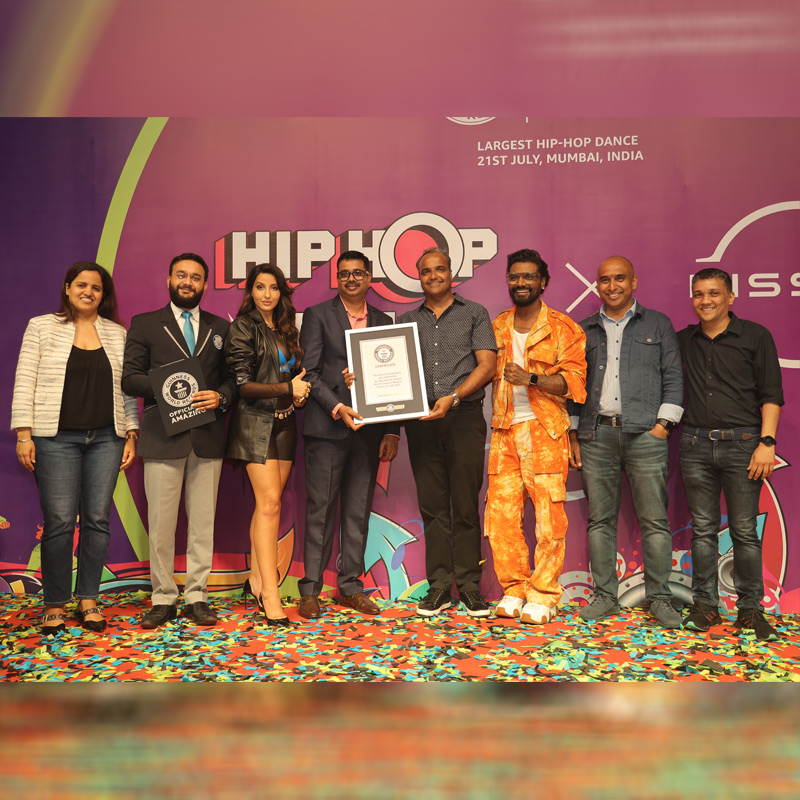
Mumbai: Amazon miniTV – Amazon’s free video streaming service, in partnership with Nissan, has officially entered the Guinness World Records with the largest on-ground hip-hop dance activity, on the day of the premiere of its dance reality show ‘Hip Hop India’. A total number of 1864 dancers came together to jointly perform hip-hop dance for over five minutes. The grand event was held at Filmcity in Mumbai in the presence of Hip Hop India’s judges Remo D’Souza and Nora Fatehi, alongside Amazon Advertising head Girish Prabhu and Nissan Motors India head of marketing Rajesh Srivastava, who flagged off this event. Special partners for the event, To The Culture and dancing crew Kings United led by Suresh Mukund, brought together the enthusiastic participants and choreographed the performance, culminating into this momentous feat.
The Guinness World Records official adjudicators announced the record-breaking moment, as the stadium went up in a rapturous applause. The previous record for the largest hip-hop performance was achieved in 2014 by 1658 dancers in Alabama, USA. This global record coincided with the launch of the show ‘Hip Hop India’ on Amazon miniTV, which is a huge celebration of hip-hop culture that viewers across India can watch for free! To mark this event, the dancers came together to build a 109 feet wide human formation of ‘Nissan Magnite’, to celebrate the brand’s association with India’s love for music and entertainment.
“This is a proud moment for India and Amazon miniTV, as we etch our name in the Guinness Book of World Records. Our endeavor with Hip Hop India has been to celebrate this rich culture of hip-hop which has now become very popular with the youth. Setting the world record was made possible by the passion of these dancers, and this is unquestionably their triumph,” said Amazon Advertising head Girish Prabhu.
Commenting on the achievement, Nissan Motors India Pvt Ltd (NMIPL) director – marketing, product & customer experience Mohan Wilson said, “The Big, Bold, Beautiful Nissan Magnite has captured hearts making many milestones, the love of it is growing and now it has achieved a remarkable feat of breaking the Guinness World Record. We are immensely proud of this accomplishment which reflects Nissan’s unwavering dedication to Outdo. With ‘Hip Hop India’ and the Magnite, we continue to make history and celebrate India’s incredible talent on the global stage.”
Ace choreographer and judge on Hip Hop India Remo D’Souza said, “Witnessing these amazing urban dancers from all across the nation in their true form is itself an achievement for me. And being a part of a team that set a world record in the field of hip-hop is an honour not only for me, but for all of us who took part in it. This is an excellent endeavour by Amazon miniTV, and I am thrilled to be a part of Hip-Hop India. I’d like to give a massive shout-out to everyone who has made this happen. Let’s go India.”
“It’s an indescribable feeling to witness and be a part of such a historic moment. When it comes to dancing, I am always game to try something new and different, but what we accomplished today surpassed my expectations. Setting a global record for the largest hip-hop performance, sends a message to all of India’s street dancers, encouraging them to come out of their shells. I am honoured to be a part of this iconic event and Hip-Hop India.” mentioned actor Nora Fatehi and also a judge on Hip Hop India.






