High Court
All Phase III DAS cases to be heard by Delhi High Court early next month

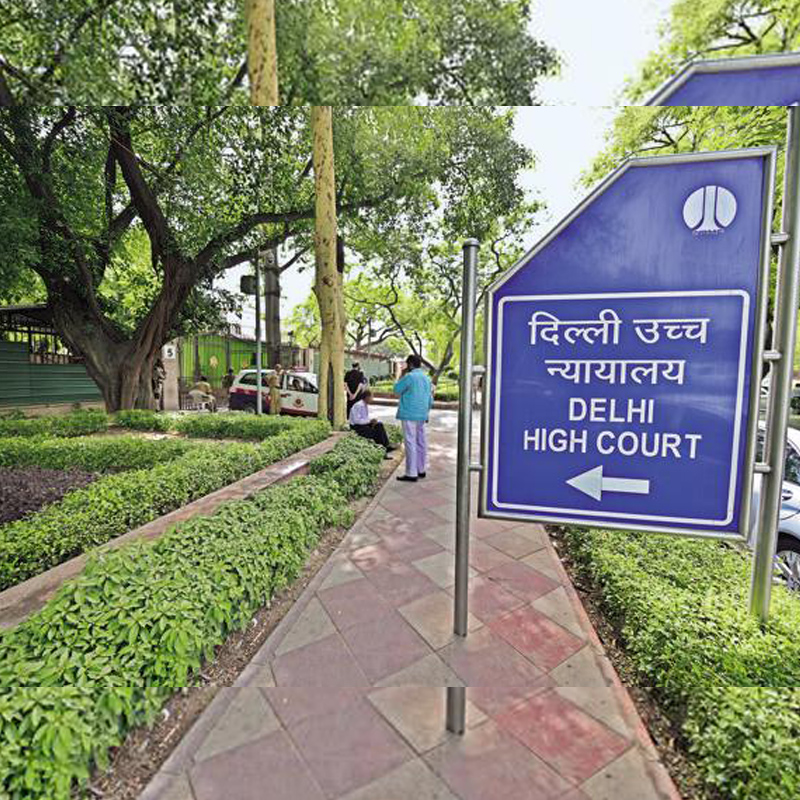
NEW DELHI: The Babus in the Information and Broadcasting Ministry would certainly breathe a sigh of relief with Dellhi High Court having fixed the hearing of the large volume of cases relating to the third phase of digital addressable system pending in different High Courts for early next month.
Although the last Task Force Meeting of 26 July had been informed that the cases would be heard from 13 September 2016, Indian Broadcasting Foundation sources told indiantelevision.com that these have been pre-poned to 7 and 8 September 2016. Notices have already been issued to the Ministry as well as the petitioners in various cases.
While a bulk of the cases will be heard on the first day by Justice Sanjeev Sachdeva, two cases which had been heard by Division Benches in the High Courts – Digiana Systems and Om Network – will be heard on 8 September by a division bench of the High Court comprising Chief Justice G Rohini and Justice Sangeeta Dhingra. .
The single-bench cases include those by AP MSOs Welfare Federation, Federation of Telangana MSO, Bhima Riddhi Digital Services, Multi System Operator Welfare Association, Rohtak Cable Operators Association, Sai Big Star Welfare Association, Shyam Baba Cable Network, Bharat Digital Cable Network, Nashik Zilla Cable Operators Association and Yogesh Cable Networks.
This follows acceptance of a petition by the Information and Broadcasting Ministry to the Supreme Court asking it to transfer all linked cases to one High Court to ensure faster justice.
The Task Force meeting had been informed that a total of 62 cases had been filed in different Courts and 29 cases had been transferred by various courts to Delhi by July-end. There were no such cases in twenty states, the Task Force was told. Of the 62 cases, 12 had been disposed off by respective courts and 3 cases had been withdrawn by the petitioners.
While the Andhra Pradesh and Telengana High Court had given orders extending the deadline of 31 December 2015 for Phase III, the Bombay High Court had referred to the Kusum Ingots judgment which had said that if similar situation prevails in all states, then the stay can be pan-India. This was because the plea taken in all High Courts was shortage of set top boxes.
But for the first time, the Ministry had admitted that the Law Ministry had observed that the order passed by the Andhra Pradesh High Court staying Phase III “appears to have all lndia applicability”. For that reason, the I and B Ministry had in fact asked its counsel not to oppose the stay or extension orders in the High Courts.
indiantelevision.com had reported in January this year that the MIB had told the Punjab and Haryana high court that it had ‘decided not to press the requirement of having a STB as for now till the decision of the cases which are pending before various other high courts’
However, the Ministry later approached the apex court with a plea for transfer of all similar cases to one High Court and the apex court had asked Delhi to handle these cases and directed notices to be sent to all other High Courts to forward the files to Delhi.
The I and B Ministry will attempt to get a vacation of stay or extension of deadline in the various courts. The Ministry may also attempt to get orders directing all broadcasters, multi-system operators and local cable operators to transmit or receive signals only on signing of inter-connect agreements as stipulated by the Telecom Regulatory Authority of India.
Meanwhile, Secretary Ajay Mittal in the last Task Force meeting reiterated that it was firm on Phase IV of digital addressable systems for cable television to commence on 31 December this year.
He cautioned that MSOs and LCOs should desist from transmitting or re-transmitting un-authorized TV channels which are not permitted by the Ministry. He informed that the Ministry has written to all the district collectors/magistrates in this regard to take action under the law against those who are violating the law.