News Broadcasting
Al Jazeera International launches Wednesday; not available in India

MUMBAI: There’s just a day left for the official launch of Al Jazeera International, the English language sibling of the sometimes controversial Arabic language channel Al Jazeera.
Al Jazeera International will kick off its inaugural broadcast from its headquarters in Doha, Qatar at 12 GMT tomorrow.
In English-language markets, the channel will beam down from the Astra and Eurobird satellites to DSat homes in the UK; the Globecast platform in the US; Optus in Australia; and foreign-language platform Orcus in New Zealand, informs an official release.

Interestingly, though India has been identified as a potential market, the channel will not be available in the country after the Union Home Ministry informed that the Qatar-based Arab news channel will not be allowed to register an office in India, thereby restricting its plans to beam into the country.
The government had asked the channel to go off air six months ago on account of not conforming to the downlinking guidelines by 10 May. Al Jazeera had submitted an application to the company affairs ministry for registration of a company in India, as stipulated by the government for channels uplinking from overseas and seeking to downlink into the country.
While the I&B ministry cleared the application, the home ministry, however, declined the application citing security considerations. According to a media report, the ministry, in a letter dated 14 September, specified that the company should not be permitted to deal in the business of providing news.
Earlier this year, information and broadcasting minister PR Dasmunsi had clarified that the reason Arab television channels like Al-Jazeera, Al-Arabia, QTV had gone off air was because they had not applied for downlink permission in India.
Broadcast across the globe, Al Jazeera English will far exceed its original launch target of 40 million cable and satellite homes. It will be distributed across all continents throughout the world and in addition to cable and satellite will be available on broadband IPTV, ADSL, terrestrial and mobile phone platforms.
Not surprisingly the channel has got a very limited distribution in the US after it was “blanked” by big satellite players like News Corp’s DirecTV and Charlie Ergen’s Echostar and cable giants like Comcast and Time Warner. Al Jazeera English will only be available to subscribers of the GlobeCast Network – a subsidiary of France Telecom that carries channels from all parts of the world and services mainly non-Americans.
Among the European satellite and cable platforms to carry the channel are Canal Sat and TPS in France, Kabel Deutschland and Kabel BW in Germany, HK Broadband in Hong Kong, YES TV in Israel, Sky Italia, Astro Malaysia, Canal Digital in The Netherlands, ORCUS in New Zealand, Canal Digitaal in Nordic Region and Sky Guide 514 in United Kingdom.






News Broadcasting
CNN-News18 to host Fury in the Gulf conclave on West Asia crisis
Three-hour summit to unpack geopolitical fallout and impact on India
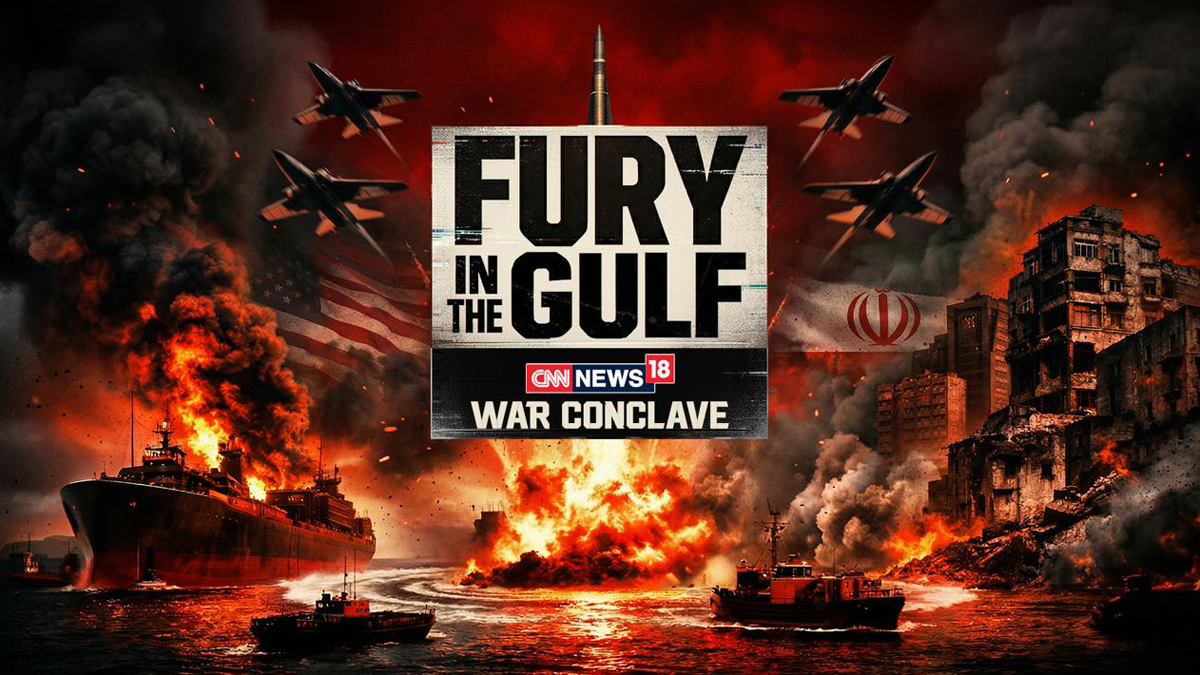
MUMBAI: CNN-News18 is set to host a special three-hour broadcast, Fury in the Gulf – War Conclave, on April 7, aiming to decode the escalating West Asia crisis and its far-reaching implications for India.
Scheduled from 4:00 PM to 7:00 PM, the conclave comes at a time when tensions between Iran and the United States are reshaping global geopolitics and triggering economic uncertainty. With India’s deep energy ties, trade links and large diaspora in the Gulf, the developments carry significant domestic relevance.
Built around the theme ‘Conflict, Consequences, and The Future,’ the programme will feature six curated sessions combining one-on-one interviews and panel discussions. The focus is to cut through the clutter and offer viewers a clearer understanding of the fast-evolving situation.
Key sessions include ‘Diplomacy in Times of War’ featuring Shashi Tharoor, and ‘World After the Iran Conflict’ with voices such as Ram Madhav, Reuven Azar, representatives from the European Union and the Iranian Deputy Envoy. Another session titled ‘Another Dunkirk?’ will bring together K. J. S. Dhillon and Jitin Prasada among others.
CNN-News18 editorial affairs director Rahul Shivshankar said, “In times of war, clarity becomes the most powerful tool. Fury in the Gulf – War Conclave brings together credible voices to address the questions and confusion that arise amid an overwhelming influx of information.”
He added that the initiative is aimed at delivering “facts, perspective, and insight” at a time when misinformation can easily cloud public understanding.
Echoing the sentiment, CNN-News18 CEO– English and business news Smriti Mehra said the conflict marks a defining global moment, with consequences that extend well beyond the region. She noted that the conclave seeks to present the crisis with “depth, nuance and responsibility” so audiences can better grasp its real-world impact.
As geopolitical tensions continue to dominate headlines, the conclave positions itself as an attempt to bring order to the noise, offering viewers a structured, insight-led look at a complex and rapidly shifting global situation.






