I&B Ministry
Airwaves are public property & community radio stations are an extension of that concept: Jaitley

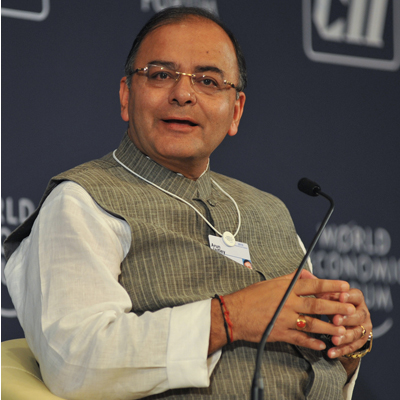
NEW DELHI: Information and Broadcasting Minister Arun Jaitley said today that the government was committed to ensuring that ‘airwaves’ constitutes property of the people or the community and there is no interference of the state in creating any monopoly in this regard.
He said Community Radio as a medium of communication constituted an integral component of the right to free speech and expression. This medium of information dissemination formed a part of the “Airwaves”.
Inaugurating the 5th National Community Radio Sammelan on the theme “Community Radio for Good Governance” here, Jaitley said community radio as a platform of communication formed a part of the tripartite stakeholder partnership: the broadcaster, the person disseminating the information and the listener, who was keen for information, knowledge and dissemination of facts.
Jaitley said radio had acted as an instrument for dissemination in the past, and would also do so in the future, in which community radio would play a critical role for the expansion of radio content. Community Radio as a concept was vibrant as it facilitated the expansion of an idea – a concept that discussed a range of issues including culture, languages and practices, amongst others.
He hoped the Sammelan would provide a roadmap to the ministry to fine tune the blueprint for policy interventions in the future.
The Minister said the Government was committed to ensuring that the sector was expanded and strengthened to achieve the goals of inclusive growth through social change. The Sammelan also offered an opportunity to highlight the relevance of flagship schemes through the medium to people, who in turn could benefit by such interventions. Sessions on Agriculture and Community Radio, Role of the Medium in promoting Water and Sanitation with emphasis on ‘Swachh Bharat Abhiyaan’ and the relevance of the medium in the context of Jan Dhan Yojana were innovations adopted for the Conference.
A compendium on ‘Community Radio for Good Governance’ was released on the occasion by Jaitley and Minister of State for I&B Rajyavardhan Rathore.
I&B Secretary Bimal Julka said the Community Radio Model offered a third model of radio broadcasting in addition to commercial and public broadcasting. As a platform for communication they served geographic communities and communities of interest. Community radio, rural radio, cooperative radio, and development radio hold the key to unite India’s linguistic and ethnic diversity and improve economic development.
Referring to a Supreme Court ruling of 1995, Julka said airwaves were declared public property to be used for promoting public good and ventilating plurality of views, opinions and ideas, and the role of community radio was important in this context.
He also outlined the recommendations of the Telecom Regulatory Authority of India (TRAI) on Community Radio Stations (CRS) permissions and related issues. The terms of permission are to continue to be for five years; the duration of advertisement on a CRS is to continue to be five minutes per hour; the stipulations that rates for advertisement approved by the Directorate of Advertising and Visual Publicity on CRS are lowest and exclusive to DAVP are to be relaxed in case of CRS. Julka specifically mentioned the role and relevance of CRS during disaster management situations and said that as the medium played a critical role in the given situations consultations with NDMA would be held to outline the detailed guidelines for the said purpose.
He also referred to the TRAI recommendations related to the allowance to be given to CRS to broadcast news and current affairs content, sourced exclusively from All India Radio (AIR) in its original form or translated into in its local language/ dialect. This would enhance the mandate of the medium in the context of operating partnership with AIR.
Jaitley and Rathore also presented the 4th National Community Awards in various categories.
The Conference assumes importance in view of outlining the vision for community radio in India. One of the key highlights of the three day Sammelan is the session on Access to Justice for poor and marginalized communities in the context of the role of community radio and the work done by the National Legal Services Authority. The Conference will also deliberate upon the integration of CRSs and PRIs. The role of CR stations in promoting livelihood generation and other economic activities would be discussed. Sessions on Community Learning, Emerging Demography and Migration would provide critical inputs in taking the process forward.
The Sammelan has brought together Community Radio Operators, policy makers, Ministries/Departments, the UN and other international bodies like UNICEF and UNESCO and other stakeholders for exchange of ideas and cross learning.
The sessions will highlight the vision of the Community Radio movement in India and its role in setting the agenda on the development discourse at the local level.
The Ministry has been organizing the National Community Radio Sammelan every year since 2011. The Ministry has also been organizing intensive Awareness Workshops in various parts of the country to increase awareness about Community Radio. Sixty three workshops have been organized so far. These workshops have proved to be useful not only to operate CRS in an effective way.
The Ministry has so far issued 409 permissions to set up community radio stations in the country. Out of this, 179 stations have become operational while others are in the pipeline.