iWorld
Airtel’s mobile services revenue grew by 20.3 per cent in Q2’22


Mumbai: Bharti Airtel Ltd (Airtel) has announced its audited consolidated second quarter results for the quarter ended on 30 September. The telecom company’s India revenues grew by 18.3 per cent year-on-year (YoY) to reach Rs 19,890 crore and mobile revenues grew by 20.3 per cent YoY on the basis of increase in ARPU and strong 4G customer addition.
“The ARPU for the quarter came in at Rs 153 compared to Rs 143 in Q2’21 on a comparable basis, validating our strategy of focusing on quality customers,” the company said in a statement on Tuesday.
The consolidated revenues for Q2’22 at Rs 28,326 crore grew 18.8 per cent YoY on a comparable basis and 13.0 per cent YoY on a reported basis. Consolidated mobile data traffic at 10,943 PBs in the quarter with a healthy YoY growth of 47.8 per cent.
“The company continues to gain a strong share of the 4G customers in the market” it said. 4G data customers increased by 26.1 per cent YoY to 192.5 million. Over the last four quarters, the company has added 39.9 million 4G customers to its network. “ARPU continues to be the best in industry, average data usage per data customer at 18.6 GBs/month and voice usage per customer at 1,053 mins /month,” a statement further said.
Airtel has rolled out additional ~3,500 towers and ~56K mobile broadband base stations in the quarter. Several initiatives have also been undertaken to improve network quality – leveraging digital tools/probes to monitor and improve customer experience and scaling up Vo-Wi-Fi adoption to improve indoor experience. “We now have over 33 million customers using our Vo-Wi-Fi services,” it said.
Homes business segment witnessed a revenue growth of 21.3 per cent YoY with highest ever customer net additions of ~467K during the quarter to reach a total base of 3.8 million. It said, “We continued to expand our offering at a fast pace to non-wired cities through the LCO model. We now live in 436 cities through this model, with overall operations in 523 cities.”
Airtel Business saw 11.5 per cent YoY growth, driven by demand for connectivity, connectivity related solutions and CPaaS (Communication Platform as a Service) across global business and domestic businesses, said the company.
Airtel announced investment of Rs 5,000 crore on ‘Nxtra by Airtel’ network of hyperscale and edge data centres by tripling the data centre capacity to over 400MW by 2025 to meet the surging demand.
Digital TV witnessed a revenue growth of 5.7 per cent YoY and continued to strengthen its leadership position with a customer base of 18 million at the end of quarter.
The digital services offerings of Airtel have a customer base of over 180 million MAUs across key digital assets – Thanks, Wynk, Xstream. “There are over 1.2 million retailers transacting and making payments every day on Mitra App,” said the company.
During the quarter, Airtel Payments Bank turned profitable with a strong total customer base of over 115 million and highly engaged Monthly Transacting Users (MTU) base of over 31 million.
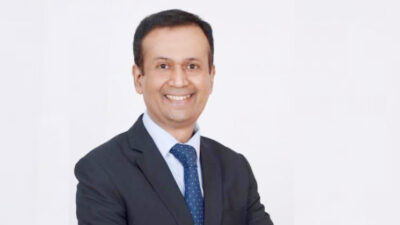
“We welcome the reforms announced by the government for the telecom industry and believe this will add to the ability of the industry to invest so as to drive India’s digital story,” said Bharti Airtel Ltd managing director and chief executive officer for India and South Asia Gopal Vittal. “We hope the reforms momentum will continue and all longstanding issues impacting the industry will be addressed.”
“Our strategy of focusing on quality customers has been validated by the strong price flow and ARPU increase that we have seen in our wireless business. The step up in performance of our enterprise and homes business reflects the resilience and strength of our overall portfolio. Even more exciting is the way our new businesses – Airtel Payments Bank, Data Centres and revenues from digital services are shaping up. With a future proofed 5G network, we are well positioned to build a strong Airtel of the future,” he added.