Broadband
Airtel mobile & DTH subs up, Jio-hit data customers & rev drop

BENGALURU: Saying that Bharti Airtel Limited (Airtel), once touted as the largest cellular operator in the country both in terms of revenue as well as subscriber numbers, has had a tough battle with Mukesh Dhirubhai Ambani’s Reliance Jio Infocomm would be making an understatement. Ambani’s largest startup in the world ever has given a run for the money to all its telecom and internet services provider peers in the country.
As on 31 March 2017 (Q4-17, FY-17 – quarter and year ended 31 March 2017), the company had 273.6 million (27.36 crore) GSM customers in India as compared to 251.2 million (25.12 crore) in previous year, an increase of 8.9 percent. DTH subscribers for Airtel’s Digital TV Services segment (Airtel DTH) increased 9.3 percent to 12.815 million (1.2815 crore) at the end of the FY-17 from 11.725 million (1.1725 crore) at the end of FY-16. The company had 57.4 million (5.74 crore) data customers (21.0 percent of total customers) as on March 31, 2017, representing a decline of 1.5 percent as compared to 58.2 million (5.82 crore) (23.2 percent of total customers) at the end of the previous year.
The total MBs on the network for the full year FY-17 increased by 47.3 percent to 733.1 billion (733,100 crore) MBs as compared to 497.7 billion (497,700 crore) MBs in the previous year. Mobile Data usage per customer for the full year FY-17 witnessed an increase of 31.0 percent to 1,049 MBs per month as compared to 801 MBs in the previous year. Data ARPU decreased by 4.5 percent to Rs 185 during Fy-17 from Rs 194 in the previous year.
Revenue from operations (operating revenue) declined 12.1 percent year-on-year (y-o-y) to Rs 2,193.46 crore in Q4-17 from Rs 2,495.96 crore in the corresponding year ago quarter. FY-17 operating revenue declined 1.1 percent to Rs 95,468.3 crore from Rs 96532.1 crore in the previous year. PAT for Q4-17 declined 69.2 percent to Rs 470.6 percent (2.1 percent of operating revenue) from Rs 1,462 crore (5.7 percent of operating revenue) in Q4-16. PAT for FY-17 declined 38.5 percent to Rs 4,241.4 crore (4.4 percent of operating revenue) from Rs 6,893 crore (7.1 percent of operating revenue).
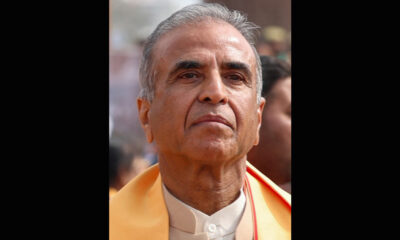
In its earnings statement, Airtel’s MD and CEO, India & South Asia Gopal Vittal said, “The sustained predatory pricing by the new operator has led to a decline in revenue growth for the second quarter in a row. The telecom industry as a whole also witnessed a revenue decline for the first time ever on a full year basis. The deteriorating health of the industry was compounded by the tsunami of incoming voice traffic from the new operator as a result of which significant investments had to be made just to carry the incoming traffic on our network. The net result of this was a revenue decline of 7.1 percent in Q4 even as EBITDA margins eroded by 2.9 percent. FY-17 saw a muted top line growth of 3.6 percent vs the double digit growth witnessed in preceding years.
Our long term commitment to provide the best experience to our customers continues to drive all our actions in every single aspect of the business. This belief coupled with brilliant execution of our people has led to acceleration in market share in an industry that is now rapidly consolidating,” he added.
Airtel’s DTH segment reported 10.4 percent y-o-y growth in operating revenue to Rs 865.7 crore in Q4-17 from Rs 784 crore in the corresponding year ago quarter. Earnings before interest and taxes (EBIT) in Q4-17 increased 35.4 percent to Rs 97.5 crore from Rs 72 crore in Q4-16. The DTH segment’s revenue for fiscal 2017 increased 17.6 percent to Rs 3,430.6 crore as compared to Rs 2,917.8 crore in FY-16. Average revenue per customer (ARPU) in FY-17 increased to Rs 231 from Rs 226 in the previous year.
The company’s capex in its DTH segment in FY-17 declined to less than half (declined by 52.9 percent) to Rs 138.6 crore as compared to Rs 294.3 crore in FY-16. Cumulative investments in the DTH segment at the end of FY-17 reached Rs 7,351.3 crore.
Note: The unit of currency in this report is the Indian rupee – Rs (also conventionally represented by INR). The Indian numbering system or the Vedic numbering system has been used to denote money values. The basic conversion to the international norm would be:
(a) 100,00,000 = 100 lakh = 10,000,000 = 10 million = 1 crore.
(b) 10,000 lakh = 100 crore = 1 arab = 1 billion…