Broadband
After telecom, Jio to bite into broadband and TV
MUMBAI: After disrupting the telecom sector, Muskesh Ambani led Reliance Jio is now heading towards the fixed broadband and television space.
The company will launch high speed fibre to the home (FTTH) broadband in more than 30 cities early next year, to offer TV as well as internet to subscribers, it is learnt.
As reported by Business Standard, Jio has mapped out a plan to address over 100 million TV households across these cities, including tier II and III, by ensuring dense fibre presence for last-mile connectivity to homes. In the first phase itself, at least 50 million households will be offered the service, according to sources in the know.
Jio has already spread out over 300,000 kilometres of optic fibre (half of which is through a long-term contract with Anil Ambani’s Reliance Communications).
In his annual speech, Reliance Industries chairman Mukesh Ambani indicated that Jio was on track to offer high-speed broadband services. The infrastructure was in place and it would be the next big monetisation opportunity for the company, he had said.
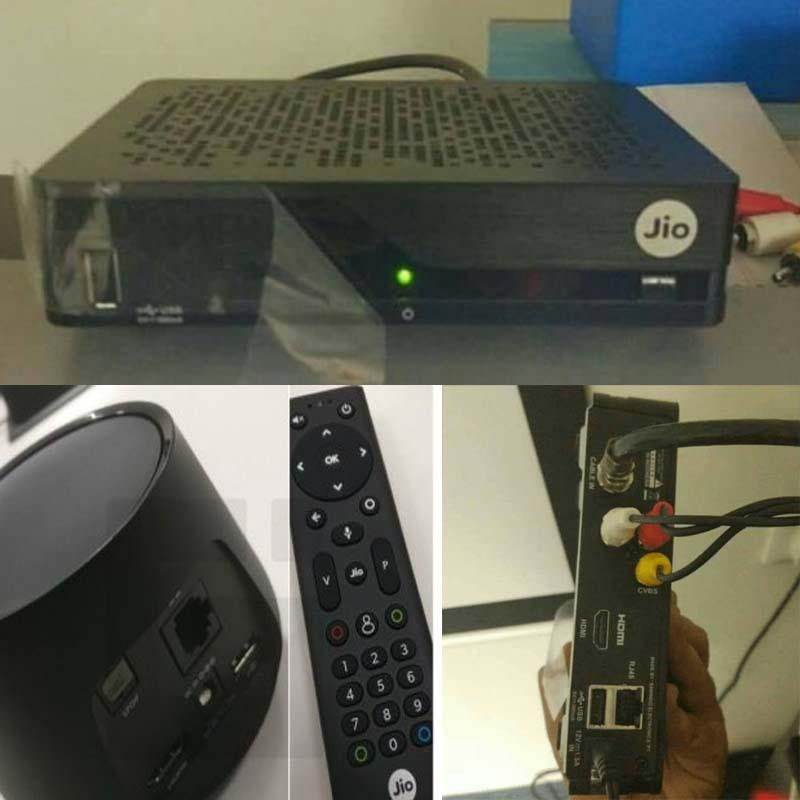
According to the news report, Jio is expected to woo customers with premium offers such as ultra-high speed of up to 1 gigabit per second. The set-top box, as part of the package, will be a home entertainment hub – offering TV channels, high-end gaming and video on demand, among others.
Jio is eyeing an average revenue per user of around Rs 1000 to Rs 1500 per month from subscribers (which includes internet and TV), as their usage of data goes up, a source said.
Trials are being conducted in Mumbai and Delhi with only internet services at speeds of 100 megabits per second and 100 gigabytes of data free of cost. It is providing a special router, which connects multiple devices at a refundable deposit of Rs 4500. With a multi-service operator (MSO) licence in place, it will also offer TV services.
Representatives of conventional TV industry cite numbers to back their claim that this is a tough game. While there are 180 million TV households in the country, subscribers fork out an average of only Rs 300- 400 a month for as many as 400 to 500 channels currently, they say.
Competitors also say that currently, only three million subscribers cough up over Rs 1000 for high-speed broadband internet and only two million rustle up a similar amount per month for DTH or cable. So, the market that Jio is looking to address is currently niche and a small one.
“Deploying FTTH is an expensive business and obviously Jio is making large investments. So, they have to get an adequate return on their investments. They might offer free broadband like they are doing currently and as they did earlier in the mobile space,” said a top industry executive to BS. But they will have to increase tariffs to make money and that might not translate into mass adoption.
If the experiment succeeds, the number of households with TV and broadband, currently growing very slowly, could just explode, he said.

Broadband
Tejas Networks names Arnob Roy as MD and CEO, overhauls top leadership team
The Bengaluru-based telecom gear maker reshuffles its entire top team even as quarterly revenue collapses by 83 per cent
BENGALURU: Tejas Networks is changing the guard at the top, and doing so at speed. The Bengaluru-headquartered telecom equipment maker has elevated Arnob Roy as managing director and chief executive officer, effective April 15, 2026, for a term running through to August 3, 2028, and in the same breath announced new appointments across operations and finance. The timing is pointed: the company is navigating one of the roughest patches in its recent history.
Roy steps up from his role as executive director and chief operating officer, a position he has held since March 2019. He brings more than three decades of experience in the high-technology sector across research and development, operations, and sales. His predecessor, Anand Athreya, resigned last year citing personal reasons and was relieved on June 20, 2025, leaving a gap at the top that has now been formally filled.
The numbers Roy inherits are sobering. Tejas posted a net loss of Rs 211.3 crore in the fourth quarter of fiscal year 2026, a near-194 per cent widening year on year from Rs 71.8 crore in the same period a year earlier. Revenue for the quarter collapsed 82.6 per cent year on year to Rs 333 crore, down from Rs 1,907 crore. EBITDA swung to a loss of Rs 118.2 crore against a profit of Rs 121.5 crore a year ago. The culprit is not hard to identify: Tejas has derived the bulk of its revenue from BSNL’s fourth-generation network project, delivered as part of a Tata Consultancy Services-driven consortium, and that roll-out is now winding down.
Roy, speaking during a post-earnings conference call with analysts, was candid about where the company has been. “The BSNL 4G network went live across 100,000 sites. We deployed our largest indigenous router networks in the country through the BSNL MAN network, as well as in the BharatNet Phase 3 network,” he said, adding that Tejas had also successfully rolled out its 400G and 800G DWDM equipment in domestic and international markets, and continued the deployment of what it describes as the world’s largest satellite IoT network through its vehicle tracking system solution.
The pivot to new revenue streams is already under way. Tejas has partnered with Japan’s Rakuten Symphony and NEC Corporation to push deeper into international markets, with several Open Radio Access Network trials ongoing, one of which concluded recently. The company is also diversifying across equipment categories and geographies to sustain momentum as the BSNL chapter closes.
To prosecute that strategy, Roy needs a full team around him. Preetham Uthaiah has been appointed chief operating officer, moving up from his current role as vice president of product management for wireless products at Tejas Networks. Uthaiah brings nearly 30 years of global experience spanning engineering, product management, and business development across India and the United States. Before joining Tejas Networks, he served as executive vice president of product management, marketing, and strategy at Saankhya Labs, and held senior roles at Tech Mahindra on both sides of the Atlantic. He holds an MBA from Arizona State University and a degree in electronics and communications from Karnatak University.
On the finance front, AVS Prasad has been approved as chief financial officer, effective May 16, 2026, succeeding Sumit Dhingra, who has resigned. Prasad, currently serving as finance controller at Tejas Networks, brings over 27 years of experience within the Tata Group across telecom, aerostructures, and defence. A company secretary and cost and management accountant by training, he has spent more than 15 years in senior finance roles including CFO and financial controller positions, with expertise spanning corporate finance, treasury management, regulatory compliance, internal audit, and governance.
New chief executive, new chief operating officer, new chief financial officer — all installed in a single move, at a moment when the company’s largest revenue source is drying up and the next chapter remains unwritten. Tejas Networks has placed its bets. Now it has to deliver.