News Broadcasting
After hearing Zee’s side, case adjourned to Monday

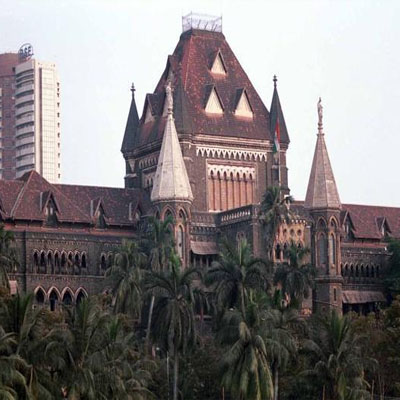
MUMBAI: The Bombay High Court has adjourned hearing in the much-contested BCCI cricket telecast rights case to Monday after Zee Telefilms exhaustively put forward its argument.
Arguing before a two-judge Bench of Chief Justice DS Bhandari and Justice DY Chandrachud, Zee’s counsel argued that ESPN has not produced a ‘clean signal’ of live cricket matches completely in-house. Neither the West Indies-India series nor the South Africa-India and England matches were exclusively produced by ESPN. It was only in the Asia Cup that the production was done in-house.
Zee raised the point that ESPN had sidelined the consortium clause and was creating confusion over production facilities. The ‘hawk eye’ camera and other facilities belonged to proprietary companies and neither to ESPN or to Zee. ‘Today to produce the match for telecasting, cameras are planted. All of us rent out those facilities. It is only a question of how much each of us do,’ argued the Zee counsel.

ESPN had been showing cricket in India so far. Zee has a presence in 88 countries and has been showing cricket when India plays overseas. “If BCCI is entertaining Zee today, the board obviously considers us eligible,” said the Zee counsel.
Justice Chandrachud queried Zee counsel on whether the company had experience in TV production of cricket matches as Zee had mentioned ‘telecast but no production’ experience in its bid for the BCCI rights. Zee counsel admitted that Zee had never produced clean signals. “But neither ESPN nor Zee have produced clean signals for two years,” the counsel said.
Zee pointed out that PriceWaterhouse Coopers was the global auditor of ESPN and had a conflict of interest. “PwC had not sent any reply to Zee on its inquiries. But ESPN had got a response from PwC in a letter on September 6,” the counsel said.
India has emerged as the largest commercial market for cricket and accounts for 80 per cent of the worldwide revenue for the sport. BCCI has put up tenders and an Indian-owned company with a homegrown network with large production facilities has bid. “Let’s not miss the wood for the trees,” the Zee counsel said. “The public interest has suffered. ESPN has put no argument saying that it has been detrimental to public interest. They are only working for their interest and monopoly.”
Earlier, ESPN counsel argued that the licence was under Zee TV, USA. Zee had never done any cricket production, he added.







News Broadcasting
UDF poised to return to power in Kerala, says Manorama-CVoter survey
Massive opinion poll projects shift in Kerala politics ahead of 2026 Assembly elections.
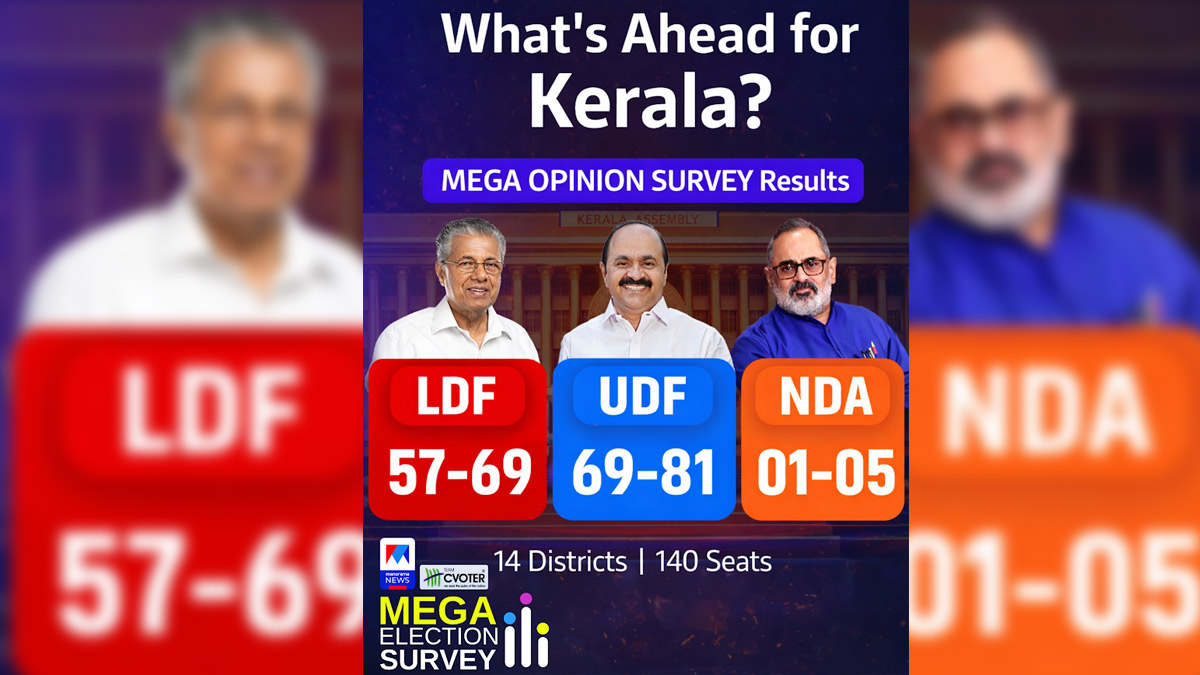
MUMBAI: The winds of change appear to be blowing through Kerala’s political landscape and this time, they seem to favour the United Democratic Front. A comprehensive mega opinion survey conducted by Manorama News in partnership with CVoter projects a potential comeback for the UDF in the upcoming Kerala Legislative Assembly Elections 2026. The survey, covering all 140 constituencies with a massive sample size of nearly 90,000 respondents, predicts the UDF could win between 69 and 81 seats.
The ruling Left Democratic Front (LDF) is expected to secure 57 to 69 seats, a significant drop from the 99 seats it won in the 2021 elections. This would mean the LDF losing 30 to 42 of its sitting seats. Meanwhile, the National Democratic Alliance (NDA), which drew a blank in 2021, is projected to open its account with 1 to 5 seats.
Region-wise, the UDF is expected to make strong gains in Malabar, winning 25 to 34 out of 48 seats, and in Central Kerala, where it could bag 29 to 33 out of 53 seats. In South Kerala, the LDF is likely to retain an edge with 21 to 25 seats, while the UDF may improve to 12 to 16 seats. The NDA could pick up 1 to 3 seats in the southern region.
The survey was conducted between 14 and 26 March 2026, with additional tracker and snap polls carried out from December 2025 to March 2026. A total of 89,693 respondents participated, ensuring representation across all demographics and social segments.
Manorama News has a strong track record of accuracy, with its previous projections closely matching the actual results of the 2019 and 2024 Lok Sabha elections as well as the 2021 Kerala Assembly polls.
In Kerala’s famously fierce political battles, this survey suggests the pendulum may be swinging back. Whether the final verdict matches these numbers or throws up another surprise, one thing is clear, the 2026 Assembly elections are shaping up to be one of the most keenly watched contests in the state’s history.






