International
ABC’s ‘Oscars Backstage’ to stream live on Facebook

MUMBAI: The Academy, ABC Entertainment and Facebook are partnering to make this year’s The Oscars Backstage on ‘Watch ABC’ the most “Likeable” ever. The curated “Director’s Cut” feed from The Oscars Backstage – which delivers three channels of live video feeds from over 20 cameras throughout the Dolby Theater to ‘Watch ABC’ for desktop and mobile devices – will also stream on the ABC Network’s Facebook Page and be part of the Facebook Trending Oscars experience (www.facebook.com/oscars), which gives fans one place to connect in real time as they watch the night unfold.
“We’re excited to bring viewers backstage and provide exclusive access to all those memorable, talked-about Oscar moments – the ones that happen on stage as well as the stories that play out behind-the-scenes,” said Academy of Motion Picture Arts and Sciences chief marketing officer Christina Kounelias.

“We know that a large percentage of people – 70 per cent of tablet and smartphone owners – are on their devices while watching TV. The Oscars Backstage on ‘Watch ABC’ provides them with an unparalleled social experience around Hollywood’s biggest night. And thanks to our ongoing partnerships with MPVDs, including today’s launch of ‘Watch ABC’ with DirecTV, and this year’s arrangement with Facebook, we’re able to deliver it to more people than ever before,” said Disney/ABC Television Group EVP and chief product officer – digital media – Albert Cheng.
On the red carpet, ABC will incorporate exclusive, real-time Facebook data of the most buzzed about nominees during the pre-show. In addition, fans will be able to ask questions of their favorite nominees via the “Good Morning America” Facebook page, with the potential to see their question answered live on the red carpet.
Embeddable video clips of the most memorable moments of the awards show – including all musical performances – will be posted almost immediately after they air to Oscar.com/Video, with a selection of those also being shared on the Facebook pages. Additionally, this is the first year that The Oscars and The Oscars Backstage will stream with the recently launched ‘Watch ABC’ features “Social Lens” and “FastShare,” which provide fans with an even more personalized social experience.
This year’s The Oscars Backstage hosts and correspondents include:
• “Good Morning America’s” weekend edition co-anchor Paula Faris and Fusion network host Pedro Andrade will host “The Director Cut” feeds during both the pre-show and awards telecast.
Faris is the co-anchor of “Good Morning America’s” weekend edition, and reports across ABC News broadcasts and digital platforms. She joined ABC News in January 2012 as co-anchor of ABC News’ “World News Now” and “America This Morning.”
A Brazilian journalist originally from Rio de Janeiro, Andrade is a host of the Fusion network, which is a multi-platform media company that serves a young, diverse, and inclusive millennial generation. Fusion delivers a unique mix of news, pop culture, and satire content that is both smart and irreverent across its TV and digital platforms (fusion.net). Prior to Fusion, Andrade anchored NBC’s weekly luxury lifestyle program “LX.TV 1st Look” for 5 years.
• “Good Morning America” and ESPN contributing editor Chris Connelly is returning as the official greeter of The Oscars Red Carpet, which includes welcoming nominees, presenters and performers to the show.
• Actor Matt McGorry will be positioned in the Fan Bleachers on the Red Carpet. McGorry stars as Asher Millstone in ABC’s series “How to Get Away with Murder.” He can also be seen playing the post-military newbie corrections officer John Bennett in the Netflix original series “Orange is the New Black.”
• Nick Axelrod will serve as The Oscars Backstage fashion correspondent. Axelrod is the creator and regular host of Yahoo Style’s popular celebrity interview series, “I Yahoo’d Myself.” He is also the Co-Founder and former Editorial Director of the award-winning beauty website Into The Gloss, which was nominated for a 2014 Webby award. He has also served as Senior Fashion News Editor at ELLE, spent three years at Women’s Wear Daily (WWD), and has also contributed to publications including ELLE Accessories and The Hollywood Reporter.
• ABC News Correspondent Sara Haines will be contributing to the Backstage feed. In addition to reporting for “Good Morning America” during the week, Haines is the Pop News anchor on the weekend edition of “GMA.”
In addition to The Oscars Backstage feeds, ‘Watch ABC’ users who have verified with a participating pay TV provider in one of the eight ABC Owned markets – Chicago, Fresno, Houston, Los Angeles, New York City, Philadelphia, Raleigh-Durham and San Francisco – can also access a live feed of the Oscars preshow, full awards telecast and “Jimmy Kimmel Live: After the Oscars” as part of the regular ‘Watch ABC’ service. Live streaming is currently available through Comcast, Cablevision, Cox Communications, Charter Communications, DISH, DirecTV, Midcontinent Communications, Verizon FiOS, Google Fiber and AT&T U-verse, among others. Once aired, the full Oscars telecast will be available on demand via ‘Watch ABC’ for verified viewers for three days. ‘Watch ABC’ can be accessed from Oscar.com, ABC.com, or via the ‘Watch ABC’ app, which can be downloaded for free at Google Play and the App Store. Verified viewers then log in using their cable or satellite subscription username and password.
All ‘Watch ABC’ fans can access the new enhanced social features. Social Lens integrates fan’s personal Facebook and Twitter into the ‘Watch ABC’ app so they can socialize with their friends while they watch The Oscars – all on one device. FastShare enables fans who are watching on demand to easily access and share clips of their favorite in-show moments as they are watching.
Video highlights from the telecast and The Oscars Backstage will also be available as embeddable clips on Oscar.com/Video almost immediately as they air. Full clips of the show’s musical numbers, including performances from Neil Patrick Harris, Jennifer Hudson, Anna Kendrick, Tegan and Sara and comedy-music trio The Lonely Island, Adam Levine, Rita Ora, Tim McGraw, Lady Ga Ga, Common and John Legend, will be featured in a dedicated “Music Moments” section on Oscar.com that includes in-depth video and photo coverage of past music winners.
Oscar.com is also showcasing nominees in their own words with a collection of official nominee questionnaires, including submissions from Julianne Moore, Robert Duvall, Patricia Arquette, Keira Knightley, and John Legend, among many others. To add to the fun, insanely addicting quizzes will challenge fans knowledge of this year’s nominees. The hugely popular “My Picks” interactive ballot is also live. Friends can view and share the ballot on Facebook, which will update in real time on Oscar night, ensuring that the most competitive Oscar handicappers are instantly aware of their ranking among friends.
The 87th Oscars will be held on 22 February, 2015, at the Dolby Theatre at Hollywood & Highland Center in Hollywood.
On 23 February, “LIVE with Kelly and Michael” will continue its awards season tradition with the fourth edition of “LIVE’s After Oscar Show.” The 10th annual “Jimmy Kimmel Live: After the Oscars” airs 22 February on ABC.





International
Moskino and Bollywood: Moscow Film Cluster and Film City Mumbai signed a cooperation agreement
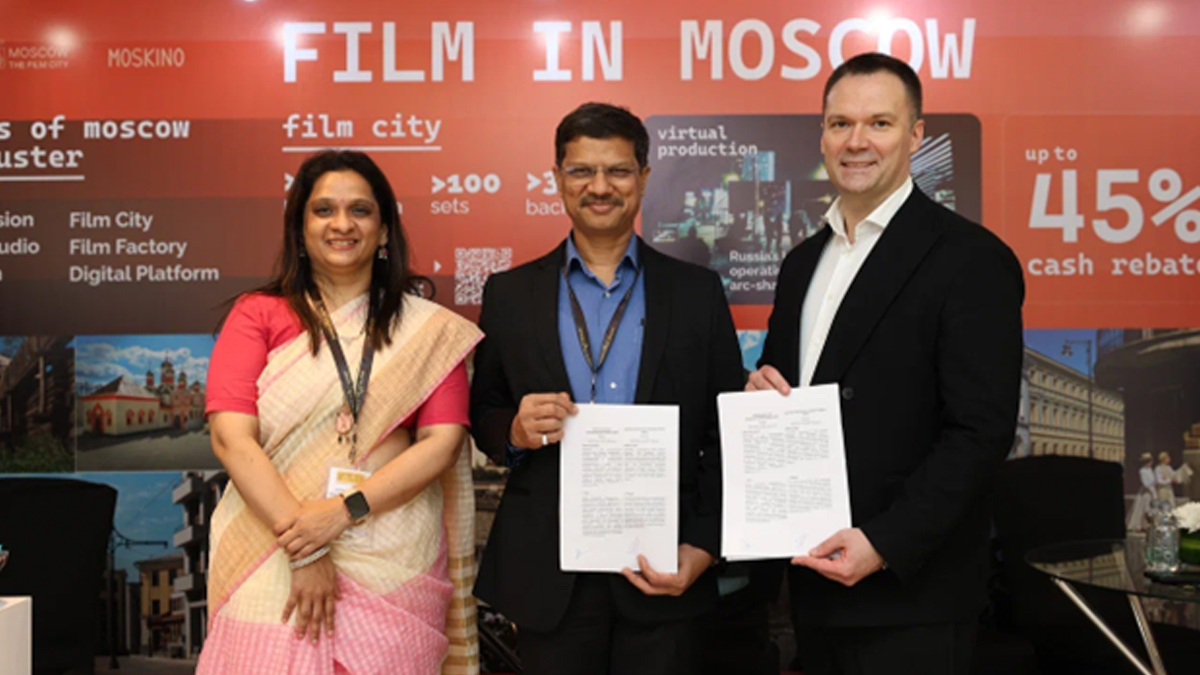
Moscow Film Cluster has signed a cooperation agreement with Film City Mumbai. The parties agreed to cooperate in developing the film industry, promoting shooting locations and supporting filmmakers.
The memorandum was signed on the sidelines of the India International Film Tourism (IIFTC) Conclave in Mumbai. At this forum, the Moscow Film Cluster presented Moscow’s opportunities for film shooting, including infrastructure projects such as Film City Moskino and Film Factory. Special attention was paid to the Moscow rebate system – up to 45% – and the co-production development.
Memorandum of Understanding between the Film City and Moscow Film Cluster provides for the establishment and development of mutually beneficial cooperation in the film industry development, including joint promotion of shooting locations, support for filmmakers, implementation of marketing and industry events, development of incentive support measures and strengthening of economic and cultural interaction between India and Moscow.
The parties also intend to promote the development of the audiovisual sector through the exchange of experience, joint initiatives and the search for opportunities to create new industry partnerships and clusters.
Moscow Film Cluster is a major city initiative led by Moscow Mayor Sergei Sobyanin to develop the capital into a global cinema hub. It brings together key production infrastructure – such as the Moskino Film Сity, Film Factory and Gorky Film Studio – along with the Film Commission, digital platform and cinema chain to streamline shooting, support productions and attract international filmmaking to Moscow.
Also, Moscow offers a rebate of up to 45%: 30% as direct production cost compensation, up to 15% for visa and accommodation support. The Moscow Image Grant provides up to $255,000 for films showcasing iconic city views.
The Moscow Film Cluster booth attracted considerable attention from Indian producers and studios. Over 80 business meetings were held, including those with major Indian companies.
One of the booth guests was the famous Indian actress Khushboo Sundar, known to Soviet and Russian audiences for her role in My Soul and considered the leading star of Tamil cinema, in whose honor one of the local temples was even built. Prithul Kumar, representative of the Indian Ministry of Information and Broadcasting and one of the officials responsible for regulating the film industry in the country, also expressed interest in the development of the Moscow Film Cluster.
One of the highlights of the India International Film Tourism Conclave was the awarding of The Greatest of All Time in the For Cinematic Excellence category. The movie was shot in Moscow. The jury members noted the project’s contribution to the development of tourism.
The shooting of The Greatest of All Time AGS by Entertainment was organized with the assistance of the Moscow Film Cluster and the Moscow Film Commission and took place in April 2024 on the streets of Moscow. The scenes were shot in such famous locations as Patriarch Bridge, Teatralnaya Square, Manezhnaya Square, Kazarmenny Lane, Podsosensky Lane, Nikolskaya Street and one of the festival venues of Moscow Seasons.
The Greatest of All Time became a landmark event in Indian box office history. It ranked fourth in box office earnings among all movies released in India in 2024 and is one of the most successful Tamil-language movies in history.
At the same time, the shooting of another joint Russian-Indian movie started at the Moskino Film City in Moscow. A film project dedicated to badminton became one of the first participants in the Moscow rebate program.
A project by Smena & WISH Media (Russia) and Kartina Entertainment And Sports Private Limited (India) will tell the story of a badminton player who travels to India with the Russian national team to compete in a tournament. Russian viewers will see for the first time the scale of sporting competitions in Asia, where badminton is a cult sport and draws packed stands of fans.
The agreement on the joint production of the Smash movie was signed st the Moscow International Film Week in August 2025. And as Moscow Mayor Sergei Sobyanin said, a rebate application was also submitted at that time to reimburse part of the costs incurred during the shooting process in the Russian capital.







