News Broadcasting
Aaj Tak turns three

MUMBAI: For the TV Today group, the year-end was an occasion to celebrate twice over. The group’s flagship channel Aaj Tak turned three on 31 December 2003.
Aaj Tak, which is the first 24-hour Hindi news channel to uplink from India, has also been rated one of the most successful brand launches during the past seven years in the Brand Derby study conducted in September 2003.
Accolades have been coming in for the channel with good frequency. At the prestigious The Indian Telly Awards 2003, the channel walked away with the Television News Channel of the Year award while Prabhu Chawla of Aaj Tak picked up the TV News Anchor of the Year award.
According to a company release, Aaj Tak claims to have a viewership of approximately 27.3 million viewers, which the release states, has managed to create a unique platform for the advertisers to reach out to their target audiences.
The release also claims that Aaj Tak commands approximately 30.4 per cent of the total news market. The release further attributes this high channel share to the superior understanding of the audience preferences based on the management’s experience in the news business, editorial excellence, independent distribution and sales capabilities, customised state-of-the-art technology and a motivated team of well-qualified professionals.
Further, TV Today’s initial public offer (IPO) in its birth month in 2003 turned out to be a runaway success. The IPO that closed on 27 December was over subscribed 36.26 times at Rs 95 per share. The TV Today Network (TVTN) has mopped up a whopping Rs 49 billion as a result of over subscription without any support from foreign institutional investors who were not allowed to participate in the initial offer.
TVTN had offered 14.5 million shares through the book-building route. The issue constituted 25 per cent of the fully diluted post issue paid-up capital of the Company. The shares will list on the Bombay Stock Exchange and the National Stock Exchange of India this month. TVTN will be allocating 50 per cent of the issue to qualified institutional investors while 25 per cent of the offering will be allocated to retail investors and non-institutional investors each.
With the news channel space getting divided amongst more and more players, it remains to be seen if Aaj Tak will carry on walking the talk in its fourth year as well.





News Broadcasting
CNN-News18 to host Fury in the Gulf conclave on West Asia crisis
Three-hour summit to unpack geopolitical fallout and impact on India
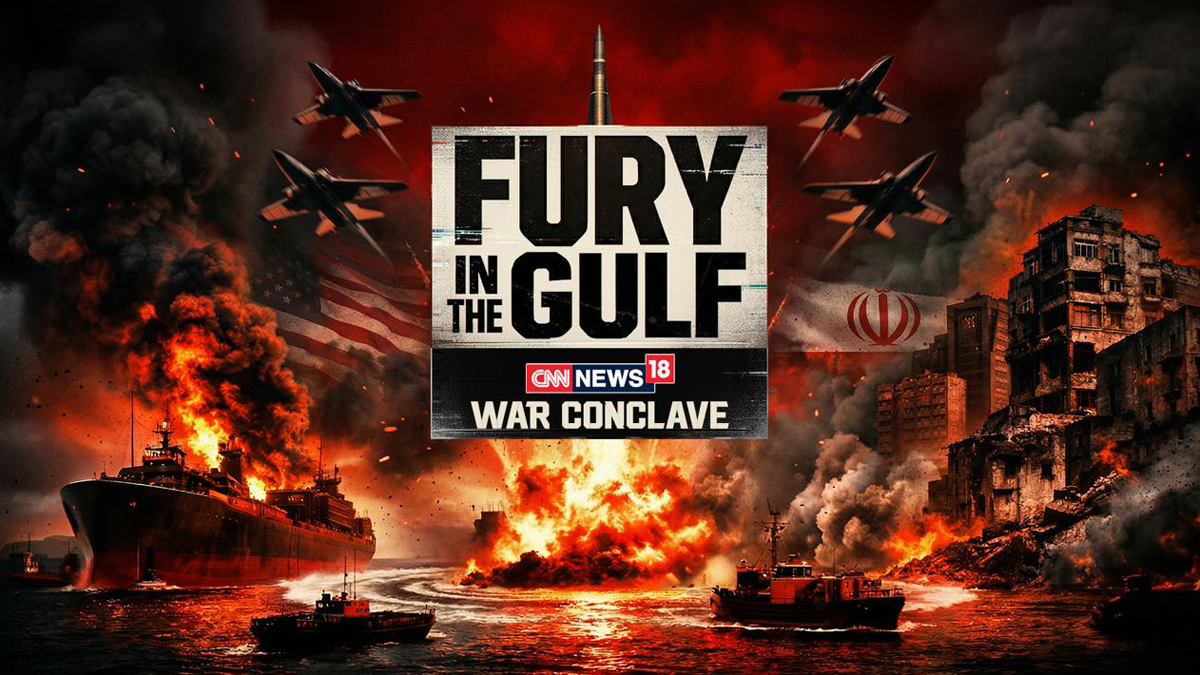
MUMBAI: CNN-News18 is set to host a special three-hour broadcast, Fury in the Gulf – War Conclave, on April 7, aiming to decode the escalating West Asia crisis and its far-reaching implications for India.
Scheduled from 4:00 PM to 7:00 PM, the conclave comes at a time when tensions between Iran and the United States are reshaping global geopolitics and triggering economic uncertainty. With India’s deep energy ties, trade links and large diaspora in the Gulf, the developments carry significant domestic relevance.
Built around the theme ‘Conflict, Consequences, and The Future,’ the programme will feature six curated sessions combining one-on-one interviews and panel discussions. The focus is to cut through the clutter and offer viewers a clearer understanding of the fast-evolving situation.

Key sessions include ‘Diplomacy in Times of War’ featuring Shashi Tharoor, and ‘World After the Iran Conflict’ with voices such as Ram Madhav, Reuven Azar, representatives from the European Union and the Iranian Deputy Envoy. Another session titled ‘Another Dunkirk?’ will bring together K. J. S. Dhillon and Jitin Prasada among others.
CNN-News18 editorial affairs director Rahul Shivshankar said, “In times of war, clarity becomes the most powerful tool. Fury in the Gulf – War Conclave brings together credible voices to address the questions and confusion that arise amid an overwhelming influx of information.”
He added that the initiative is aimed at delivering “facts, perspective, and insight” at a time when misinformation can easily cloud public understanding.
Echoing the sentiment, CNN-News18 CEO– English and business news Smriti Mehra said the conflict marks a defining global moment, with consequences that extend well beyond the region. She noted that the conclave seeks to present the crisis with “depth, nuance and responsibility” so audiences can better grasp its real-world impact.
As geopolitical tensions continue to dominate headlines, the conclave positions itself as an attempt to bring order to the noise, offering viewers a structured, insight-led look at a complex and rapidly shifting global situation.






