News Broadcasting
Aaj Tak distribution head Amitabh Srivastava quits

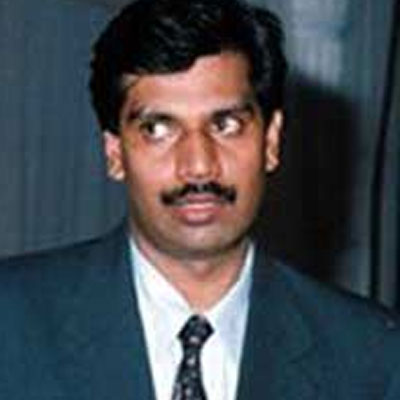
NEW DELHI: Even as the Aroon Purie-controlled TV Today Network hunts for a news director for its two news channels following the departure of Uday Shankar, comes the information that the company’s distribution and network development head Amitabh Srivastava, too, has quit to seek greener pastures.
Amitabh Srivastava – Another one out the door
TV Today sources confirmed that Srivastava put in his papers a few days back. When contacted by indiantelevision.com, Srivastava said, “I have had an enriching experience at TV Today. But now I am looking for a larger role to play in a company and not get restricted to just network development.”
Though Srivastava did not specify his next destination, he admitted that there are “at least three offers” which he is evaluating before taking a final call.

However, broadcast and cable industry sources hinted that the offers that Srivastava is talking about might include those from Zee Telefilms and the Adhikaris-promoted Mumbai-headquartered SAB TV. It has also been indicated that the former TV Today man is looking at expanding his work sphere to marketing too.
Srivastava, who has worked in various media companies, including BBC World’s Indian operation, was part of the core team at TV Today, which helped in launching first Aaj Tak and then its English sibling Headlines Today.
With Srivastava’s departure, TV Today seems to be experiencing another round of desertions not restricted to just to the editorial division. Apart from Srivastava, another senior person to quit TV Today in recent times was news director Uday Shankar, who is headed to take up the editorship of Star News — contrary to reports in a certain section of the media — after taking a short break.
IStill, TV Today’s CMD Aroon Purie brushed aside allegations that the deluge of desertions is linked to the company’s HR policy. Talking to indiantelevision.com, Purie said, “We train people, nurture them, make them a big name and then others take them away by offering fancy packages.”
However, he admitted that, at the moment, the outflow of people from TV Today is higher than the inflow of fresh and new talent. “Where else do you have a situation where there are five to six news channels competing for more or less the same people?” Purie countered.
Pointing out that the TV job market would correct itself sooner than later, Purie added the company would find a replacement for Shankar “very soon.”
“There are some interesting candidates (for the news director’s post) around in the industry and we’ll inform you soon,” he said.




News Broadcasting
CNN-News18 to host Fury in the Gulf conclave on West Asia crisis
Three-hour summit to unpack geopolitical fallout and impact on India
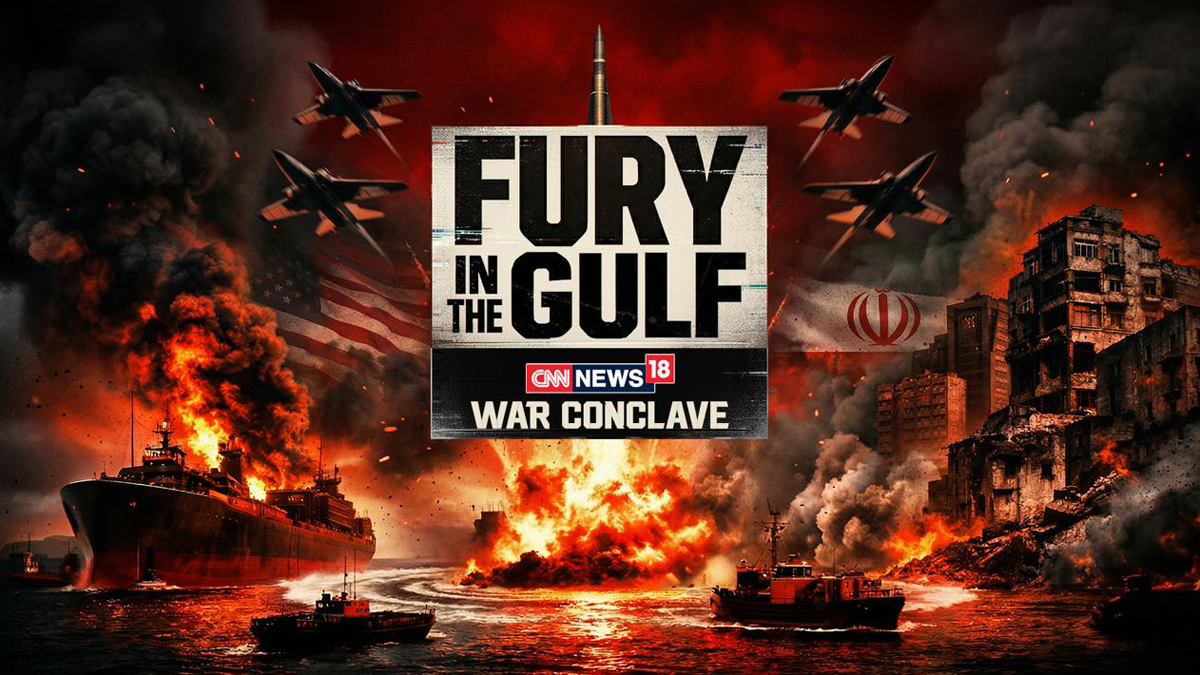
MUMBAI: CNN-News18 is set to host a special three-hour broadcast, Fury in the Gulf – War Conclave, on April 7, aiming to decode the escalating West Asia crisis and its far-reaching implications for India.
Scheduled from 4:00 PM to 7:00 PM, the conclave comes at a time when tensions between Iran and the United States are reshaping global geopolitics and triggering economic uncertainty. With India’s deep energy ties, trade links and large diaspora in the Gulf, the developments carry significant domestic relevance.
Built around the theme ‘Conflict, Consequences, and The Future,’ the programme will feature six curated sessions combining one-on-one interviews and panel discussions. The focus is to cut through the clutter and offer viewers a clearer understanding of the fast-evolving situation.
Key sessions include ‘Diplomacy in Times of War’ featuring Shashi Tharoor, and ‘World After the Iran Conflict’ with voices such as Ram Madhav, Reuven Azar, representatives from the European Union and the Iranian Deputy Envoy. Another session titled ‘Another Dunkirk?’ will bring together K. J. S. Dhillon and Jitin Prasada among others.
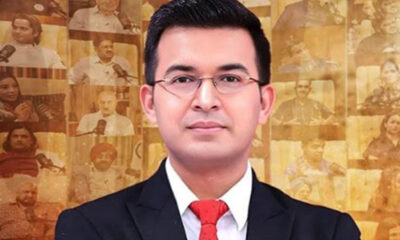
CNN-News18 editorial affairs director Rahul Shivshankar said, “In times of war, clarity becomes the most powerful tool. Fury in the Gulf – War Conclave brings together credible voices to address the questions and confusion that arise amid an overwhelming influx of information.”
He added that the initiative is aimed at delivering “facts, perspective, and insight” at a time when misinformation can easily cloud public understanding.
Echoing the sentiment, CNN-News18 CEO– English and business news Smriti Mehra said the conflict marks a defining global moment, with consequences that extend well beyond the region. She noted that the conclave seeks to present the crisis with “depth, nuance and responsibility” so audiences can better grasp its real-world impact.
As geopolitical tensions continue to dominate headlines, the conclave positions itself as an attempt to bring order to the noise, offering viewers a structured, insight-led look at a complex and rapidly shifting global situation.






