News Broadcasting
Aaj Tak all geared up for the upcoming budget


MUMBAI: All eyes are glued on the UPA government and its forthcoming budget. To keep abreast with the happenings as well as to mark the run-up to the Union Budget 2004, Aaj Tak has drawn a comprehensive programming schedule which has been on air since 26 June.
The master-branding for Aaj Tak’s complete budget-related programming is Suniye Vitt Mantri Ji. This includes live reactions with the man on the street from various locations across the country at 3:30 pm and 4:30 pm, interviews with industry leaders, analysis of the various budget-related issues apart from the reactions of the various political parties at 6:30 and 10:30 pm with a repeat telecast the next day at 8:15 am.
To highlight the needs and apprehensions of the general family, Aaj Tak has introduced a special segment called Sharmaji Ka Khandaan. This is the most important segment in the budget programming on Aaj Tak. This programme focuses on a real middle-class Delhi-based family, and based on its interview with the various members of the family, the channel depicts the aspirations and apprehensions of the middle class Indian family. Various other segments will focus on the wish-list of different sectors like industries, trade, union, farmers, markets, etc thus capturing the shift in policy and aspirations from the UPA government.
The budget day programming would comprise live coverage of the finance minister P Chidambaram’s speech followed by expert comments, and panel discussions focusing on the stock market investors, the political economy and the different segments of the society.
Aaj Tak has also drawn a comprehensive programming schedule around the railway budget. Focusing on India’s life-line, Rail kA Khel will be a run-up to the railway budget. Aaj Tak already has two programmes Kitne Late Hai Train and Ghar Ghar Jati Rail on air under the umbrella branding. These programmes focus on various topics related to the railways and its operations. Each of these segments are of five minutes duration and provide critical analysis on various issues like technology, safety, speed, crime, efficiency, facilitation and services, etc.
On 6 July, the day’s programming would be devoted to the railway budget and will be live from 11 am. Christened Laloo Ki Rail, the coverage includes a live chat on the budget from all zonal headquarters of the Indian Railways, with special reference to Delhi, Mumbai, Kolkata, Patna and Lucknow. In the evening, Aaj Tak will air an in-depth analysis of the railway budget and its implications on the rail travelers. This would be followed by an interview with the railway minister Laloo Prasad Yadav. The railway programming will conclude with a live audience interaction with Yadav and former railway ministers Nitish Kumar, CK Jafar Sharif and Suresh Kalmadi and will be aired live from one of the make-shift studios being prepared by Aaj Tak at one of the railway stations in Delhi.
Speaking on the budget-related programming TV Today Network’s spokesperson Rajesh Sheshadri said, “As a channel for the masses it would be our endeavor to provide the common man’s perspective as well as the implication of the budget on the masses.”





News Broadcasting
News18 India launches Command Centre war explainer with Arya
New show shifts from debates to decoding global conflicts and impacts
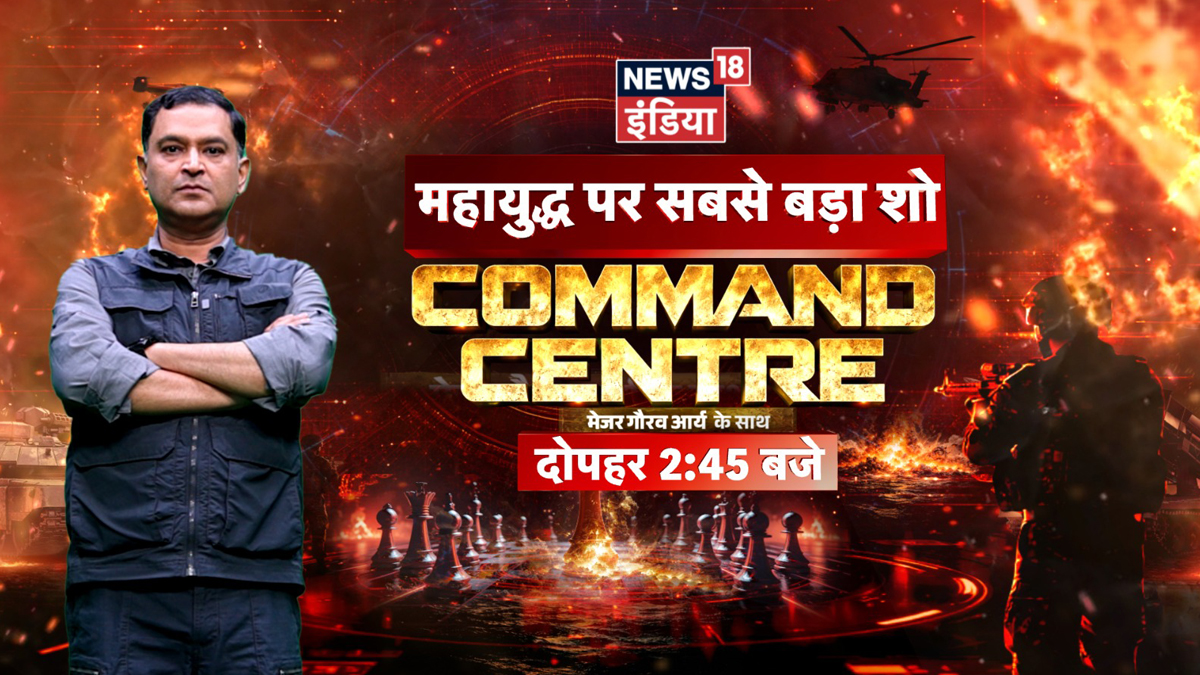
MUMBAI: News18 India has rolled out a new war-focused programme, Command Centre, featuring Gaurav Arya, as it looks to offer viewers a sharper, more grounded take on global conflicts amid rising tensions in West Asia.
Positioned as an “insider war room”, the show moves away from conventional panel debates and instead focuses on explaining military developments, decoding strategy and connecting global events to their everyday impact, from fuel prices to economic shifts.
The format leans heavily on visuals and data. The studio has been designed like a command hub, complete with large LED war maps, real-time graphics and an alert system to track developments as they unfold.

At the centre of it all is Arya, who brings his military background to simplify complex war strategies for viewers. His signature line, “Seedhi baat samjhiye”, anchors the show’s promise of clarity over noise.
News18 India managing editor Jyoti Kamal said, “Command Centre, featuring Major Gaurav Arya is designed to deliver accurate insights and a clear perspective on how evolving conflicts impact everyday life, from household budgets to national security. With expert voices analysing every development in real time, the show goes beyond headlines to decode what’s happening now, what it means, and what could come next.”
Echoing the intent, Gaurav Arya added, “In times of war, confusion is the biggest threat. With News18 India’s Command Centre, we are bringing viewers inside the war room, decoding strategies, tracking every escalation, and explaining, in the simplest terms, what it means for India and for every household. Seedhi baat samjhiye, this is where you understand not just what is happening, but what happens next.”
The weekday show will air in the afternoon slot and will also feature Gaurav Shukla, adding to its editorial depth.
With its mix of analysis, visuals and a clear focus on impact, the show reflects a broader shift in news consumption. Viewers are no longer just watching events unfold, they are looking to understand what those events mean for them.






