iWorld
5G auctions: Govt to earn Rs 1.5 trillion from sale of 51.236 Mhz of spectrum


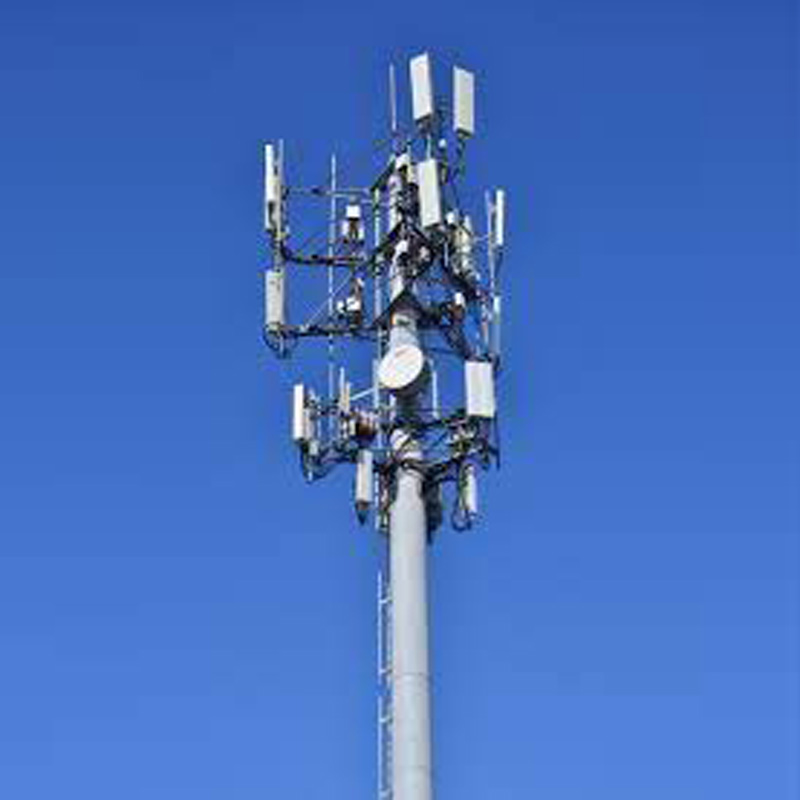
Mumbai: After seven days and 40 rounds of bidding, the 5G spectrum auctions concluded on Monday and the government generated revenues to the tune of Rs 1,50,173 crore from the sale of 51,236 MHz of spectrum out of 72,098 MHz total spectrum.
“The process of allocation of spectrum shall be completed within the timeframe and 5G services are likely to be rolled out by September/October,” said the press statement.
Telco Reliance Jio Infocomm obtained 24,740 MHz spectrum in 700, 800, 1700, 3300 MHz and 26 GHz bands and bid a total amount of Rs 88,078 crore.
Bharti Airtel obtained 19,867.8 MHz spectrum in 900, 1800, 2100, 3300 MHz and 26 GHz bands and bid a total amount of Rs 43,048 crore.
Vodafone Idea obtained 6,228 MHz spectrum in 1800, 2100, 2500, 3300 MHz and 26 GHz bands and bid a total amount of Rs Rs 18,799 crore.
Adani Data Networks obtained 400 MHz spectrum in mm wave band 26 GHz and bid a total amount of Rs 212 crore.
All the auction winners will pay the government in annual installments of Rs 13,365 crore.
Reliance Jio Infocomm chairman Akash Ambani said, “Jio is committed to offering world-class, affordable 5G and 5G-enabled services. We will provide services, platforms and solutions that will accelerate India’s digital revolution, especially in crucial sectors like education, healthcare, agriculture, manufacturing and e-Governance.”
Bharti Airtel MD and CEO Gopal Vittal said, “This spectrum acquisition at the latest auction has been a part of a deliberate strategy to buy the best spectrum assets at a substantially lower relative cost compared to our competition. We are confident that we will be able to deliver the best 5G experience in India in terms of coverage, speeds and latency. This will allow us to change a lot of established paradigms for both our B2C and B2B customers.”
A statement by Vodafone Idea said, “We actively participated in the spectrum auction to strengthen our pan-India 4G footprint and embark on our 5G roll-out journey in the country in line with our long-term vision. We believe that the above spectrum acquisition will enable us to strengthen our position in our key markets and it aligns well with our long-term strategic intent.
It further added, “We have successfully acquired mid band 5G spectrum (3300 MHz band) in our 17 priority circles and mm Wave 5G spectrum (26 GHz band) in 16 circles, which will enable us to offer a superior 5G experience to our customers as well as strengthen our enterprise offerings and provide new opportunities for business growth in the emerging 5G era. We will continue to collaborate with enterprise customers and partners in prioritising and developing 5G use cases for real-world deployments. The additional 4G spectrum acquisition in 3 circles of Andhra Pradesh, Karnataka and Punjab will further improve the customer experience; an area where we have been consistently leading the league tables, as per various third-party reports, over the last several quarters.”
Adani Group chairman Gautam Adani said, “The Adani Group’s foray into the industrial 5G space will allow our portfolio companies to offer a set of new add-on services that capitalizes on all the other digital segments we are building.”
He elaborated, “Given that our portfolio is a highly distributed asset intensive investment that is all being revolutionized by sensorisation and fast becoming IoT (Internet of Things) enabled, we believe the next data surge will be created more by machines than by people as all devices get interconnected. This data will need to be streamed, stored, processed, and analysed by other machines in real time and this capability will change every single industry. It will help build a set of services that the market cannot even fully conceptualize today. This volume will be exponentially higher and generated at the edges, especially in a country like India, where the Tier 2 and 3 cities are witnessing the fastest all-round growth.”
The government did not receive any bids for the 600 MHz spectrum band which was auctioned for the first time. The 600 MHz band is still not developed for mobile telephony but may become important in a few years.
Telcos bid Rs 1.45 lakh crore for the highly-priced 700 MHz spectrum for which the 5G ecosystem is very well developed. The band provides a large range and good coverage. Reliance Jio obtained pan India 10 MHz spectrum.
Participants who bid for bands between 800 to 2500 were primarily looking to augment capacity and improve 4G coverage.
Reliance Jio, Bharti Airtel and Vodafone Idea obtained spectrum in the mid band i.e., 3300 MHz which is crucial in providing high throughput. The telco operators are likely to augment existing 4G capacity and provide 5G services in the 3300 MHz band.
All four telcos acquired mm wave band i.e., 26 GHz band which can be utilised for the captive or non-public network. The 26 GHz band has high throughput but a very short range. The band is becoming popular for fixed wireless access (FWA) that can be used as an alternative to fibre in high-density/congested urban areas.
The 5G auctions were conducted by Metal Scrap Trading Corporation (MSTC) a public sector undertaking of the government.