Connect with us

International

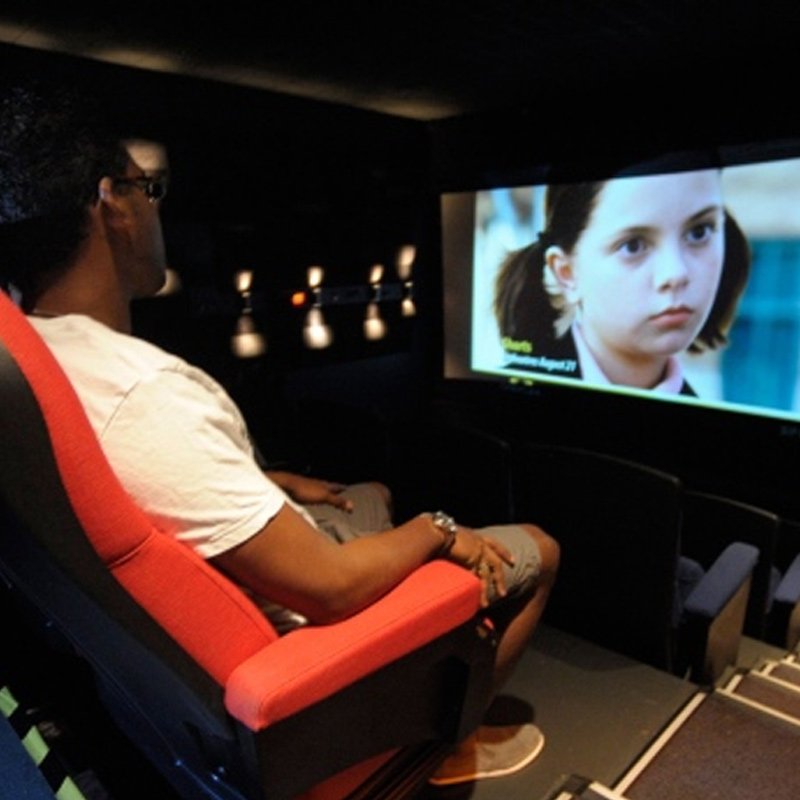
4D formatted films in anvil

Published

on

MUMBAI: Ever since the advent of 3D formatted movies, practically every big-budget film is being released in the format, with higher ticket prices boosting the box-office intake.

The latest attempt to move beyond 3D technology has resulted in a new cinematic encounter known as 4-D. The film industry is enthusiastic about the unique theatre- experience that 4D promises to deliver.

CJ Group, a South Korean company that operates Asia‘s largest theater chain, is on the cutting edge of the technology necessary for the display of 4-D movies. The company has 29 specialty theatres that screen blockbuster studio releases such as Avatar, Pirates of the Caribbean: On Stranger Tides and Prometheus.

Advertisement

The group is on the verge of closing a transaction with a nationwide US cinema chain that would create 200 4D theatres over the next five years.

The 4D technology has already been in use in theatres in Thailand, South Korea, and Mexico, and also in some theme parks. One of the company‘s biggest clients is the fourth-largest theater chain, Cinepolis, which recently expanded into Southern California. The company owns a dozen 4D theatres in Mexico.

Company execs project that filmgoers will be willing to pay an additional $8 beyond the cost of mere 3-D just to involve more of their senses while watching their favorite superheroes. CJ set up a lab located close to the famous Grauman‘s Chinese Theater in Hollywood to demonstrate and market its latest system, which it calls 4DX.

Advertisement

This isn‘t the first time that the film industry has tried to bring senses other than sight to film audiences. In 1960 a film titled Scent of Mystery utilised something called ‘Smell-O-Vision‘ which featured 30 different odours that included the smell of flowers, liquor, and gun smoke wafting toward the nostrils of the audience at appropriate times during the screening.

Then, for a film that was released in 1974 titled Earthquake, theatres used a technology called Sensurround that utilised large bass resonating speakers that shook the room with such intensity that Grauman‘s Chinese theatre had to install a safety net to catch falling plaster as the film was shown.

In 1981 John Waters used what is called as Odorama which allowed the audience to smell the cinematic scenes with scratch-and-sniff cards and in 2011 Robert Rodriguez used a similar approach that he referred to as Aromascope.


Advertisement
Click to comment

Leave a Reply

Your email address will not be published. Required fields are marked *

International

Utopai Studios unveils 4K three-minute video generation for PAI platform

New Story Agent and editing tools aim to streamline AI-led filmmaking workflows

Published

on

MUMBAI: Utopai Studios has announced a major upgrade to its PAI storytelling AI platform, introducing what it claims is an industry-first capability to generate three-minute videos in 4K resolution, alongside enhancements to its Story Agent feature.

The update, rolling out from April 15, expands the platform’s capabilities across the filmmaking process, from early concept development to post-production. The company said the new features are designed to help filmmakers maintain continuity across characters, scenes and visual styles, a key challenge in AI-driven storytelling.

At the heart of the release is a next-generation model that enables more structured narrative development, allowing creators to move more seamlessly from idea to execution. With tools such as multi-shot sequencing and multi-turn editing, the platform aims to give both studios and independent creators greater control over complex storytelling workflows.

Advertisement

Commenting on the launch, Utopai Studios co-founder and CTO Jie Yang said, “The next phase of AI in media will not be defined by isolated tools, but by systems that can carry story, continuity and collaboration across the full creative process.” He added that the update is a step towards enabling more practical, end-to-end narrative development at a professional level.

Echoing this, Utopai Studios co-founder and chief scientific officer Zijian He said, “Generative video is opening the door to a new production model, where creative ambition is less constrained by traditional cost and complexity.” He noted that the platform combines multimodal models with iterative editing to give creators more speed, control and consistency.

The company said PAI is already being used in professional film and television productions, particularly in Hollywood, for tasks such as pre-visualisation, scene design and post-production refinements. The latest update adds features including improved voice options, character consistency, unlimited editing and more flexible asset management.

Advertisement

Utopai also emphasised that its models are not trained on copyrighted material, positioning the platform as a cleaner alternative for creators and rights holders navigating the evolving AI landscape.

As AI continues to reshape content creation, Utopai’s latest push signals a shift from standalone tools to integrated systems, aiming to make high-quality filmmaking faster, more flexible and increasingly accessible.

Advertisement
Continue Reading

Advertisement News18
Advertisement
Advertisement
Advertisement
Advertisement Whtasapp
Advertisement Year Enders

Indian Television Dot Com Pvt Ltd

Signup for news and special offers!

Copyright © 2026 Indian Television Dot Com PVT LTD