News Broadcasting
3 Reasons why news industry is miffed with BARC


NEW DELHI: The recent TRP manipulation scam has reopened old wounds that news channels and Broadcast Audience Research Council (BARC) had been mending. The genre had never been absolutely satisfied with how the authority is measuring ratings and the recent sequence of events has once again brought the matter to the fore. At the recently concluded News Television Summit hosted by Indiantelevision.com, several speakers from the news world pointed out the errors that they feel BARC is making in measuring news TRPs. Here is a comprehensive overview:
1. Incorrect Sample Size
Zee News CEO and editor-in-chief Sudhir Chaudhary pointed out, “I think the main problem with BARC ratings is that the sample size is so small. Statistically speaking, we are a 32,000 crore industry and BARC has its meter in just 44,000 homes. As we traditionally say that of the overall sample size only 10 per cent watch news, we are left with just 4,400 boxes, which is very less for a huge market like India.”

2. Incorrect Data Points
ABP News Network CEO Avinash Pandey, who has been an open critic of the BARC measurement systems, stated that he’s against the minute-by-minute stock market-like analysis of news shows, where BARC points out at what precise moment the TRP took a jump. According to him, this is prompting all the news channels to run a similar sort of programming and picking up a similar tone with its stories. He said, “Until and unless BARC effectively manages the impact of news, and not just the number of people watching the channel for a certain time, unfortunately, we all will be in the rat race of chasing the ratings and it will destroy our businesses, people’s lives, and our country.”
3. Improvement Needed in the Backend
Times Network MD & CEO MK Anand stated, “From what I’ve seen in the last four years, fixing the back-end of the measurement mechanism is required. BARC CEO Sunil Lulla has been trying to bring a lot of sense to the process. He has been continuously improving it. But whether it is inside BARC or outside, there are people who break ranks and resort to corrupt means. We have seen them use shortcuts to get to the numbers and that is not acceptable.”
According to the industry, these drawbacks have also degraded the quality of programmes that news channels are running these days. They highlighted that the blind contest for maximum TRPs has prompted news outlets to run similar shows with little to no differentiation, which in turn is harming the industry as a whole.
While BARC under Sunil Lulla is making strides in streamlining the measurement process for the better, there are still loopholes that need to be filled.







News Broadcasting
Kamlesh Singh receives Haldi Ghati Award from MMCF
India Today Group editor honoured for three decades of journalism at Udaipur ceremony.
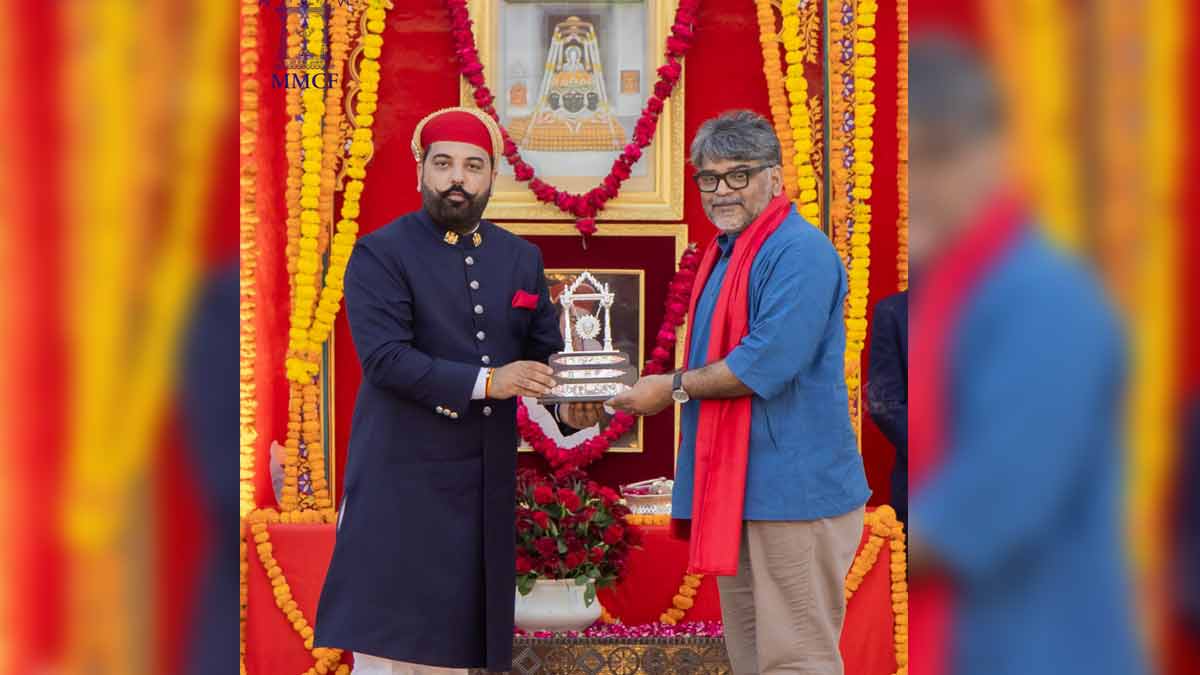
MUMBAI- Kamlesh Singh just turned a lifetime of sharp words into a shiny shield because when journalism wakes up a society, even the Maharana of Mewar wants to pin a medal on it.
The Maharana of Mewar Charitable Foundation (MMCF) conferred its prestigious Haldi Ghati Award on Kamlesh Singh, a senior editor at the India Today Group, during a ceremony in Udaipur on 15 March 2026. The national award, instituted in 1981-82, recognises “work of permanent value that initiates an awakening in society through the medium of journalism.”
Singh, who leads several editorial initiatives including Aaj Tak Radio, the Teen Taal community and The Lallantop, was presented the honour by Lakshyaraj Singh Mewar, Managing Trustee of MMCF. The citation highlighted his three decades of contributions to Indian media, innovations in digital journalism, mentoring young reporters, and his popular podcast persona “Tau” on Teen Taal, which fosters thoughtful public discourse.
The Haldi Ghati Award, named after the historic Battle of Haldighati symbolising valour and resilience, is one of four national awards given annually by MMCF. Past recipients include Tavleen Singh, Piyush Pandey and Raj Chengappa.
Other honourees this year included Padma Vibhushan Pt Hari Prasad Chaurasia, Vedamurti Devvrat Rekhe, Treeman of India Marimuthu Yoganathan, Vir Chakra Capt Rizwan Malik, and US-based researcher Molly Emma Aitken, who received the Colonel James Tod Award for contributions to understanding Mewar’s spirit and values.
In an era where headlines often shout louder than substance, the MMCF quietly reminded everyone that real journalism isn’t about noise, it’s about the quiet, persistent work that stirs society awake, one thoughtful story at a time.







