Applications
28 per cent of divorced daters in India are open to remarriage: Rebounce
INDIA: India’s long-held unease with remarriage is beginning to soften, particularly in its cities, according to a new survey by Rebounce, a matchmaking app focused on divorced, separated and widowed singles.
The study found that 28 per cent of previously married daters are open to remarriage, signalling a gradual shift away from the stigma that has traditionally surrounded second marriages. Conducted between mid-November and mid-December among 5,837 respondents aged 28 to 50, the survey covered both metropolitan centres and smaller cities.
Women appear to be driving the change. More than 35 per cent of divorced women in Tier 1 cities said apps tailored for second marriages offered a safer and more comfortable route back into relationships, giving them greater control over partner choice and expectations. The data also suggests that women, despite facing greater social scrutiny, are clearer about what they want from a second marriage than men.
Among men aged 30 to 40, priorities are also shifting. Three in five respondents said emotional compatibility now mattered more than social approval, with many preferring to discuss goals and emotional alignment early on. About 21 per cent admitted they still struggle with vulnerability after a failed first marriage, though specialised platforms have made it easier to open up to partners with similar experiences.
Attitudes vary sharply by geography. Acceptance of remarriage is most visible in Tier 1 cities such as Delhi, Mumbai and Bengaluru, where social pressure appears to weigh less heavily. In Tier 2 cities, resistance persists, albeit weaker than a decade ago.
Across both tiers, second marriages are marked by firmer boundaries and clearer intent. Three in four respondents said they actively prioritise personal boundaries, while 41 per cent said they now seek partners who complement, rather than complete, them.
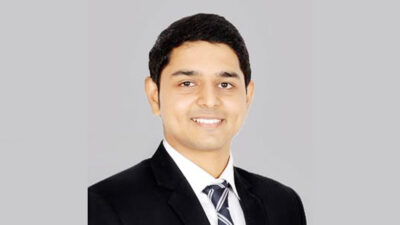
“Remarriage was once seen as a compromise,” said Rebounce founder and ceo Ravi Mittal. “What we are seeing now is a desire for healthier, more compatible relationships, shaped by experience rather than fear.”
The findings point to a generational reset: less driven by social sanction, and more by emotional clarity and individual choice.

Applications
Inshorts Group chief Deepit Purkayastha joins IAB video council for Southeast Asia and India
The co-founder and chief executive of the short-form content platform has been inducted into the IAB SEA+India Video Council, giving India a stronger voice in shaping digital video frameworks
NOIDA: India has long been the world’s most chaotic, multilingual and mobile-first digital market. Now, one of its most prominent short-video executives is getting a seat at the table where the rules are written.
Deepit Purkayastha, co-founder and chief executive of Inshorts Group, has been selected as a member of the IAB SEA+India Video Council for 2026. Run by the Interactive Advertising Bureau, the council brings together senior leaders from Southeast Asia and India to shape standards, best practices and measurement frameworks for the fast-evolving video and digital advertising ecosystem.
The timing is pointed. According to the IAMAI-Kantar Internet in India Report 2025, over 588 million Indians are now consuming short-video content, with growth increasingly driven by rural and non-metro audiences. India’s active internet user base has crossed 950 million, with 57 per cent of users now coming from rural markets. Yet the frameworks that govern how video consumption is measured and monetised were largely designed for single-language, Western markets and have struggled to keep pace with the scale, diversity and complexity of India’s digital landscape.
Purkayastha is no stranger to these debates. He already serves on the AI Council at Marketing and Media Alliance India and as co-chair of the Digital Entertainment Committee at the Internet and Mobile Association of India. His induction into the IAB SEA+India Video Council extends that influence into the global video standards arena.
Inshorts Group sits squarely at the intersection of these forces. Its flagship product, Inshorts, India’s highest-rated short news app, reaches 12 million active users with 60-word news summaries. Its sister platform, Public App, reaches 80 million monthly active users across more than 700 districts and 12 languages, serving communities that most global platforms barely register.
Purkayastha said the opportunity was about building something more representative. “India today sits at the centre of the global video ecosystem, but the frameworks that define how value is created and measured have not always kept pace with the realities of our market,” he said. “Being part of the IAB SEA+India Video Council is an opportunity to contribute to a more representative and future-ready approach, one that accounts for diversity in language, context, and user intent.”
As a council member, Purkayastha will contribute to shaping regional standards across video advertising, measurement and platform governance, with a focus on frameworks that are native to India’s multilingual, mobile-first ecosystem rather than imported from global benchmarks designed elsewhere.
For years, India has been content to play by rules written for other markets. Purkayastha’s induction is a signal that it is done waiting to be consulted and ready to start writing them.