International
Women in Film India returns to Cannes, secures rare double entry at Impact Lab
Second Cannes cohort highlights growing global platform for Indian women filmmakers


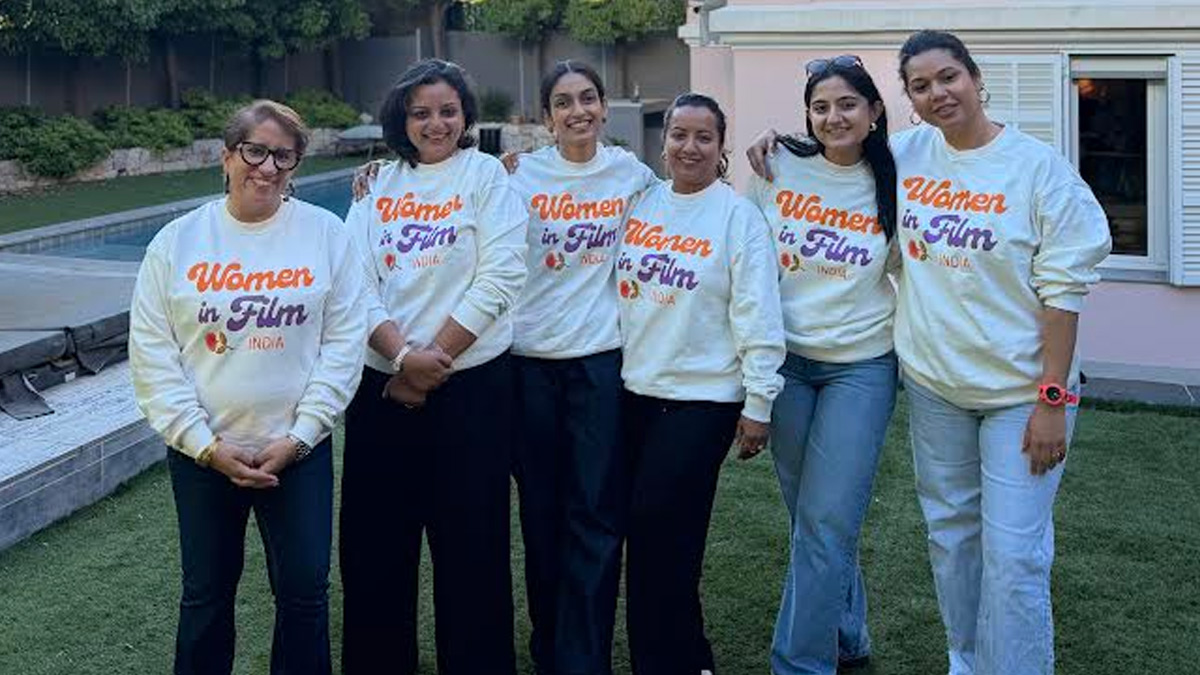
CANNES: One year after planting its flag at the Cannes Film Festival, Women in Film India is back on the French Riviera, this time with a bigger mission and a historic first for Indian representation.
The organisation returned to Cannes with its second cohort of women filmmakers, continuing its effort to create international access and opportunities for emerging women producers from India through scholarship-led participation in global film industry platforms.
This year’s delegation included producers Molshri, Jasmin Singh, Suruchi Sharma and Archana Borhade, who attended the festival through the organisation’s Cannes Producers Network and Cannes Impact Lab initiatives.
The filmmakers were selected through nationwide contests conducted by Women in Film India, with entries reviewed by an industry jury and approved through the Marche du Film selection process.
This year also marked India’s first double entry into the Cannes Impact Lab, with two Indian participants selected among a highly competitive global cohort of only eight to ten attendees worldwide.
The Cannes delegation was supported by partners Rareism and The House of Rare.
Beyond simply facilitating attendance, the initiative focused on helping first-time Cannes participants navigate the festival ecosystem through mentorship, networking support and community-building.
Industry conversations during the delegation centred on representation, confidence-building and expanding pathways for women within the international film business, where leadership and decision-making roles remain heavily male dominated.
Speaking about the collaboration, The House of Rare and Rareism co-founder Akshika Poddar said the partnership reflected a larger commitment to recognising women shaping culture behind the scenes.
“Women have always been a powerful part of that journey, yet they are still underrepresented where the biggest decisions are made,” Poddar said.
Meanwhile, Academy Award-winning producer and Women in Film India founder Guneet Monga Kapoor reflected on how difficult it was navigating Cannes during her own early years in the industry.
“When I first came to Cannes fourteen years ago, nobody handed me a playbook. That is exactly what we are building now,” Kapoor said.
Women in Film India head of programs and strategy Rabia Chopra added that sustained access and continuity remain central to the organisation’s long-term vision.
“Access is the starting point, but what we are really building is the support and community that helps filmmakers actually use that access,” Chopra said.
As Indian cinema continues expanding its global footprint, initiatives like Women in Film India are quietly working to ensure more women are not just part of the conversation, but helping lead it.