Hindi
‘The Lunch Box’ set to release this week after winning international acclaim

MUMBAI: Before the third installment of the Hrithik Roshan-starrer Krrish hits theatres this November, another superhero by the same name, albeit in a kid avatar, is set to storm the home box office.
Come 2 October, the first of a four-part animation series titled Kid Krrish – a joint venture between Rakesh Roshan’s production house Film Kraft, Turner, and Toonz Animation – will premiere exclusively on Cartoon Network at 12.00 pm (CN Popcorn hour).
 |
|---|
Krrish is a family film, whereas Kid Krrish is only targeted at children; so we are clear about our target group expounds Rakesh Roshan |
The animation telly-film will see superhero Krrish’s (kid) namesake fighting an evil scientist and keeping him from getting his hands on a precious artifact that he is eyeing. According to the makers, Kid Krrish is about Krishna’s journey of self discovery, and will surely resonate with children of all ages. Add to that, the film will have Jadoo, the lovable alien from the Krrish franchise, who helps Kid Krrish realise his true powers.
The announcement was made in the presence of Film Kraft Productions’ director Rakesh and his superstar son Hrithik Roshan, while there was no representation for Toonz at the event.
About Kid Krrish, Rakesh said: “It is for the first time that a Bollywood character is set to get an animated version. The character of Krrish has been idolised by every child in India and has become an iconic super hero. Krrish is a family film, whereas Kid Krrish is only targeted at children. So we are clear about our target group. Toonz Animation has done a great job and if the movie does well, we will continue making it for years to come.”
 |
|---|
Kid Krrish will premiere on Cartoon Network on 2 October at 12 pm |
About the partnership, Turner International India Sr. director and network head – kids, south Asia Krishna Desai said: “Turner has been a pioneer in terms of content and we believe that with Cartoon Network and Pogo, we have always provided a full consumer experience and will continue to strive for that. The coming together of three legendary companies in the form of Film Kraft, Toonz Animation and Turner will certainly be a mutually beneficial endeavour.”
What really led to this collaboration? “We were approached by Film Kraft to make a live animation movie on Krrish. We took things forward but tried to reason that if we were trying to connect with children, then we would have to portray Krrish as a kid. So that’s how the idea of Kid Krrish came about,” said Desai.
So what did Hrithik think of Kid Krrish? “See, before you ask me what are my expectations from the film, I have already got the best compliment from my two sons Hrehaan and Hridhaan… They are completely in love with Kid Krrish,” said the actor.
Asked about similarities about the two superheroes, he said: “See, I don’t know about similarities, but Kid Krrish is certainly better than Krrish (jokes). Well, both stand for the same thing, both have a child alive inside them, both have their share of struggles, and both fend off evil.”
Taking a moment to relive some of his childhood memories, Hrithik said: “Animation has been a big influence in my formative years. I still remember watching Popeye but I never used to love spinach. Though later, I got to know its importance and now, I basically survive on it. I also loved Tom & Jerry and the Justice League.”
Coming back to the children’s superhero franchise, the first film will air on CN on 2 October followed by three more films in the coming six months to one year. All four films will be exclusively premiered on Cartoon Network. While the second film is already in production, the third and fourth films are at different stages, and will get into production in the coming months.
 |
|---|
Krishna Desai believes the coming together of three legendary companies in the form of Film Kraft, Toonz Animation and Turner will certainly be a mutually beneficial endevour |
The music of Kid Krrish has been scored by Aditya Sorab and the lyrics have been penned by Kausar Munir. Apparently, the title song is extremely catchy and will strike a chord with children thanks to its simple lyrics and soulful rendition.
Was there any reason for selecting 2 October as the date for the premiere? Said Desai: “Since it’s a national holiday, we are sure that everyone will be able to enjoy the movie. Also, as for the 12:00 pm telecast time, well that is the prime time for Cartoon Network.”
Elaborating on the promotional plans, Desai said: “Well, 95 per cent of the promotional activity will be carried out by Cartoon Network itself. We will do our bit to promote it digitally and also push it through OOH presence.”
But isn’t it a fact that creating an original animation in India would do better with our audiences? “See, what I believe is the fact that be it any language, content is what matters in the end. So whether it’s Kris in Roll No 21 speaking in Hindi or Ben 10 talking in Hindi, what eventually strikes a chord with children is – if they can relate with the characters on the show, the show will be a success, no matter which language it is in,” Desai shot back.
Would Turner be venturing into more animation films after Kid Krrish? “It completely depends on the idea and the script, because making a live action animation is a tough task, but if something interesting and worthwhile comes along, we will definitely consider it,” Desai concluded.

Hindi
GUEST COLUMN: Why film libraries & IPs are the new engines of growth
Unlocking value through catalogue strength and IP synergy
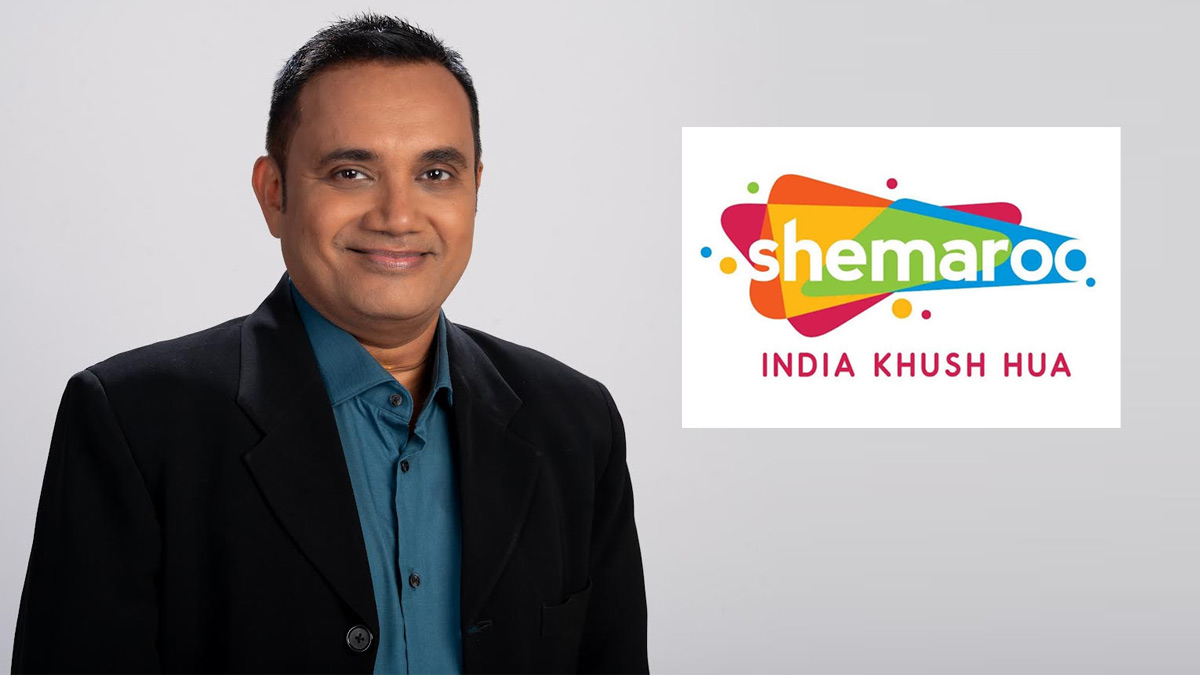
MUMBAI:In a media landscape defined by fragmentation, platform proliferation, and ever-evolving audience behavior, the economics of filmmaking are undergoing a fundamental shift. No longer confined to box office performance, a film’s true value is now measured across an extended lifecycle that spans digital platforms, syndication networks, and global markets. As content consumption becomes increasingly non-linear and algorithm-driven, film libraries and intellectual properties (IPs) are emerging as strategic assets, capable of delivering sustained, long-term returns. For Mohan Gopinath, head – bollywood business at Shemaroo Entertainment Ltd., this transformation signals a decisive move from hit-driven models to portfolio-led value creation. In this piece, Gopinath explores how legacy content, when intelligently repurposed and distributed, can unlock recurring revenue streams, why the interplay between catalogue and original IP is critical, and how media companies can build resilient, future-ready entertainment businesses.
For all these years, we thought that a film is successful if it performs well in theatres. There are opening weekend numbers, box office milestones, and distribution footprints that gave a good picture of how the movie has done commercially and also tell us about its cultural impact. However, there are multiple platforms today, always-on content ecosystem, which has caused a shift. Today, the theatrical performance is not the culmination of a film’s journey but merely the beginning of a much longer and more dynamic lifecycle.
Film libraries today are emerging as high-value, constantly evolving assets that deliver sustained returns well beyond initial release cycles. This becomes a point of great advantage for legacy content owners with diverse catalogues, to shape long-term business outcomes.

According to FICCI-EY, the media and entertainment industry of India achieved a valuation of Rs 2.78 trillion in 2025 which is expected to reach Rs 3.3 trillion by 2028 through a compound annual growth rate of approximately 7 per cent and digital media will bring in more than Rs 1 trillion to become the biggest sector which generates about 36 per cent of overall market revenues.
This shift is the expansion of distribution endpoints. We know how satellite television was once the primary secondary window but today, it coexists with YouTube, OTT platforms, Connected TV, and FAST channels. Each of these platforms caters to distinct audience demographics and consumption behaviors, helping content owners to obtain more value from the same asset across multiple formats.
For instance, films that had great reruns, now find continuous engagement across digital platforms. On YouTube, classic Hindi cinema continues to attract significant viewership, reaching audiences across generations and geographies with remarkable consistency. At Shemaroo Entertainment, this is reflected in our film library shaped over decades as part of a long association with Indian entertainment. From classics such as Amar Akbar Anthony to much-loved entertainers like Jab We Met, Welcome, Dhamaal, Phir Hera Pheri, Dhol, Golmaal, and Bhagam Bhag, many of these titles continue finding new audiences while retaining their place in popular memory. Their enduring appeal reflects how culturally resonant stories can continue creating value over time. Similarly, FAST channels have created curated, always-on environments where catalogue content can continue to thrive through star-led and genre-based programming.
This multi-platform approach has very well transformed films into long-tail IP assets which are capable of generating recurring revenue across advertising, subscription, and syndication models.
The evolution of audience behavior is equally important. Nowadays, it’s more important to find what’s more relative than what’s recent as viewers are more influenced by mood, memories, and algorithmic suggestions than by release schedules. Even if a movie was released decades ago, it can trend alongside a newly released movie, if surfaced in the right context. Thoughtful packaging, whether through festival-based playlists, actor-driven collections, or genre clusters, allows catalogue content to remain dynamic and continuously discoverable. Shemaroo Entertainment has built extensive film libraries over decades and its focus has mostly been on recontextualizing content for the consumption of newer environments. This process doesn’t just include digitization and restoration, but also re-packaging of films as per platforms.
Syndication itself has evolved into a key growth driver. In perspective, when looking at the domestic market, curated content packages continue to find strong demand across broadcast and digital platforms. Meanwhile, in the international market, especially in markets like Middle East, North America and Southeast Asia, the appetite for Indian content is opening up new monetization avenues. Here, the ability to package and position catalogue content effectively becomes as important as the content itself.
Importantly, the need to re-package catalogue content does not diminish the role of new content. In fact, originals and fresh IP are essential to sustaining the long-term value of a film library because they act as discovery engines that bring audiences into the ecosystem, while catalogue content drives depth, retention, and repeat engagement.
This interplay between the “new” and the “known” is what defines a robust content strategy today. While new films generate spikes in consumption, catalogue titles offer familiarity and comfort. These are factors that are increasingly valuable in an era of content abundance and decision fatigue. This is also shaping our strategy, drawing value from both a deep catalogue assets and a growing focus on original IPs to strengthen long-term audience engagement and build more predictable revenue streams.
There is growing recognition that long-term value in entertainment will be shaped not only by how intelligently existing content continues to live, travel and find relevance, but also by how consistently new stories are created to renew that ecosystem. In that sense, film libraries and original IP are not parallel bets, but reinforcing engines of growth. For media companies, the opportunity lies in making these two forces work together, because that is increasingly where more resilient and predictable businesses are being shaped.
Note: The views expressed in this article are solely the author’s and do not necessarily reflect our own.