
Hollywood
Midjourney seeks wider AI disclosures in Hollywood copyright battle
AI startup asks court to expand discovery as fair use dispute with studios deepens


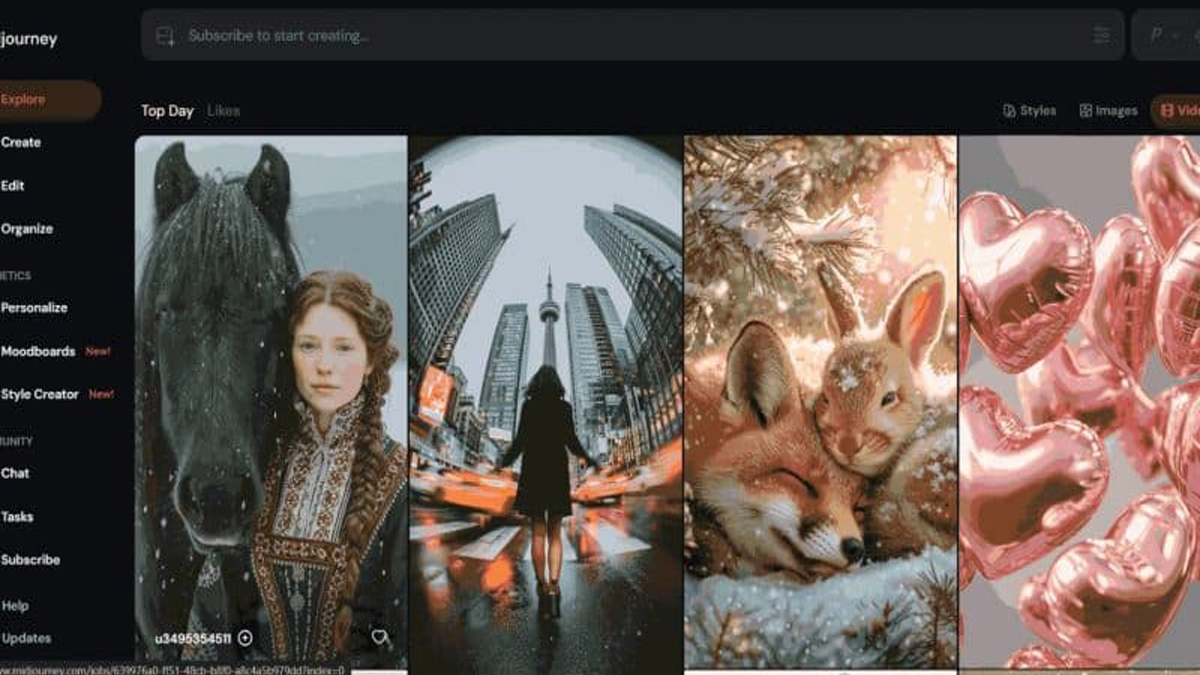
NEW DELHI: Looks like the courtroom’s latest prompt is asking who trained on what. AI image generation startup Midjourney is pushing back in its copyright battle with Hollywood, asking a US court to compel major film studios to reveal more about how they use artificial intelligence behind the scenes.
According to a TechCrunch report, Midjourney has asked the court to broaden the discovery process in its ongoing legal dispute with Disney, Universal and Warner Bros., arguing that the studios should disclose a wider range of documents relating to their own AI activities.
The dispute began after Disney and Universal sued Midjourney last year, alleging that its AI image-generation models could create images featuring copyrighted characters such as Bart Simpson and Darth Vader. Warner Bros. later launched a similar lawsuit, intensifying one of the entertainment industry’s most closely watched copyright battles over generative AI.
Midjourney has consistently argued that training its AI models on copyrighted material falls under the fair use doctrine, a defence that has become central to several AI-related copyright cases.
The latest disagreement centres on the discovery phase, during which both sides exchange evidence. A judge had previously ordered the studios to disclose information about their use of generative AI only where it related to consumer-facing images and videos.
Midjourney is now seeking to remove that limitation, contending that the restriction allows the studios to selectively produce documents supporting claims of market harm while withholding evidence that could strengthen the company’s defence.
The startup also argues that the undisclosed material could reveal whether the studios themselves are using AI in ways similar to those they are challenging in court.
According to the filing, if the studios are deploying image-generation tools for internal purposes such as storyboarding, concept development or content ideation for films and television programmes, it could bolster Midjourney’s argument that training AI models using copyrighted content has become an accepted industry practice.
Midjourney has also requested that the court require the studios to produce every prompt they submitted to its platform, along with the corresponding AI-generated outputs, instead of limiting disclosure to prompts that allegedly produced infringing images.
The studios have opposed the request. Their lead attorney, David Singer, has described Midjourney’s demand as a “fishing expedition”, arguing that the requested material is irrelevant to the dispute.
Singer has also maintained that the studios are not attempting to stop AI technology or shut down Midjourney. Instead, he said the lawsuits are aimed at preventing the company from reproducing, displaying, distributing and creating derivative works based on copyrighted films, television programmes and iconic characters without authorisation.
As AI-generated content becomes increasingly sophisticated, the outcome of the case is expected to help shape the boundaries of copyright, fair use and the permissible use of creative works in training future AI models.






