Hindi
‘Lateef: The King Of Crime’…Lateef who?


MUMBAI: Gangster movies are an easy genre to handle. It does not matter that the gang you want to portray on screen is relevant to any sort of audience in India or elsewhere. And, how does one gangster movie differ from another where one man from nowhere who fails in all other endeavours turns a successful gangster and builds a gang around him? This is irrelevant for those who want to make gangster movies.
Initially, filmmakers inspired by the American all-time classic Godfather saga tried to make versions of it for Hindi screen; most failed miserably. India was not a national gang country until a Mumbai gangster came to be known as don and to pull strings all over country. Then came a slew of films on UP dons and Bihar dons, local police-file legends that found no takers anywhere.
Now we have this film about a Gujarat don, ‘Lateef: The King of Crime’, which is not quite right. Gujarat never had a culture of breeding dons; he was just a local bootlegger whom politicians began using giving him muscle power.

Lateef, a petty bootlegger from the walled city of Ahmedabad, on whose life the film is based (but is way off the mark) thrived mainly because he was a bootlegger in a dry state whose services were need by everybody from industrialists to bureaucrats. Politicians are known to breed Lateef kinds and soon a proximity grew between the two. The two occasions when the city was tense and prone to communal violence, Rath Yatra and Makar Sankranti (the kite flying festival in January) were the communal riot seasons when he thrived.
|
Director: Sharique Minhaj Cast: Hameed Khan, Bharti Sharma, Aryan Vaid, Raju Mavani, Aditya Lakhiya, Mustaq Khan |
 Producer: Kewal Krishna
As the film depicts and as it happened, Lateef came into his own when he reportedly linked up with Dawood. This was also the time he was going beyond the control of his political masters. His reported link to the 1993 Mumbai multiple bomb blasts was too hot to handle for all concerned, especially the people of Gujarat not used to don culture. Lateef was put behind bars and later liquidated while ‘attempting to flee through a jail toilet’ in 1997. A political puppet created and dumped by the same clan.
As for the film, it fails to be either an interesting adaption of his story or a docudrama. There is no sense in making this film in the first place. He was an ‘Accidental Don’ thanks to the Dawood era and died the way he was destined to. The film is a poor narrative sans details, nonperformers as actors and has poor sense of direction. The protagonist looks rather comic with his ill-fitting wig.
The film is slated for release at few cinemas but finding audience will be nigh impossible.




Hindi
Zee5 and Applause Entertainment team up for whodunnit ‘Everybody Loves Sohrab Handa’
Rajat Kapoor directs star-studded murder mystery streaming from 10 April.
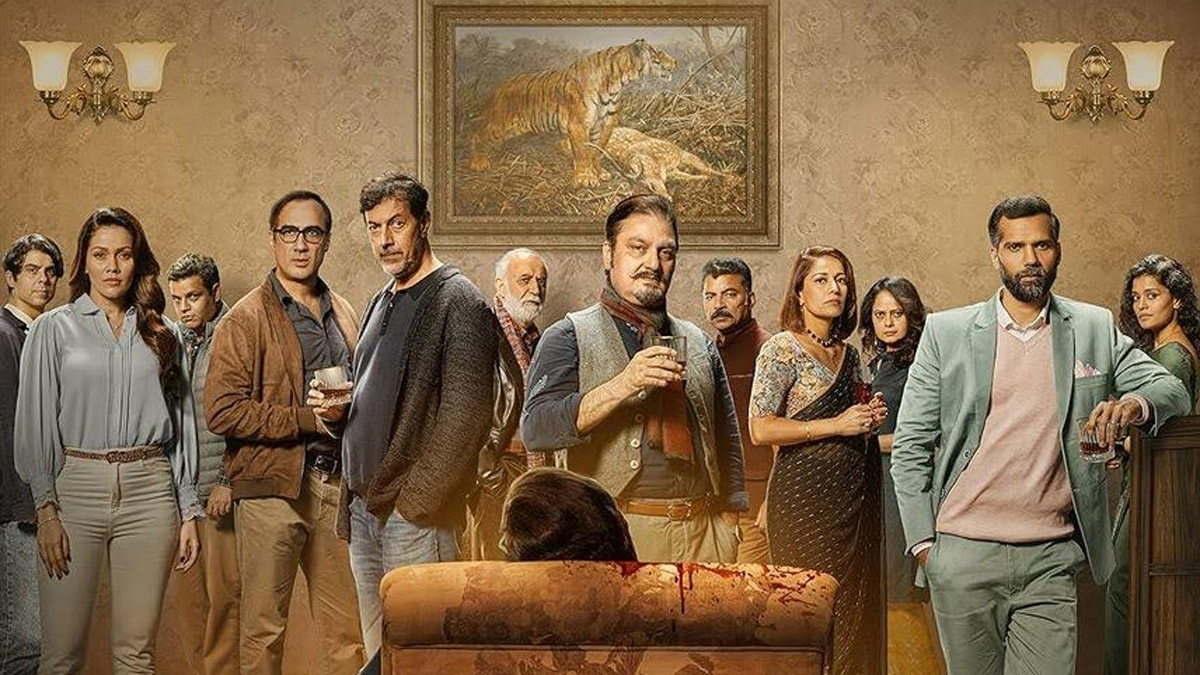
MUMBAI: Zee5 is serving up another killer collaboration and this time, the murder mystery comes with a generous side of dark humour and family dysfunction. The streaming platform has partnered with Applause Entertainment and Mithya Talkies to bring Everybody Loves Sohrab Handa, a fresh, twisted whodunnit written and directed by acclaimed filmmaker and actor Rajat Kapoor. The film will stream exclusively on Hindi Zee5 from 10 April.
The movie reimagines the classic murder mystery genre with a contemporary, darkly comic edge. It revolves around a group of friends and family who smile, drink, and celebrate together until the silence snaps and long-buried secrets spill out. The stellar ensemble cast includes Vinay Pathak, Ranvir Shorey, Waluscha De Sousa, Saurabh Shukla, Chandrachoor Rai, Neil Bhoopalam, Koel Purie, Palomi Ghosh, and Rajat Kapoor himself.
This latest offering continues the successful partnership between Zee5 and Applause Entertainment, which has previously delivered diverse hits such as Mithya, Bloody Brothers, and Jab Khuli Kitaab.
&TV Business Head of hindi Zee5 and chief channel officer Kaveri Das said, “Our collaboration with Applause Entertainment has consistently delivered distinct, high-impact storytelling. Everybody Loves Sohrab Handa is a natural progression, reinforcing our focus on genre-led content with a compelling whodunnit premise and a strong ensemble cast.”
Applause Entertainment business head for movies Sunil Chainani added, “This film adds yet another compelling layer to our slate with Rajat Kapoor’s unmistakable voice.”
Rajat Kapoor shared, “What interested me was not just the mechanics of a whodunnit, but the emotional violence that precedes physical violence. These are people who smile at each other, but there’s so much that is not said.”
The film promises razor-sharp writing, layered performances, and simmering tension, inviting viewers not just to solve the crime but to unravel the complex relationships at its heart.
If you love a good murder mystery served with wit and emotional depth, Everybody Loves Sohrab Handa looks set to be your next addictive watch. Mark your calendars, the whodunnit drops on Hindi Zee5 from 10 April.







