
Hollywood
Indians back social media curbs but reject AI bans in schools
78 per cent support curbs for under-14s, while 61 per cent oppose school AI bans


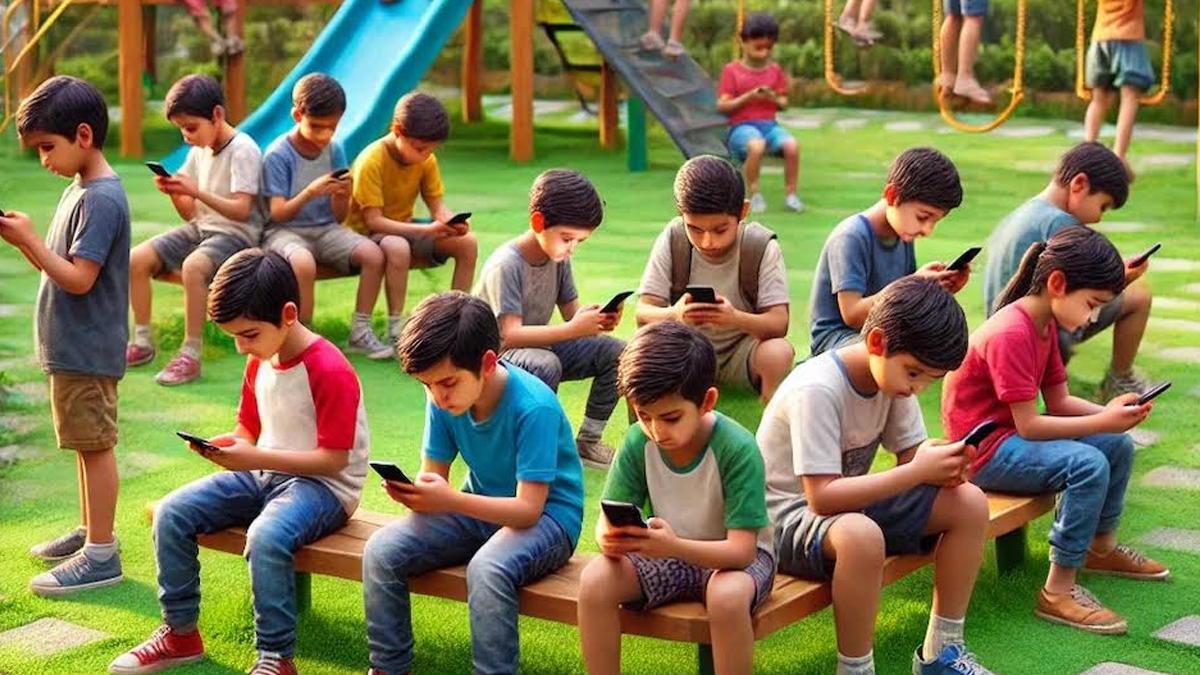
MUMBAI: India’s education debate is drawing a rather clever line in the digital sand, keep the scroll away, but keep the AI close. A new Ipsos survey shows 78 per cent of Indians support banning social media for children under 14, while 61 per cent oppose banning AI tools such as ChatGPT in schools.
The findings from the Ipsos Education Monitor 2026, which surveyed 23,537 adults across 31 countries, suggest that Indians are not taking an outright anti-technology stance. Instead, respondents appear to be distinguishing between technologies they see as distractions and those they believe could support learning and future employability.
Smartphones fall closer to social media in this equation, with 57 per cent supporting a ban on smartphones in schools. By comparison, only 26 per cent believe AI should be banned from classrooms.
India’s confidence in education is also notably strong. 51 per cent of Indians rate the country’s overall education system as good, compared with a 33 per cent global average.
Higher education receives even stronger backing. 78 per cent say a college or university degree helps people progress in their careers, while 75 per cent consider a degree important to succeeding in life. For 70 per cent, a college or university degree also represents good value for money.
The perceived role of education extends beyond employment. 72 per cent believe it helps reduce social inequality, while 67 per cent say the school curriculum adequately prepares students for future careers.
India is also the most optimistic market surveyed about young people’s prospects. 72 per cent believe young people in the country have a bright future, while 75 per cent think today’s generation will have a better life than their parents. Even among young people from poorer backgrounds, 64 per cent believe the future is bright.
Yet that optimism comes with a geographical twist. 76 per cent believe young Indians would have better opportunities by moving abroad, highlighting the tension between confidence in India’s youth and the perception that global mobility offers stronger career and economic prospects.
The biggest concern facing young people is where education meets employment. 36 per cent identify the mismatch between education and labour-market requirements as the biggest challenge.
Mental health issues, including depression and anxiety, are cited by 30 per cent, matching the proportion concerned about poverty and inequality. Poor-quality education worries 29 per cent, while 26 per cent point to the effects of social media and technology, including AI. India’s economy is cited by 25 per cent.
Against that backdrop, AI appears to be getting a relatively warm classroom reception. While 78 per cent favour restricting social media for under-14s, 61 per cent do not want AI banned from schools and only 26 per cent support such a ban.
The figures suggest that, for many Indians, the question is no longer simply whether technology belongs in education, but which technology belongs there and how it should be used. AI may raise concerns around academic integrity and learning habits, but the survey indicates that most respondents see potential value in keeping it within the educational ecosystem.
Suresh Ramalingam, CEO, Ipsos India, said the findings reflect both optimism and higher expectations from India’s education system. Indians continue to see education as a route to opportunity and social mobility, while increasingly expecting it to keep pace with labour-market requirements and prepare young people for the future.






