International
Cinema is all about connections, says Federico Atehortúa at MIFF 2026 masterclass
Award-winning filmmaker explores how editing shapes meaning, memory and reality


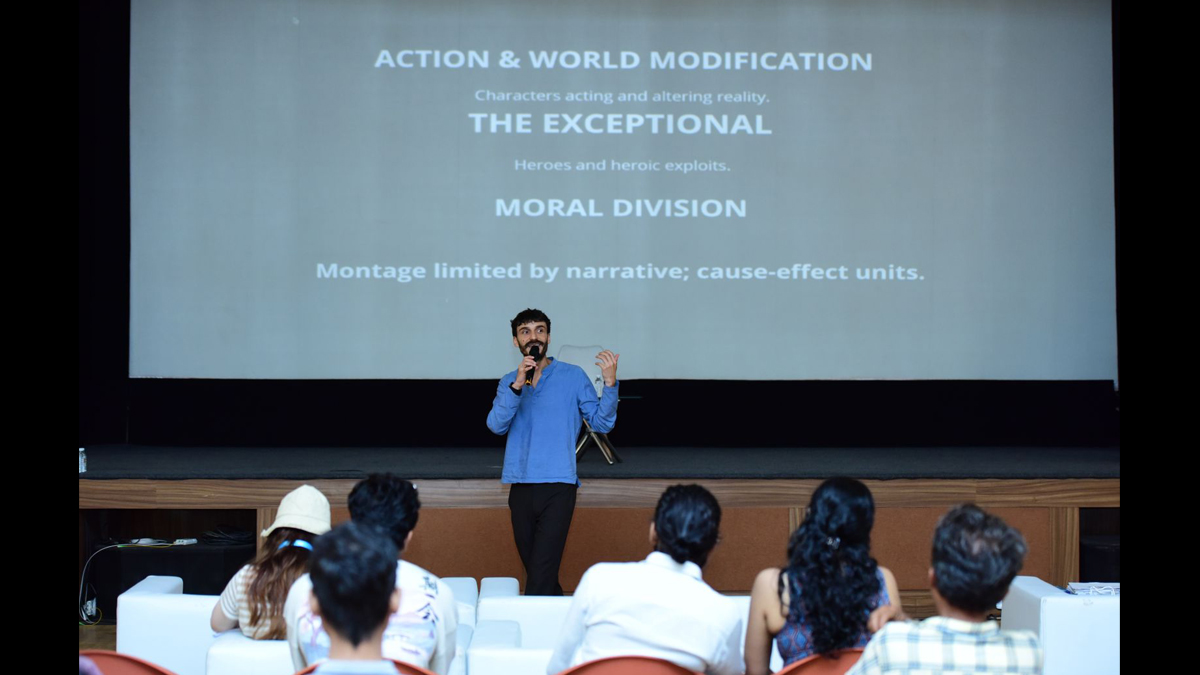
MUMBAI: Film editing is often viewed as a technical process carried out behind the scenes, but award-winning documentary filmmaker Federico Atehortúa Arteaga believes it is far more profound than that.
Speaking at the 19th Mumbai International Film Festival, Atehortúa challenged audiences to rethink the role of editing during a masterclass titled The Philosophy of Montage: Unveiling the Folds. The session explored how the arrangement of images and sounds can shape not just stories, but also the way people understand history, trauma and reality itself.
Drawing on his experience directing acclaimed documentaries such as Pirotecnia and Forensics, Atehortúa explained that what was traditionally known as “montage” extends far beyond cutting footage together.
According to the filmmaker, editing is an act of meaning-making. It is the process through which separate images, sounds and ideas are brought into conversation with one another, creating emotions, interpretations and connections that do not exist in isolation.
“Cinema is all about the connections,” Atehortúa told the audience, summarising the central idea behind his session.
The filmmaker traced the evolution of cinematic language, explaining how classical cinema was largely built around clear cause-and-effect storytelling, where actions led predictably to consequences. That structure, he said, began to shift significantly after the upheaval of World War II.
In the post-war era, filmmakers increasingly turned their attention to ordinary lives, fragmented experiences and more abstract forms of storytelling. As narratives became less rigid, editing too gained greater freedom, allowing filmmakers to move beyond conventional structures and experiment with new ways of expressing emotion and meaning.
To illustrate the transformation, Atehortúa drew a parallel with the history of visual art. Just as painting evolved from realistic representation to the abstract works of artists such as Jackson Pollock, cinema also moved away from strict narrative rules towards more poetic, intuitive and associative forms of expression.
He argued that the power of an image does not lie solely in what appears on screen. Instead, its significance emerges through its relationship with other images and sounds placed before or after it. The true artistry of editing, he suggested, lies in creating unexpected links that encourage audiences to think, feel and interpret in new ways.
Throughout the session, Atehortúa encouraged filmmakers to embrace editing not merely as a technical stage of production but as a creative and philosophical practice. By carefully constructing connections between disparate elements, editors have the ability to reveal hidden meanings and evoke deeper emotional responses.
The masterclass resonated strongly with young filmmakers, film students and cinema enthusiasts attending MIFF 2026, many of whom were introduced to a broader understanding of montage and visual storytelling.
By the end of the session, attendees were left with a simple but powerful takeaway: great cinema is not defined by individual shots alone, but by the invisible threads that connect them. In Atehortúa’s view, those connections are where the true magic of filmmaking begins.