Hollywood
Christopher Nolan says young audiences are rejecting AI in films
Ahead of The Odyssey, director says viewers prefer authentic storytelling over AI-generated ‘slop’


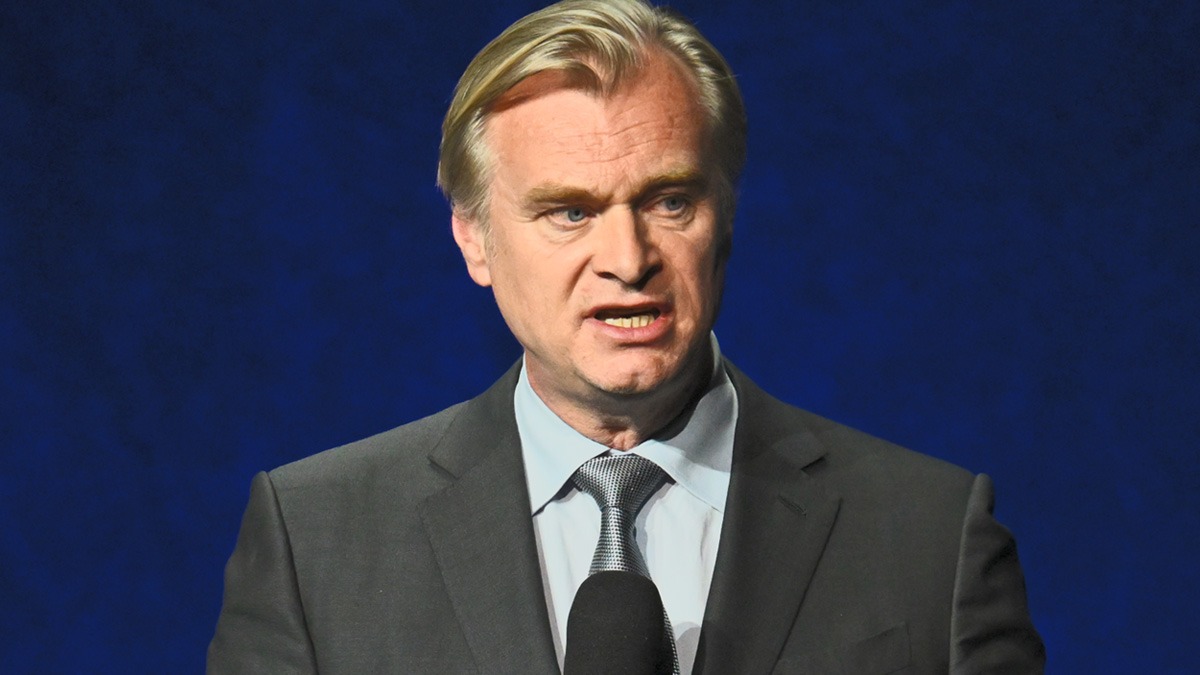
MUMBAI: Lights, camera… authenticity. While artificial intelligence continues to dominate conversations across Hollywood, Christopher Nolan believes the audience most immersed in technology may also be its toughest critic.
Ahead of the July 17, 2026 release of The Odyssey, the Oscar-winning filmmaker has argued that younger audiences are increasingly dismissing AI-generated content, describing their reaction to so-called “AI slop” as both “immediate and harsh.”
Speaking in an interview with The Telegraph, Nolan challenged the notion that younger viewers have shorter attention spans, pointing instead to the success of atmospheric, slow-burning films such as Backrooms and Obsession.
“This is why I never bought into the arguments that young audiences’ attention spans are too fried to enjoy a three-hour Greek epic,” Nolan said. “Those films are so mysterious and ruminative. Parts of Backrooms are like David Lynch at his most obscure. And yet young people can’t get enough of them.”
The director said the enthusiasm for these low-budget productions reflects a broader appetite for more tangible, handcrafted filmmaking at a time when AI-generated content is becoming increasingly common.
“I’ve never seen a more rapid wholesale dismissal of a supposedly foundational jump in technology in my lifetime,” Nolan said. “So much energy has been expended on bringing in AI, but if you look at that generation’s reaction, they’re utterly rejecting it.”
Nolan added that his own children, who are in their late teens and early twenties, quickly recognise AI-generated content and dismiss it.
“Their judgment of AI slop has been immediate and harsh,” he said. “They see it for what it is very quickly, and it’s much easier for them to identify it because it grew out of an online world they know really well.”
While stopping short of rejecting AI entirely, Nolan argued that its growing use in filmmaking comes at a time when audiences are gravitating in the opposite direction.
“That doesn’t mean every aspect of the technology is useless or meaningless, but in filmmaking it’s hitting at exactly the wrong time,” he said. “After years of driving towards heavily virtual environments, we’re seeing a renewed interest in more tactile, more real forms of storytelling.”
His comments add to a growing debate within Hollywood over the role of artificial intelligence in creative industries. Filmmakers including James Cameron, Seth Rogen and Gore Verbinski have previously voiced concerns about AI’s long-term impact on filmmaking, although opinions differ on how the technology should be adopted.
Nolan’s own upcoming adaptation appears designed to reinforce his argument. The Odyssey relies heavily on practical craftsmanship, including a 60-foot Cyclops puppet, one of the production’s most ambitious practical effects. Actor Matt Damon recently revealed that the sequence was filmed inside Psychro Cave, traditionally believed to be the birthplace of Zeus in Greek mythology.
For a director renowned for championing large-format film, practical effects and in-camera spectacle, the message is unmistakable: in an era increasingly shaped by algorithms, authenticity may be cinema’s biggest special effect.