Movies
“Boong” wins BAFTA for Best Children’s and Family Film
Manipuri-language debut by Lakshmipriya Devi triumphs over Disney’s Lilo & Stitch and Zootopia 2 at 2026 awards.


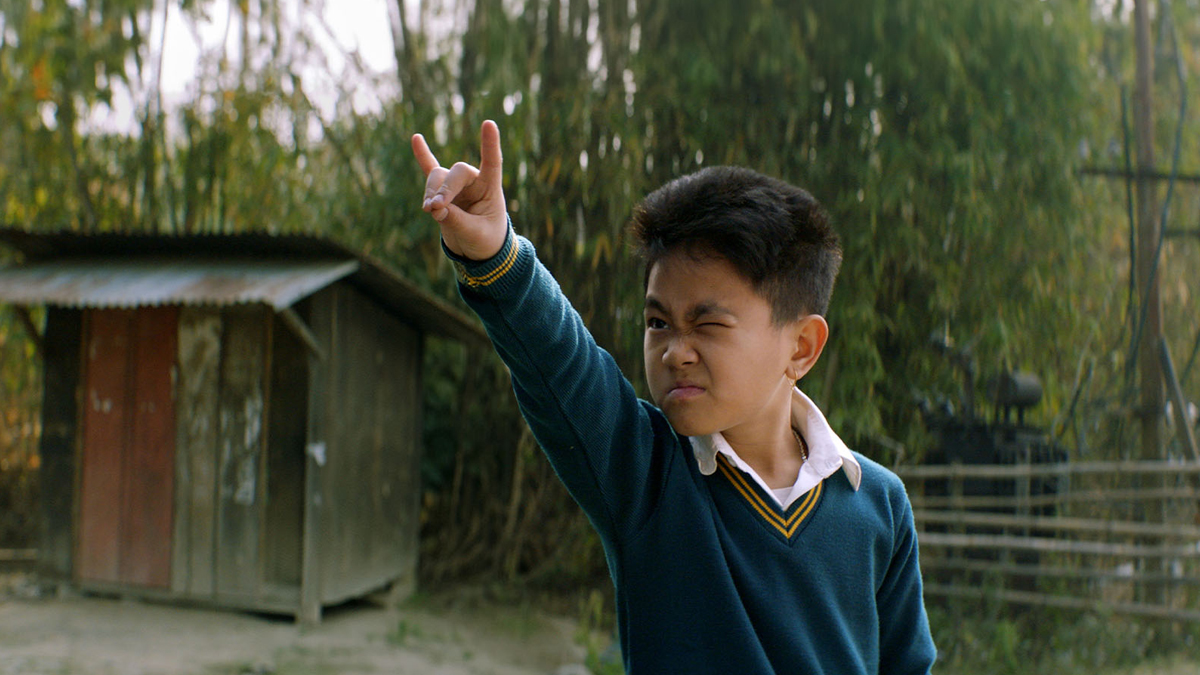
MUMBAI: A little boy from Manipur just taught the BAFTAs a big lesson sometimes the smallest journeys pack the mightiest emotional punch. “Boong”, the tender Manipuri-language coming-of-age tale directed by Lakshmipriya Devi in her feature debut, clinched the BAFTA for Best Children’s and Family Film on 23 February 2026. The film beat out heavyweights including Disney’s live-action Lilo & Stitch, animated sequel Zootopia 2, and the science-fantasy Arco to claim the prize.
The story follows young Boong (Gugun Kipgen), who believes reuniting his mother Mandakini (Bala Hijam) with his long-absent father Joykumar would be the perfect gift. When rumours swirl that his father has died after migrating to the border town of Moreh for work, Boong together with his loyal friend Raju (Angom Sanamatum) sets off on an innocent, determined quest for truth and a fresh start. What begins as a child’s simple wish unfolds into a heartfelt exploration of family, hope, and resilience.
Backed by actor-producers Farhan Akhtar and Ritesh Sidhwani via Excel Entertainment, and co-produced by Chalkboard Entertainment and Suitable Pictures, “Boong” premiered at the Toronto International Film Festival in 2024 before a theatrical release in September that year. It later screened at the Warsaw International Film Festival, MAMI Mumbai Film Festival, 55th International Film Festival of India, and Indian Film Festival of Melbourne.
Lakshmipriya Devi, who previously served as first assistant director on films including Luck by Chance, Talaash, PK, and Mira Nair’s A Suitable Boy, brings a grounded yet lyrical touch to her debut. The win marks a proud milestone for Indian regional cinema on the global stage.
While the main BAFTA best film race features heavy-hitters like One Battle After Another, Hamnet, Marty Supreme, Sinners, and Sentimental Value, and the British film category includes The Ballad of Wallis Island, Pillion, I Swear, and Bridget Jones: Mad About the Boy, “Boong” stands out as the sole Indian contender to take home gold this year.
In a night where directing nods went to Paul Thomas Anderson, Josh Safdie, Ryan Coogler, Yorgos Lanthimos, Joachim Trier, and Chloé Zhao (who could become the first woman to win two BAFTA directing awards after Nomadland), “Boong” quietly proved that heartfelt storytelling from distant corners can resonate louder than any blockbuster budget.
For once, a six-year-old’s dream outshone Disney magic and the BAFTA stage just got a little more colourful.