Brands
Zomato to acquire Blinkit, board approves the deal for Rs 4,447 crore


Mumbai: The board of online food delivery firm Zomato has approved the purchase of quick commerce company Blinkit, which was earlier known as Grofers. This deal has been done for Rs 4,447.48 crore.
In the information sent to the stock market, Zomato said that this deal will be done under the exchange of shares. The board of directors of the company in a meeting held on Friday approved the acquisition of 33,018 shares from the shareholders of Blinkit Commerce at a price of Rs 13.45 lakh per equity share.
After the acquisition by Zomato, the Blinkit team and CEO Albinder Dhindsa will continue to run the company as an independent entity and app.

Zomato CEO Deepinder Goyal said, “We will explore ways in which Blinkit can benefit from Zomato’s large customer base (and vice versa in the long term). Post the deal closure, we are going to start experimenting with various ideas that we have and see which all bear fruit, including having the Blinkit tab on the Zomato app. As they say, experiment a lot and keep what works. This remains our guiding motto.”
The quick commerce segment in India is estimated to grow to $5 billion over the next three years, which is a 16x jump from the current size of $0.3 billion. Thus, the deal can be a game changer for quick commerce space!
Let’s have a look at what, according to the industry experts, works in the favour after this deal and what works against!
What works in favour?
Experts believe that the deal will lead to better utilisation of the delivery fleet for Zomato and also propel multiple orders per transit, which is a global norm for driving efficiency and bringing the delivery costs down. With this, the valuations of Zomato may inch up backed by this, as one can provide a separate valuation to this segment for now, given its strong growth prospects.
It may also help Zomato to be better placed versus peers who are only into Q commerce, as they have a ready delivery fleet and will also help them compete with players like Swiggy who have made a very serious foray into this segment via Instamart.
What works against?
AOV (average order value) for this segment may be extremely low, which in turn will limit margins and capability to charge a higher delivery fee as delivery charge is linked to AOV.
At the same time, AOV in this segment is low as this segment caters to buyers who would want products on an urgent basis; a customer may order 5-10 per cent of their monthly grocery requirements via this segment.
India as a market is still predominantly driven by local Kiraana outlets (general grocery stores), within the vicinity, which would generally drive more than 90 per cent of grocery requirements.
Moreover, industry experts think that Zomato will need to offer something very different in terms of user experience for Blinkit in order to compete with peers and scale up in this business segment. Further, this business model may not have a big potential in the smaller markets such as tier 2 and 3, as the demand for gourmet food is much lesser vs metros.
Meanwhile, the closing of the transaction is expected to happen in early August. The transaction is subject to shareholders’ and stock exchange approval.







Brands
Samsung certifies 1,000 Maharashtra students in AI and coding
The South Korean electronics giant marks its first large-scale skilling push in the state, with women making up nearly half the national programme’s enrolment
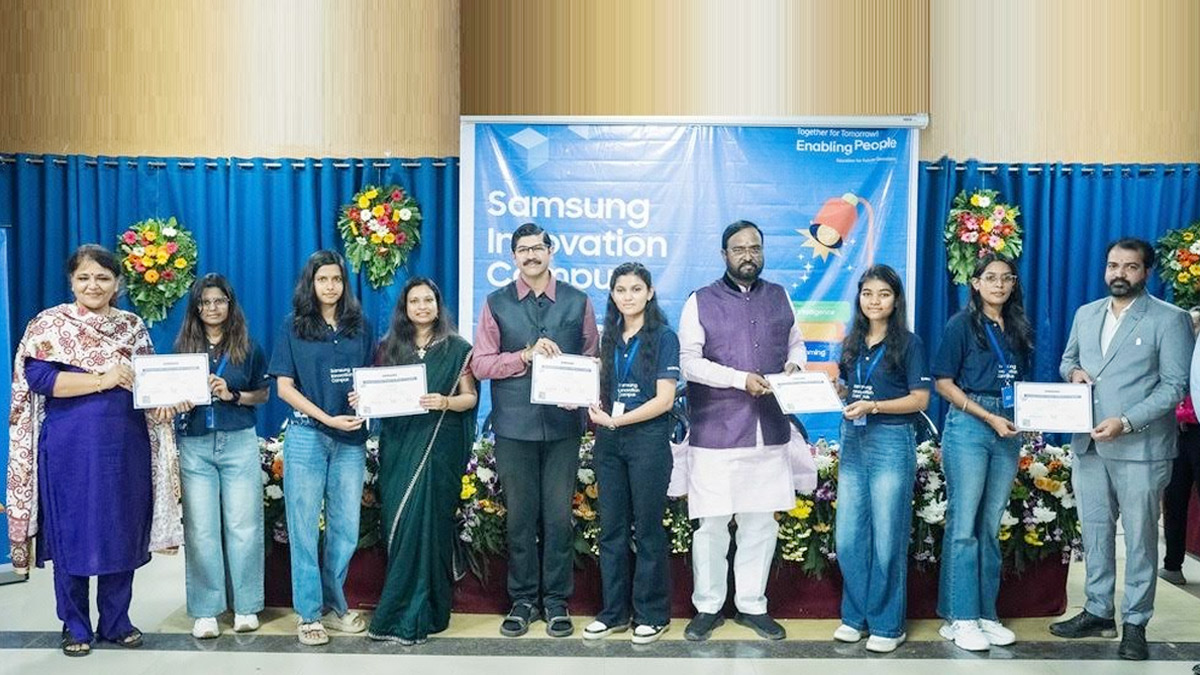
PUNE: Samsung has put 1,000 students in Maharashtra through a certified training programme in artificial intelligence and coding, the largest such drive the South Korean electronics company has run in the state and a signal that corporate India’s skilling ambitions are moving well beyond the boardroom brochure.
The certifications were awarded under Samsung Innovation Campus (SIC), the company’s flagship corporate social responsibility programme, which launched in India in 2022 with the stated aim of democratising access to future-technology education. The 1,000 graduates were drawn from four institutions: 127 from Savitribai Phule Pune University, 373 from Pimpri Chinchwad University, 250 from D.Y. Patil University’s Ramrao Adik Institute of Technology and 250 from Anjuman-I-Islam’s Kalsekar Technical Campus. All completed training in either AI or coding and programming, the two disciplines Samsung has identified as the critical pillars of the digital economy.
The programme does not stop at technical training. Soft-skills development and career-readiness modules are baked into the curriculum, a deliberate attempt to close the gap between what universities teach and what employers actually want.
“India’s digital growth story will ultimately be shaped by the quality of its talent pipeline,” said Shubham Mukherjee, head of CSR and corporate communications at Samsung Southwest Asia. “As technologies like AI move from the periphery to the core of industries, skilling must evolve from basic training to building real-world capability. This milestone in Maharashtra reflects how industry and academia can come together to create a future-ready workforce that is both globally competitive and locally relevant.”
The Maharashtra drive sits within a rapidly scaling national effort. Samsung Innovation Campus trained 20,000 young people across India in 2025, hitting its stated target for the year. Women account for 48 per cent of national enrolments, a figure the company cites as evidence of its push for an inclusive technology ecosystem. The programme is implemented in partnership with the Electronics Sector Skills Council of India and the Telecom Sector Skill Council.
Samsung, which is marking 30 years in India this year, runs SIC alongside two other initiatives, Samsung Solve for Tomorrow and Samsung DOST, as part of a broader effort to build what it calls a generation of innovators with both the technical depth and the problem-solving mindset to thrive in a fast-moving digital world.
A thousand certified students is a tidy headline. Whether they find jobs that match their new skills is the harder question, and the one that will ultimately determine whether corporate skilling programmes like this one are genuine pipelines or well-photographed gestures.






