Brands
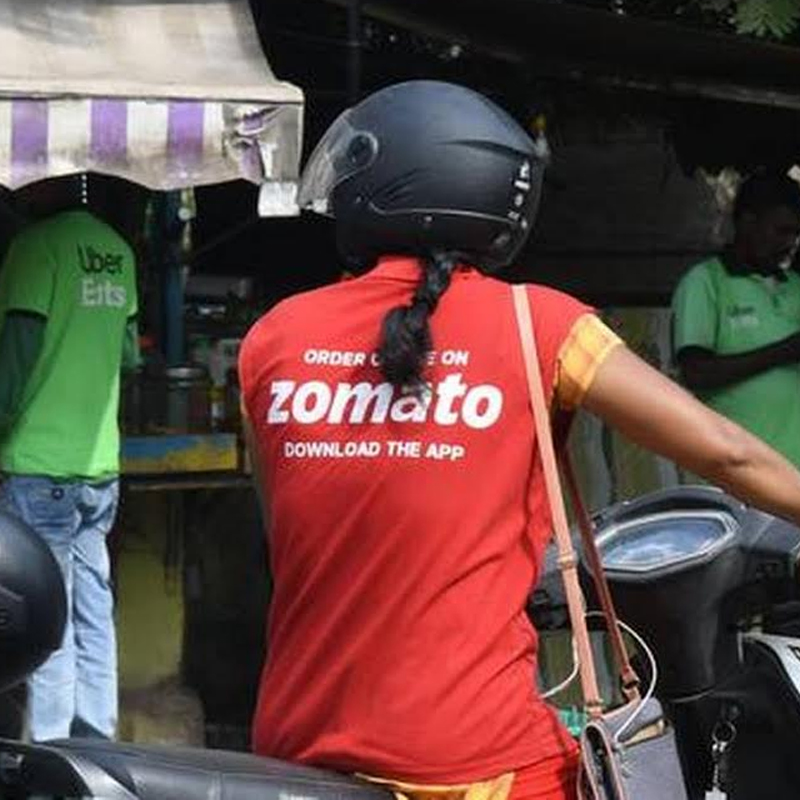
Zomato progresses a step ahead in inclusivity; announces menstrual leaves
NEW DELHI: “How many times have you had to send a message to your team saying “unwell today – taking the day off” and having to answer concerned questions about your health with a feeble “stomach upset / weakness” when you really wanted to say “on my period, terrible cramps – need a heating pad, some chocolate and a lot of green tea (or something stronger) so I’m taking the day off”?”
This is how Zomato founder and CEO Deepinder Goyal started an interesting letter he sent the employees working at the restaurant aggregator and food-delivery company this Sunday. He was introducing an optional 10-day period leave policy for the women of Zomato, in a progressive step, becoming the third Indian company on-record to take menstrual leaves. Earlier, digital media company Culture Machine and independent digital agency Gozoop had announced such a policy for their female employees, back in 2017.
Zomato is extending this option of taking 10 extra leaves a year during menstruation to its transgender people as well. Any person facing unnecessary harassment or distasteful comments from colleagues for taking a period leave can report them to an internal POSH committee via email.
Goyal wrote, “At Zomato, we want to foster a culture of trust, truth and acceptance. Starting today, all women (including transgender people) at Zomato can avail up to 10 days of period leaves in a year. There shouldn’t be any shame or stigma attached to applying for a period leave. You should feel free to tell people on internal groups or emails that you are on your period leave for the day.”
In its run to inclusivity, Zomato had earlier announced a 26-week paternity leave as well.
Menstrual leaves became an issue of widespread debate in the country when “The Menstruation Benefit Bill” was tabled by Ninong Ering, a member of parliament from Arunachal Pradesh, in 2018, with forces against it citing increased workplace harassment and gender discrimination at the workplace as a reason.
However, several countries have these policies in place for decades. Japan had passed a law allowing women with debilitating periods to take days off in 1947, more than 20 years after Japanese labour unions started demanding it. Indonesia announced two days of menstrual leave per month under its Labour Act in 2013. As of 2015, women in Zambia are legally entitled to a day off each month during periods and one has the right to prosecute the employer if denied.
In South Korea, not only are female employees entitled to menstrual leave but they are also ensured additional pay if they do not take the menstrual leave that they are entitled to.
In India, as mentioned, the discussion is still in its nascent stages, however, and this decision by Zomato has met with mixed reactions on social media.
The number of butt hurt men reacting to @Zomato s period leave by calling it 'unfair' is proof enough the company did the right thing. These are the same people who consider maternity leave as 'unfair' and say women can't cope with work and a baby. No Uterus No opinion please.
— Agamoni Ghosh (@agamoni) August 9, 2020
Granted that men do not have much say on periods and it’s side effects but don’t you find asking for special treatment defeats the whole act of Equal Opportunity, treatment and Pay at the workplace. Asking to declare will invoke another harassment lawsuit. #Catch22
— Harish Viayan (@harish3912) August 9, 2020
Earlier with 26 week Paternity leave and now with 10 day #periodleaves, @Zomato keeps winning our hearts.
Companies make a note – Women have periods, they need a day off. No need to disguise it as just another "sick leave". They deserve this time off. This is just biology. https://t.co/mwotxMmTRO
— Rajiv Bhatt (@rajivbhatt) August 8, 2020
Oh lord. How do we demand equality when we want special treatment every step of the way? https://t.co/6Wyce8u9HY
— Nupur J Sharma (@UnSubtleDesi) August 8, 2020
Great initiative, but are you doing something about the stress you cause to employees, which is leading to anxiety, depression, hormonal imbalances and ultimately irregular periods?
— Neha Sharma (@neha0920) August 8, 2020
This is an extremely dangerous precedent 2 set.Provide equal opportunities in appointments, promotions n pay structure. Providing holidays as period leaves will only work as a deterrence 2 employers in hiring women.I don’t think or support the idea tht women need period leaves.
— Madhubanti Chatterjee (@MadhubantiChat3) August 8, 2020

Brands
Creative Intelligence: Using AI to Predict Which Ads Will Actually Convert
Priyanka Aeron, Director & Co-founder of Thrive Global AI
MUMBAI: In a heavily populated digital landscape, simply being creative with your advertising will not guarantee that your ad will be successful. In fact, brands today are producing more content than ever. However, very little of that results in actual engagement or sales. However, Creative Intelligence, powered by AI, is fundamentally transforming the advertising industry.
Creative Intelligence utilizes data, machine learning, and statistical behavioral insights to analyze and predict how well a creative asset will perform prior to it being published. Therefore, marketers no longer have to rely on either their gut instincts or post-campaign analytics for making informed decisions before production. That said, AI-powered creative intelligence greatly improves results and decreases wasted dollars spent.
Moving Beyond Guesswork
In the past, making ads was a mix of gut feeling, experience, and A/B testing. These methods were useful, but reactive by nature. People have already spent their budgets by the time the results are looked at. AI models can find patterns that are linked to higher engagement and conversion rates by looking at huge datasets. These datasets can include things like past campaign performance, audience behavior, and visual elements like color, composition, and facial expressions. This helps marketers guess which ads will do well even before they go live.
Decoding What Truly Drives Conversions
AI-powered creative intelligence allows for an evaluation of advertisements that is not limited to the basic data but also explores the elements of an effective advertisement through subtle reactions; clarity and directness of the ad message and how well the ad captures audience’s attention in the first three seconds. AI can also provide insights into the successful use of advertisements directed to human faces, which connect through eye contact based on media channels, and how advertisements that utilize shorter but clear calls to action may produce more clicks from certain populations. The insights, provided through AI, provide marketers with the ability to think beyond creating more advertising material and additionally create more effective ad campaigns that actually convert.
Personalization at Scale
Consumers expect relevance more than ever. Irrelevant mass messaging is not going to work in a society inundated with information. Hyper-personalization, using AI, allows companies to create content that suits individual segments within their target markets based on their demographics, interests, and behaviors. Rather than having one single message that aims to reach everyone, brands can have many versions of their messages tailored to each segment within the market. Such flexibility is what makes campaigns successful nowadays.
Faster Iteration, Better Results
Another advantage to using AI in creative decision-making is speed. Companies must improvise because their campaign cycles are shorter than ever before, and having the ability to iterate rapidly is more important than it has ever been. There is no greater way to do this work than through AI, as new technologies give brands the ability to test multiple creative avenues and figure out which ones are working well. This reduces a lot of the testing that companies would otherwise have to do and makes the process faster.
With AI, brands can also make creative changes in real-time during a campaign, allowing the, to make vital decisions and adjust their creatives, rather than waiting out. This allows for faster adaptability, well-tested campaigns and reduced lost ad spend.
The Human-AI Collaboration
Even though AI is capable of performing certain tasks, its purpose is not to eliminate human creativity. Successful campaigns require human collaboration with computer intellect since both complement each other. While computers are capable of dealing with massive amounts of information, discovering patterns, and providing predictions, humans are the one to inject stories and emotions into campaigns.
The Future of Advertising
As the complexity of advertising becomes harder with the passage of time, Creative Intelligence will play a significant role in helping marketers formulate a strategic approach. The yardstick that will set standards for determining whether a marketing firm has fulfilled its responsibilities will be the forecasting of future outcomes, as well as personalized content and optimization of creative elements in real-time. In contrast to the existing scenario where the campaigns remain fixed, these campaigns will be capable of adjusting themselves according to the customer interacting with the brand, as well as other trends on social media channels. This will enable brands to offer customers an engaging experience that will exceed expectations. The biggest hurdle marketers will face will be finding ways to utilize these capabilities without compromising branding and enhancing the creativity of the team involved.