MAM
WPP Media: The ad industry continues to defy the doomsayers


MUMBAI The advertising world, it seems, refuses to read the room. Whilst economists fretted over trade wars and geopolitical chaos, the ad business simply cracked on. WPP Media’s This Year Next Year global end-of-year forecast reveals an industry in rude health: global advertising revenue will swell by 8.8 per cent in 2025 (excluding American political ads) to hit $1.14 trillion. Not bad for an industry supposedly on its last legs.
The momentum doesn’t stop there. WPP’s number-crunchers reckon 2026 will deliver 7.1 per cent growth, with a five-year compound annual growth rate of 6.3 per cent. Trade tariffs turned out less beastly than feared, whilst the AI investment boom has opened wallets across boardrooms. The industry’s prior dalliance with machine learning, it turns out, was excellent preparation for the current technological maelstrom.
Joseph Schumpeter would be having a field day. Streaming video continues its relentless march against linear television. Retail media pinches budget from traditional digital channels. AI-powered answer engines are starting to reshape how people search. And creator-driven content keeps displacing the professionally produced stuff, forcing a wholesale re-evaluation of what actually works.

The real story is commerce. WPP forecasts it will rake in $178.2 billion in global ad revenue this year—surpassing total television advertising for the first time. That’s a watershed moment. The United States dominates commerce advertising, projected to reach nearly $100 billion by 2030, with China following at roughly the same level. Britain, Japan, Germany and India trail considerably behind, each forecast to hit between $8 billion and $12 billion by decade’s end. The report warns that AI interfaces may soon cannibalise retail media revenue, forcing consolidation and demands for proof of value.
Content-driven advertising remains the heavyweight champion at $663.5 billion (58 per cent of global revenue), but the composition has shifted dramatically. The chart tells a brutal story of industrial decimation and digital triumph. In 2000, newspapers commanded roughly 37 per cent of content advertising share—by 2030, they’ll be a rounding error at barely 3 per cent. Television, which owned about 65 per cent of the pie in 2000, will tumble to roughly 30 per cent.
The winners? Social media and other digital platforms have surged from nothing to dominance, claiming the lion’s share by 2030. Audio (including podcasts and streaming) maintains a thin but steady slice around 10 per cent. Magazines, which held 5.75 per cent in 2019, have virtually vanished into the digital ether.
Gaming represents the fastest-growing content advertising channel, expanding 29.5 per cent to $8.5 billion in 2025, though it remains a mere 0.7 per cent of total ad revenue. Small today, explosive tomorrow—the trajectory suggests gaming could be the sleeper hit of the next decade.
Newspapers are clinging on at $31.4 billion in 2025 before a projected decline—a brief stay of execution before the final curtain. Digital out-of-home advertising is forecast to represent 43.9 per cent of total OOH revenue by 2030, reaching $31.4 billion and effectively achieving parity with traditional billboards and posters. Even the streets are going digital.
America remains the undisputed king, commanding $431.2 billion in 2025 ad revenue (12.5 per cent growth). China sits at number two with $216 billion (6.8 per cent growth). Britain punches above its weight at third place with $58.4 billion (8 per cent growth), ahead of economic heavyweight Japan at $51.9 billion. The regional breakdown shows North America gobbling up 39.8 per cent of global advertising, APAC claiming 31.5 per cent, Europe taking 22.2 per cent, Latin America managing just 4.7 per cent, and the Middle East and Africa scraping by with 1.9 per cent.
Brazil is the standout performer, notching 16.1 per cent growth to reach $26.8 billion—the highest growth rate amongst the top 15 markets. India follows with respectable 9.2 per cent growth to $20.7 billion. At the other end, Italy limps along with just 2.9 per cent growth to $15.9 billion.







MAM
Beacon Group appoints Dr Rajesh Patel as Group CEO
36-year healthcare veteran to lead Beacon Diagnostics, Vector Biotek, Biogeny.
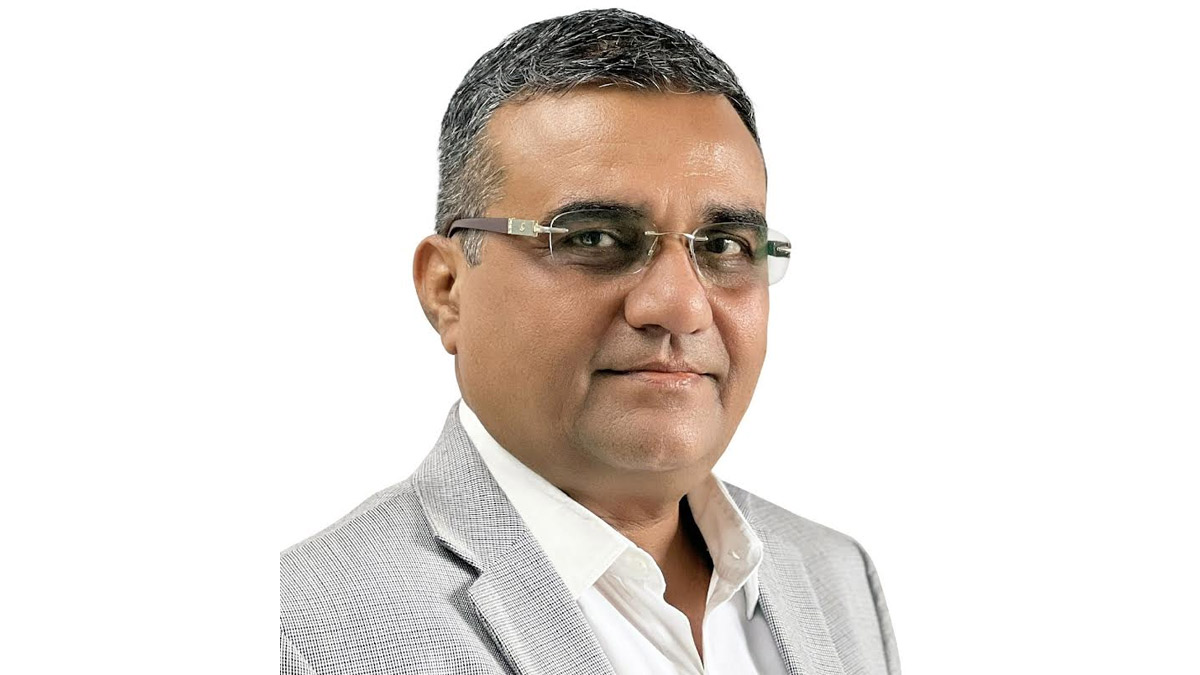
MUMBAI: A new chief, a fresh diagnosis and a sharper prescription for growth. Beacon Group has appointed Dr Rajesh Patel as its Group Chief Executive Officer, effective April 1, 2026, signalling a decisive push to scale its presence in the diagnostics and IVD space. Patel steps into the role with 36 years of experience across the healthcare and diagnostics industry, bringing a career shaped by leadership roles spanning sales, marketing, business development and operational strategy. His mandate is both expansive and precise: to steer the group’s overall strategic direction while tightening coordination across its three core entities Beacon Diagnostics, Vector Biotek and Biogeny Diagnostics.
In practical terms, that means driving cross-company synergies, accelerating market expansion and strengthening organisational capability areas increasingly critical as diagnostic players compete for scale in a fragmented yet rapidly evolving healthcare ecosystem. The group is positioning itself to capture unmet demand across chain laboratories, key accounts and standalone labs, segments that remain underserved despite growing diagnostic needs.
The appointment comes at a time when the In Vitro Diagnostics (IVD) sector in India is entering a more competitive and innovation-led phase, with companies focusing not just on product pipelines but also on service delivery, integration and customer-centric models. Beacon’s leadership appears to be betting that Patel’s execution-focused approach can help translate ambition into operational momentum.
Welcoming the appointment, Chairman Dr D K Joshi described Patel’s induction as a strategic move aligned with the group’s long-term vision, emphasising the role of leadership depth in navigating the next phase of growth.
For Beacon Group, the message is clear, in a sector where precision matters, leadership is the new differentiator—and this appointment is intended to set the tone for what comes next.






