MAM
WPP Media highlights 10 trends shaping the future of advertising in India
At its TYNY 2026 briefing, WPP Media described a market where AI, commerce, creators and data work as one loop

Mumbai: Advertising is entering what looks less like a new cycle and more like a rewrite. At its annual This Year Next Year 2026(TYNY) briefing, WPP Media sketched a future where AI agents, commerce platforms, creators and live experiences merge into one measurable system.
The thrust is simple but unsettling for traditionalists. Reach alone is no longer the prize. Outcomes, data and cultural relevance are. In fast-evolving markets such as India, where digital adoption and youth demographics amplify every shift, the change is likely to be felt quickly.
Here are the 10 trends WPP Media says will shape the ad business next.

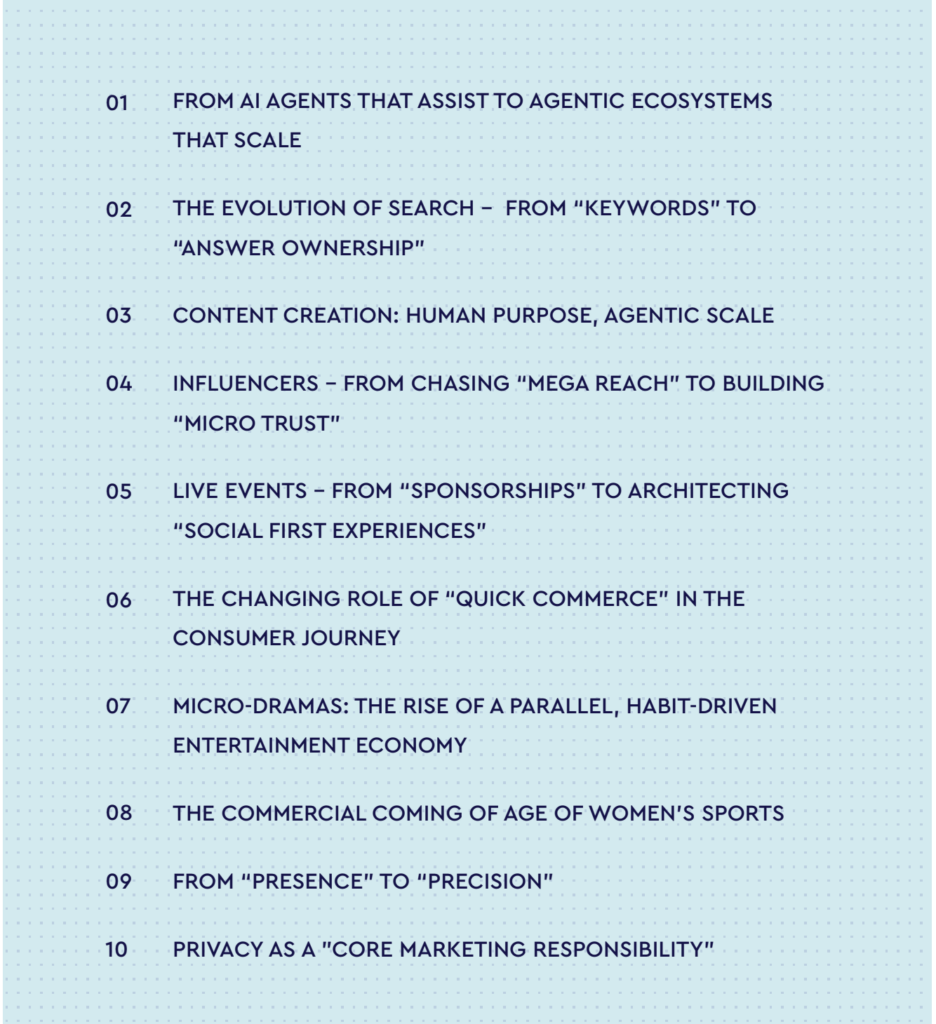
1) Agentic AI ecosystems
AI is evolving from a single assistant into networks of “agents” that can plan, buy, optimise and measure campaigns. Marketers move into supervisory roles, setting rules and guardrails. Firms are advised to build data systems that let multiple AI tools work together.
Why it matters: AI becomes marketing’s operating layer, not just a tool.
2) Answer ownership replaces keyword hunting
Search is turning into AI-generated answers. Instead of competing for links, brands must become trusted sources that AI models cite. Credibility and expertise rise in value.
Why it matters: Visibility depends on being the answer, not just appearing near it.
3) Content at agentic scale
Creators supply the cultural spark; AI multiplies it across languages, formats and markets. Brands are urged to build modular creative assets that machines can remix.
Why it matters: Human insight meets machine scale.
4) Micro-trust over mega-reach
Influencer marketing is fragmenting into smaller, language-led communities. Long-term partnerships and transparency count more than follower size. Compliance norms from bodies such as Advertising Standards Council of India also shape credibility.
Why it matters: Influence travels through trust, not just numbers.
5) Live events as data engines
Events are becoming tools to gather first-party data and cultural signals. The show is only half the value; the data and social ripple effects are the rest.
Why it matters: Sponsorships turn into data strategies.
6) Quick commerce as media
Quick commerce is merging with mainstream e-commerce as giants such as Amazon and Flipkart deepen their play. Brands must decide whether these platforms drive demand, conversion or insight.
Why it matters: Delivery apps double as ad channels.
7) Micro-dramas and the habit economy
Short, serialised videos are building loyal viewing habits and linking content directly to purchase. Narrative loops replace one-off ads.
Why it matters: Storytelling becomes shoppable.
8) Women’s sports move centre stage
Women’s sport is gaining cultural and commercial clout. Early brand entrants can secure premium associations at relatively low cost.
Why it matters: A rising property still has open ground.
9) Precision over presence
Effectiveness comes from aligning with consumer mindset and context, not just scale. High-intent moments are prized.
Why it matters: Smarter reach beats bigger reach.
10) Privacy as growth lever
Data ethics and privacy compliance are framed as competitive advantages. Secure data environments and responsible use build trust.
Why it matters: Trust converts into long-term value.
The bigger signal
WPP Media’s underlying message is that advertising is becoming an ecosystem business. Data, distribution, culture and commerce are interlocked. Brands that treat them separately risk inefficiency. Those that connect them can compound gains.
The industry’s centre of gravity is shifting from buying media to engineering outcomes. In that world, creativity still matters, but it travels with code, commerce and consent close behind. The ad industry has always chased attention. Now it is being asked to earn trust and prove results too.







MAM
WPP appoints Estée Lauder’s Anne-Isabelle Choueiri as chief transformation officer
Former Estée Lauder executive to lead operations, technology and culture overhaul under WPP’s three-year growth plan

LONDON: WPP has appointed Anne-Isabelle Choueiri as chief transformation officer in a newly created role tasked with delivering the group’s Elevate28 strategy.
Choueiri joins from The Estée Lauder Companies, where she led enterprise-wide strategic initiatives, including the “One ELC” operating model and major upgrades to enterprise marketing, data and analytics capabilities. She also led the redesign of enterprise technology teams and served on the company’s AI taskforce, driving AI strategy, adoption and value realisation across the business.
At WPP, she will be responsible for designing, implementing and embedding the operating model behind Elevate28, the company’s three-year growth plan unveiled in February 2026. She will lead efforts to improve innovation, efficiency and integration across WPP’s client offerings, with a focus on delivering agile, outcome-driven solutions and measurable growth.
Choueiri will oversee organisational transformation across the group, working closely with product and enterprise technology teams to deploy AI, data and technology to build new capabilities and improve operational performance. She will also work with the people function to embed cultural change, strengthen an agile performance mindset and support talent development across the organisation.
Before joining Estée Lauder, she held senior roles across consulting and digital agencies, including at Accenture, Masaï (a Bain & Company spin-off), and Kearney, with experience spanning strategy, data and digital marketing transformation.
Cindy Rose, chief executive officer of WPP, said Choueiri brings a strong track record of leading large-scale transformation across operations, technology and culture, adding that her appointment will help accelerate the group’s next phase of growth under Elevate28.
Choueiri said WPP’s strategy represents an ambitious opportunity to reshape how the company operates and delivers for clients, adding that she looks forward to building integrated solutions and fostering a culture of innovation and change.
She will be based in New York and will join WPP’s executive committee.







