Digital
Work stress tops India’s mental health talk, not heartbreak or headlines

MUMBAI: When India opens up about mental health, the conversation keeps clocking in at work. A new conversation analysis by Consuma, an AI-native consumer insights platform, shows that workplace pressures are the most frequently discussed trigger in online conversations around mental health awareness in India. The study analysed 136,695 public conversations across Twitter, Reddit, Youtube and Instagram between January 1 and December 31, 2025. Within a focused subset of 20,272 conversations that explicitly discussed what triggers mental health awareness, nearly half 49.72 per cent pointed to work-related stressors, making employment the single largest trigger category online.
The findings echo concerns flagged at the policy level. India’s Economic Survey 2024–25 has already warned that hostile work environments and long working hours can hurt mental wellbeing and productivity. Online conversations suggest employees are feeling the strain long before policy catches up.
Among work-related triggers, poor work–life balance dominates the discussion at 24.37 per cent, followed by general workplace stress at 21.85 per cent and toxic work culture at 15.90 per cent. Long working hours account for 9.57 per cent of mentions, while job insecurity features in 7.50 per cent.

The numbers are backed by sharp, candid commentary. One user writes, “Most Indian employers overcomplicate employee wellness. Let people work async. Let them go for a run in the afternoon. Let them sleep in when their body needs it.”
Consuma notes that these findings apply only to conversations that explicitly discuss triggers for mental health awareness, not the entire universe of mental health discussions online.
The data shows that mental health discourse in India is overwhelmingly driven by adults in their prime working years. People aged 25–34 contribute 50.51 per cent of conversations, while those aged 35–44 account for 34.35 per cent. Together, they represent 84.86 per cent of the discussion.
Work stress, however, is not acting alone. Societal and educational pressures make up 33.98 per cent of trigger conversations, including societal expectations (14.42 per cent), academic pressure (13.92 per cent) and parental pressure (6.09 per cent). One widely echoed sentiment reads, “Indian parents will raise you with a roof over your head, food in your stomach, and shame in your soul.”
Taken together, the data points to a compounding “pressure stack” faced by working-age Indians balancing career demands alongside cultural expectations, education-linked anxiety and family pressure, all while chasing conventional life milestones.
Interestingly, the conversation is not limited to venting. Of the 26,311 conversations analysed for broader mental health themes, discussion is almost evenly split between core challenges (48.05 per cent) and solutions or support systems (43.81 per cent).
Mental health crises dominate the challenge cluster at 32.58 per cent, followed by stigma and lack of awareness at 20.27 per cent. On the solutions side, people lean towards culturally familiar, self-directed approaches rather than institutional pathways. Holistic practices such as music therapy and spiritual wisdom account for 17.34 per cent, practical stress management for 13.72 per cent, celebrity-led awareness for 7.64 per cent and government initiatives for 6.51 per cent.
The shift suggests that people are not only asking “what’s wrong?” but increasingly “what can I do?”even if the answers remain personal and decentralised.
Consuma’s analysis also zooms in on women’s health conversations, where mental wellbeing outweighs physical health topics. Among 1,934 women’s health conversations analysed, mental health accounts for 51.14 per cent, surpassing reproductive and gynaecological health at 37.07 per cent.
Younger adults dominate this space, with 18–44-year-olds contributing over 81 per cent of the discussion. In women’s health awareness triggers (3,489 conversations), societal factors lead at 45.2 per cent, closely followed by mental health drivers at 41.7 per cent.
Healthcare-related challenges appear less frequently at 7.4 per cent, but the tone is striking. Misdiagnosis and medical gaslighting recur as trust-breaking themes. One user notes: “Going to doctors is useless in India as a woman. First, they tell you to lose weight… Then they tell you that you are imagining it or that you are sensitive.”
The report was generated using Consuma’s AI-powered Rapid Research Platform. The dataset was cleaned for noise and duplicates and classified using a multi-coding methodology. Source-wise, the conversations came from Youtube (77,544), Twitter (41,121), Reddit (9,283) and Instagram (8,747).
In a digital space often crowded with noise, the findings paint a consistent picture, for India’s online audience, mental health conversations begin not in therapy rooms or hospitals, but at the workplace and the clock is still ticking.






Introduction
In the modern digital landscape, businesses are constantly seeking innovative ways to reach their audience, build relationships, and drive conversions. Two of the most powerful tools in digital marketing today are email automation and YouTube marketing. These strategies not only help brands engage with their audience but also provide measurable results that can significantly impact business growth. Platforms like ExamCollection offer valuable insights and resources for mastering these techniques. In this article, we will explore how email automation and YouTube marketing can transform your digital strategy and help you achieve long-term success.
The Power of Email Marketing Automation
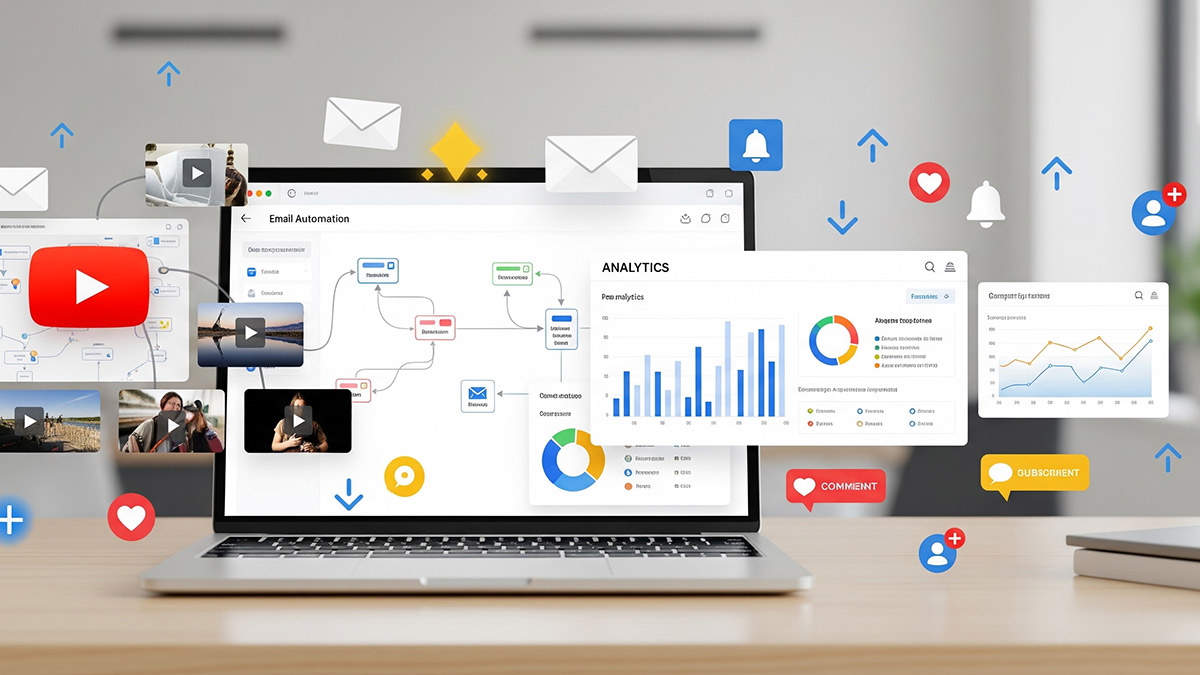
Email marketing remains one of the most effective channels for communication and conversion. However, manually managing email campaigns can be time-consuming and inefficient. This is where marketing automation comes into play. Automation tools allow businesses to send personalized messages based on user behavior, preferences, and engagement patterns. This not only improves efficiency but also enhances the customer experience.
Benefits of Marketing Automation
Marketing automation provides several advantages, including increased productivity, improved targeting, and better customer retention. By automating repetitive tasks, businesses can focus on strategy and creativity. Additionally, automation enables marketers to segment their audience and deliver highly relevant content, which leads to higher open rates and conversions. It also provides valuable analytics that help optimize campaigns for better performance.
How to Master Email Automation
To master email automation, businesses need to understand their audience and create targeted campaigns. This involves setting up workflows, designing engaging email templates, and analyzing performance metrics. Tools like CRM systems and automation platforms can help streamline the process. Learning from expert guides and resources can significantly improve your skills and results.
The Rise of YouTube Marketing
YouTube has become one of the most influential platforms for digital marketing. With billions of users worldwide, it offers businesses an فرصة to reach a massive audience. Video content is highly engaging and can convey messages more effectively than text or images. As a result, many brands are investing in YouTube marketing to build their online presence and connect with their audience.
Key Strategies for YouTube Success
Successful YouTube marketing requires a well-planned strategy. This includes creating high-quality content, optimizing videos for search, and engaging with viewers. Consistency is also crucial, as regular uploads help build a loyal audience. Additionally, using analytics tools can help track performance and identify areas for improvement.
Explore more: https://www.examcollection.com/blog/master-youtube-marketing-with-these-10-powerful-steps/
Combining Email and YouTube Marketing
Integrating email automation with YouTube marketing can create a powerful synergy. For example, businesses can use email campaigns to promote new videos, share exclusive content, and drive traffic to their YouTube channel. Similarly, YouTube videos can encourage viewers to subscribe to email lists, creating a continuous cycle of engagement. This integrated approach can significantly enhance marketing effectiveness.
The Role of Data and Analytics
Data plays a crucial role in both email and YouTube marketing. By analyzing user behavior and engagement metrics, businesses can make informed decisions and optimize their strategies. Metrics such as open rates, click-through rates, watch time, and subscriber growth provide valuable insights into campaign performance. Using these insights, marketers can refine their approach and achieve better results.
Challenges and How to Overcome Them
While email automation and YouTube marketing offer numerous benefits, they also come with challenges. These include content creation, audience engagement, and staying updated with changing algorithms. To overcome these challenges, businesses need to invest in continuous learning and adapt to new trends. Leveraging reliable resources and expert guidance can make a significant difference.
Future Trends in Digital Marketing
The future of digital marketing is likely to be shaped by advancements in artificial intelligence, personalization, and interactive content. Automation tools will become more sophisticated, enabling even more personalized experiences. Video content will continue to dominate, with platforms like YouTube playing a central role in marketing strategies. Businesses that stay ahead of these trends will have a competitive advantage.
FAQ
1. What is email marketing automation?
Email marketing automation involves using software to send targeted and personalized emails based on user behavior and preferences.
2. Why is YouTube important for marketing?
YouTube provides a platform to reach a large audience and engage users through video content.
3. Can small businesses benefit from these strategies?
Yes, both email automation and YouTube marketing are highly scalable and suitable for businesses of all sizes.
4. How can I improve my email open rates?
By creating compelling subject lines, segmenting your audience, and delivering relevant content.
5. What tools are used for YouTube marketing?
Tools like video editing software, analytics platforms, and SEO tools are commonly used.
Conclusion
Digital marketing is evolving rapidly, and businesses must adapt to stay competitive. Email automation and YouTube marketing are two powerful strategies that can drive significant growth when implemented effectively. Email automation allows businesses to deliver personalized and timely messages, improving customer engagement and retention. On the other hand, YouTube marketing provides a platform to connect with a vast audience through engaging video content. By combining these strategies, businesses can create a comprehensive marketing approach that maximizes reach and impact. Platforms like ExamCollection offer valuable resources that help marketers understand and implement these techniques effectively. The integration of data and analytics further enhances the effectiveness of these strategies, enabling businesses to make informed decisions and optimize their campaigns. However, success in digital marketing requires continuous learning, creativity, and adaptability. As technology continues to advance, new opportunities and challenges will emerge. Businesses that stay updated with the latest trends and leverage the right tools will be well-positioned for success. Ultimately, mastering email automation and YouTube marketing can lead to increased brand visibility, higher engagement, and improved conversion rates. By investing time and effort into these strategies, businesses can achieve sustainable growth and long-term success in the competitive digital landscape.






