Digital
WION Ai EDU Summit explores how AI is reshaping education and future skills
Bengaluru summit brings together policymakers, educators and industry leaders to discuss AI’s impact


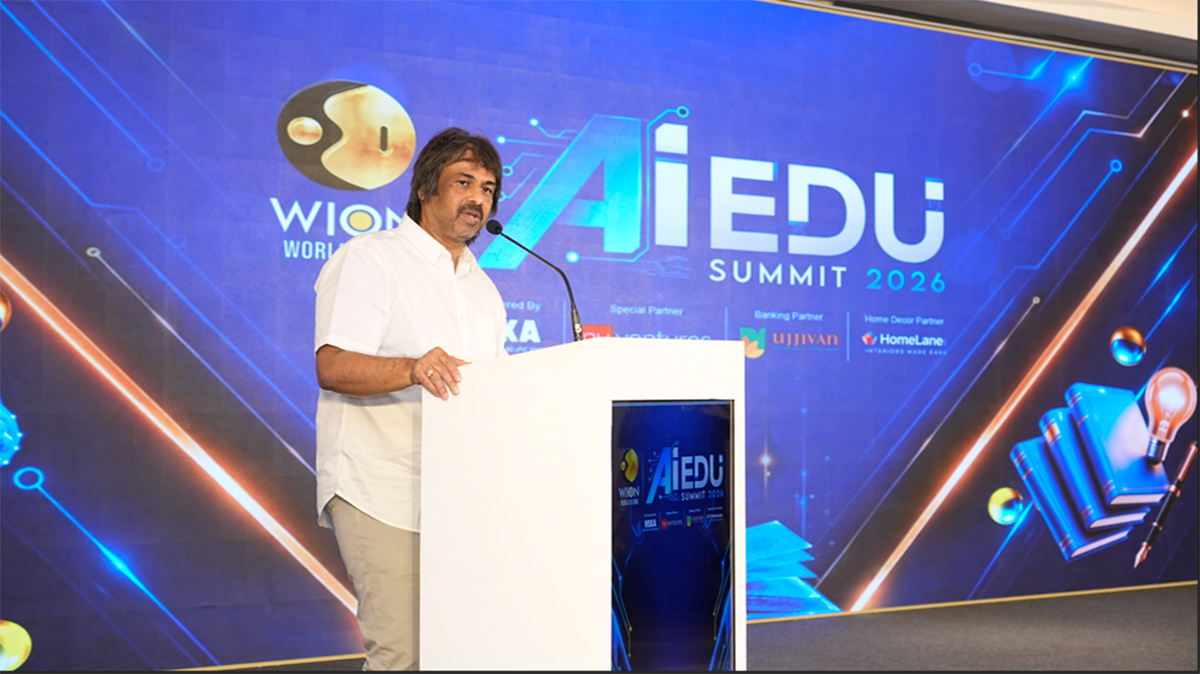
BENGALURU: From classrooms and airports to creator ecosystems and startups, artificial intelligence is moving beyond experimentation and reshaping how organisations work and people learn. This was the focus of the WION Ai EDU Summit 2026, held in Bengaluru on 24 September.
The summit brought together policymakers, educators, technology leaders, innovators and industry experts to examine how AI is changing education, business and the skills required for the next generation.
Karnataka cabinet minister for school education and literacy Madhu Bangarappa opened the summit by highlighting the need for greater AI awareness among young people. He said AI would be important to their professional and personal futures, while stressing that technology must be accompanied by personality development and strong human capabilities.
The keynote by Ideaspring Capital managing partner and founder and Vision Group for Startups, ITBT, Government of Karnataka co-chairman Naganand Doraiswamy focused on ‘Building the Next Decade of Innovation: AI, Startups & the Future of Karnataka’.
Doraiswamy discussed the wider opportunities for applying AI across industries and education, while highlighting Karnataka’s potential to strengthen its position as an innovation and startup hub.
The first panel, ‘AI@Work: The Future Logs In’, explored the transition of AI from experimentation to practical business applications.
Vinay Ramprasad discussed predictive AI in airport operations, including passenger-flow forecasting, while Balaji Rajan highlighted the need to turn fragmented data into actionable intelligence while keeping humans involved in critical decisions.
Pranesh examined AI’s role in creator discovery, content analysis and brand-creator partnerships, while Avinash Rao discussed its use as a business co-pilot for research, market intelligence and decision-making.
The conversation then moved from workplaces to classrooms with ‘The AI Class Act: The Future of Learning’. Revathi Kamath cautioned against excessive dependence on technology, while Raghuram Ananthoj emphasised reading, critical thinking and strong foundational skills.
S. V. Venkatesh highlighted personalised learning and the continuing role of teachers and mentors. The discussion centred on the idea that AI should support learning while preserving students’ ability to think, question and create independently.
The final panel, ‘Funding the Future’, brought together investors and entrepreneurs to discuss AI, innovation and responsible technology development.
NuVentures’ Venk Krishnan stressed the importance of strong founders, long-term thinking and solving real Indian problems. HomeLane co-founder Srikanth Iyer discussed AI’s potential to improve productivity and customer experience while retaining human trust.
Moderated by T. M. Veeraraghav, the session also examined AI guardrails, human oversight and the responsibilities of investors, founders and governments in shaping the technology’s impact.
The summit concluded with a live Carnatic music performance by musician and singer Vinay Sharva, adding an artistic element to a day focused on technology, education and innovation.
Zee Media CEO Raktim Das said the summit brought together perspectives on how AI could transform education, business, skills and the wider innovation ecosystem, adding that developing AI-ready talent and accelerating responsible adoption would be important as India builds its AI capabilities.