MAM
Why every brand should use mobile SDKs as a part of its digital campaign strategy


MUMBAI: Bot-generated traffic is the bane of the digital marketing ecosystem. It results in the inaccurate tracking of attribution and sales performance which causes advertisers as well as publishers to incur heavy losses every year. It is estimated that Indian advertisers lose over 40 per cent of their investment to bot-driven ad frauds, fake traffic hits, bogus schemes, etc.
This has emerged as the top challenge for advertisers trying to secure robust ROIs, even as they attempt to keep up with recent data privacy policies such as the EU-GDPR. With leading web browsers also introducing more stringent anti-tracking algorithms, digital marketers find the scope of their challenge intensifying.
Enter Mobile SDK: Countering the challenges

Mobile SDKs have emerged as one of the most effective ways of countering this rising tide of bot-induced activity on publisher platforms. Leading affiliate networks are leveraging the more reliable user authentication facilitated by SDK integrations to separate human users from the bot-generated traffic. This – complemented by proprietary anti-fraud technologies – helps them to reduce the losses incurred by clients due to digital frauds to a large extent.
Mobile SDKs also enable in-app tracking of a user’s digital activities – whether the user is logging into the app, placing an order, or carrying out transactions. SDK integration allows the system to record data pertaining to an app’s installation on the device. An advertiser can then choose any of these user actions as their target data source. Such precise targeting, in turn, enables advertisers to effectively track sales attribution and get a deeper insight into campaign performance.
In this way, a transparent process is established between advertisers and publishers. As SDK integrations reduce bot-related losses, publishers who earlier used to avoid associating with affiliate programs can now rest in ease and confidently participate in mobile performance marketing. Thanks to this technology, advertisers can also acquire access to new, legitimate traffic sources and drive an increase in the number of incoming orders.
Apart from this, other benefits offered by the integration of mobile SDKs include:
1. Improved tracking of user behaviour
SDKs enable advertisers to access and work with massive volumes of data, thus facilitating more reliable user authentication. At the same time, they can also be used to gain deeper insights about user behaviour (both pre- and post-acquisition).
Such data-mined intelligence can then be used to bolster their marketing strategies. The accuracy facilitated by large volumes of data enables affiliates to conduct better customer profiling, allowing them to deliver hyper-personalised ads to users. Advertisers can also complement their strategies with demographic-based and geolocation-based targeting to enhance user engagement for their digital campaigns.
2. Better attribution as well as reliable KPI measurement
The cookie-less tracking facilitated by SDKs not only complies with data privacy regulations but also enables far better tracking of user behaviour. In addition, it empowers advertisers to accurately map their sales activities and the performance of their digital campaigns. As a result, marketers are better placed to define more stringent KPIs.
The razor-sharp targeting of consumer demographics facilitated by the use of SDKs further allows marketers to determine sales attribution through enhanced cost per acquisition (CPA) tracking. Advertisers can, therefore, distinguish between affiliates that facilitate superior user-brand interaction and those that need to be worked upon.
3. Enhanced transparency and visibility into the campaign performance
SDKs leveraged by top affiliate networks can be used to gain superior visibility into the individual performance of each advertisement on a real-time basis. As this allows them to precisely track their ongoing campaigns, marketers can alter their digital strategy to optimise ad performance. With the ability to work with larger datasets and conduct sharper targeting, it is no wonder that the SDK-based approach delivers better outcomes than most other digital advertising methods.
4. Superior user-brand interaction
With affiliate networks and marketers working in compliance with the shift towards stronger user privacy, consumers’ confidence in the advertisements they engage with has received a significant boost. SDKs enable advertisers to have users interact with the ads that they are most likely to engage with. This increases the probability of a user not only engaging with the ad but also following through on the transaction. This benefits both marketers and their partner affiliates, as the cumulative RoI of the association increases.
Digital tools such as SDKs developed by affiliate networks like Admitad India have the potential to help both brands and publishers navigate today’s evolving digital marketing ecosystem. Here is the detailed description of the service. The new-age marketing strategies employed by such platforms are as innovative in nature as they are safer, smarter, and considerably more effective.
(The author is Neha Kulwal, CEO, Admitad India. The views expressed here are her own and Indiantelevision.com may not subscribe to them.)

Brands
Jubilant FoodWorks faces Rs 47.5 crore GST demand, plans appeal
Tax authorities flag alleged misclassification of restaurant services
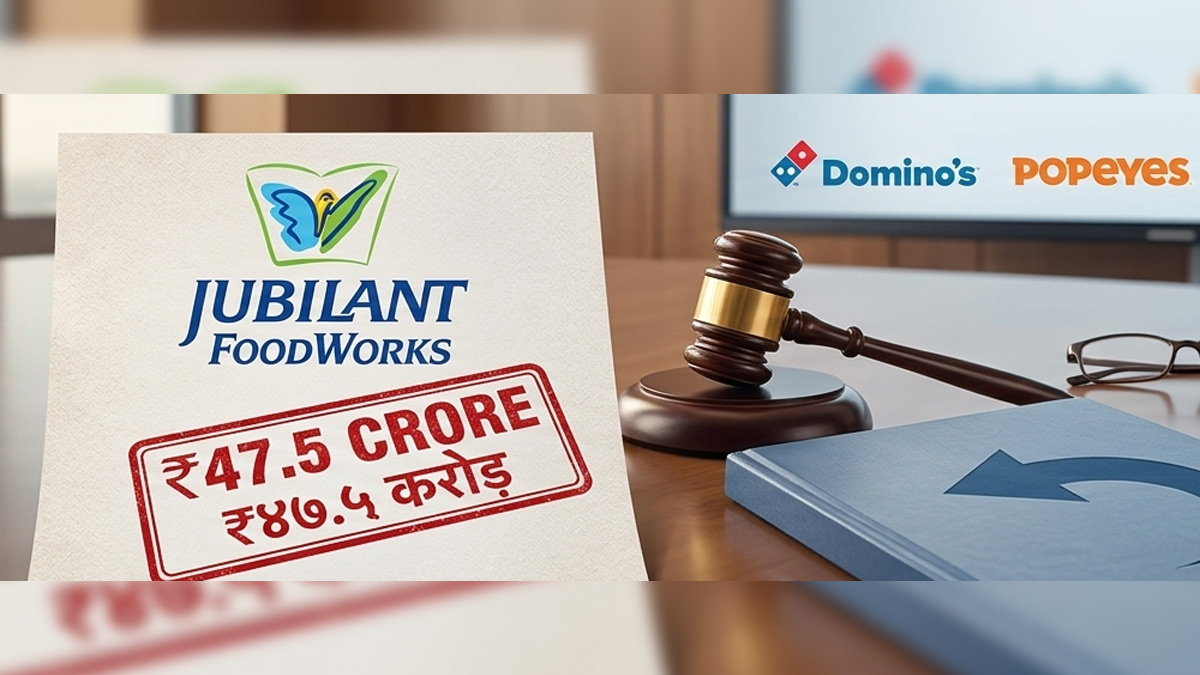
MUMBAI: Jubilant FoodWorks Limited has landed in a tax tussle after receiving a GST demand of Rs 47.5 crore from the office of the additional commissioner of CGST and central excise in Thane, Maharashtra.
The order, issued under the provisions of the Central Goods and Services Tax Act, 2017, relates to an alleged incorrect classification of certain services under the category of restaurant services. According to the tax authorities, this classification resulted in a short payment of goods and services tax for the period between the financial years 2019-20 and 2021-22.
The demand includes Rs 47.5 crore in GST along with an equal amount as penalty, in addition to applicable interest. The order was received by the company on March 13, 2026.
In a regulatory filing to the BSE Limited and the National Stock Exchange of India Limited, the company said it disagrees with the order and believes its arguments were not adequately considered.
The company is preparing to challenge the decision and plans to file an appeal. It added that once the redressal process is complete, the demand is likely to be dropped.
Despite the sizeable figure attached to the notice, the company said it does not expect any material impact on its financials, operations or other activities.
The disclosure was signed by Suman Hegde, EVP and chief financial officer, who confirmed that the company received the order at 19:06 IST on March 13 and has already initiated steps to contest it.
The development places the quick service restaurant major in the middle of a tax debate that could hinge on how certain restaurant-linked services are classified under GST rules. For now, the company appears ready to take the matter from the tax office to the appeals desk.







