MAM
We plan to launch 97 new SKUs in makeup in the next quarter alone: Plum CEO Shankar Prasad

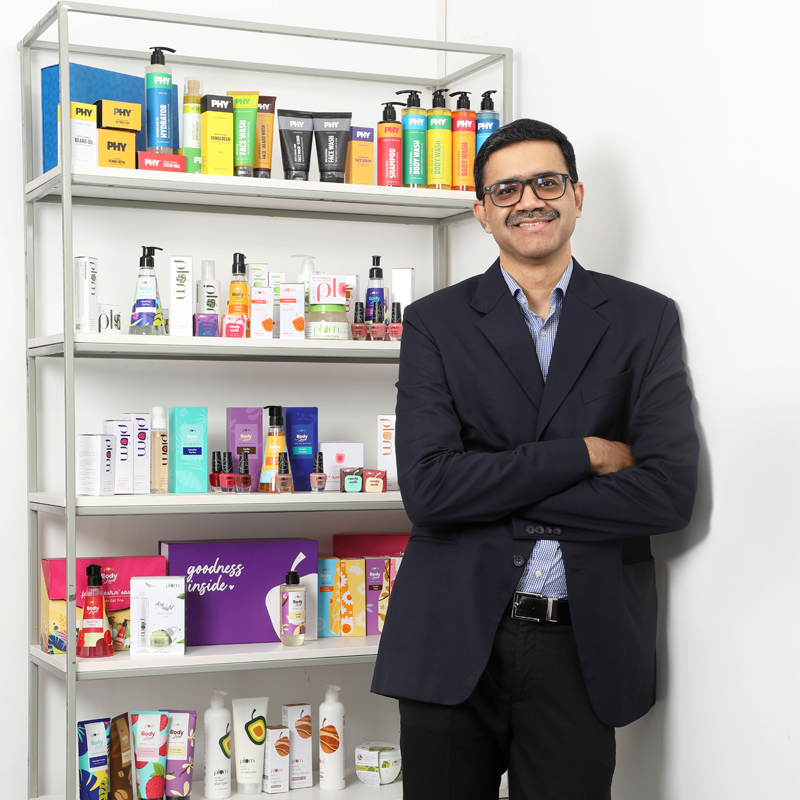
Mumbai: India’s online beauty and personal care market has witnessed a boom due to a shift in consumers’ buying behaviour during the Covid-19 pandemic. The estimated number of online beauty shoppers by 2025 is expected to be over 122 million, with a $5.6 billion market opportunity for D2C brands in the beauty and personal care segment, according to Customer Perception Report 2021. This comes at a time when the space has also been seeing increased traction from investors.
Earlier last week, the homegrown vegan beauty brand Plum made news when it raised $35 million in fresh capital led by A91 Partners. A fast-growing player in the D2C beauty space, Plum has been strengthening its omni-channel presence, building new categories in addition to its core skin care category- across channels and categories in skin, hair, body, men’s care, and now makeup. The fresh capital is expected to add further momentum to the new-age brand’s game plan.
IndianTelevision.com spoke to the founder & CEO of Pureplay Skin Sciences, the parent company of Plum, Shankar Prasad to find out more about the D2C startup’s road map, post the foray into new categories and the fresh capital infusion. Prasad also elaborates on the brand’s plans to scale up this year by aiming for a larger share in the beauty market following its entry into the competitive make-up category.

Aiming for a larger share in the Beauty Pie
From a business perspective, category and channel expansion is the way forward for Plum. The brand plans to deploy its series C funding on “marketing, technology, and people,” says Prasad.
Speaking about the new make up products range launched by the brand, Prasad emphasises, “The fact that product efficacy goes hand-in-hand with the goodness of non-toxicity is appreciated by our consumers,” adding that what worked for the brand is its ‘skin loving makeup proposition’: “which is to say that our makeup is lightweight, nourishing, and free from toxins, apart from being 100 per cent vegan and cruelty-free of course.”
The brand plans to build on this momentum and replicate the success across a full-face makeup range in the coming year. “We plan to launch 97 new SKUs in the next quarter alone. To put things into perspective, our current SKU count is 36, and we plan to take this to 143 by the end of the next quarter across eyes, face, lips, and nails,” Prasad further adds.
Turning disruption into an opportunity
The pandemic was a period of changing consumer behavior, when offline sales had come to a grinding halt and online transactions were the go-to. There was an overall increase in exploration and awareness of brands and content consumption during the lockdowns. The beauty industry was one of the biggest beneficiaries of this shift in consumer behaviour. This had a direct effect on our business, agrees Prasad. “An increasing number of customers, even those who preferred shopping offline, were now turning to online avenues of buying, which gave a much-needed boost to all D2C brands, including us.”
The D2C platform grew 2.5 times over the last year in terms of business. “We got over a million visitors a month on our platforms, with close to 35 per cent repeat rate on a 12-month period.” So while the brand’s makeup line took a hit due to people curtailing their discretionary spends and shying away from buying non-essential items, an increased awareness about hygiene gave a boost to its skincare category, a major part of its portfolio.
The startup saw an opportunity in the reduced advertising costs due to the uncertainty in the market on the media front. “We increased our advertising spends to acquire new customers on our D2C and e-commerce channels.” The brand also took cues from the shifting search trends as people were actively looking for products with specific ingredients, and innovated to launch products such as Aloe Vera Gel and Vitamin C Serum.
The brand recently launched an ad campaign for the products with the millennial actor Mithila Palkar as brand ambassador. Prasad is happy with the response the campaign has garnered, referring to Palkar as ‘a natural fit’ for the brand, as she reflects Plum’s values of being ‘honest and real.’
The D2C brand considers as its primary TG the young women across metros and tier 1 & 2 cities, typically in the age group of 18-34. “With increasing internet penetration, there is greater awareness around new-age D2C brands, not only in the metros but also in tier 1 & 2 cities and consequently, they’re increasingly gaining in share. So, we certainly see a huge opportunity here,” affirms Prasad.
Betting big on social commerce
Social commerce has been gaining momentum in the D2C space by virtue of its ability to educate and reach newer consumers, especially in the hitherto unexplored territories of tier 2 & 3 cities.
Amid the convenience of shopping in the comfort of their homes, the experience of shopping was lost, feels Prasad. “Social commerce solves this by simulating such an experience through social networking sites such as Instagram, Facebook, etc. Higher customer engagement, personalised offers, increased average order value, faster decision-making towards the purchase, and ease of purchase are some of the benefits. Hence, it is a win-win situation for both the consumer and the brand.” Also, due to the interactive nature of the activity, feedback about the product from both the influencer and customers is rich and real-time, enriching the overall experience of the consumer and providing valuable insights to the brand, he stresses.
Keeping this in mind, the D2C platform has a watch and buy section on its website, where users can watch the product being used and then make their purchases. It also has plans to leverage Instagram for social commerce soon, adds Prasad.
Shaping an omni-channel presence
Being a digital-first brand since inception, all its spends are digital and it plans to ‘aggressively’ continue down that road. However, with retail expansion, the brand plans to supplement its primary digital media with other channels such as radio, TV, OOH, etc. “With an increasing offline presence in terms of retail outlets, our consumer touchpoints need to increase proportionately and be relevant to our TG. In accordance with this, we plan to leverage other media such as OOH, radio, TV, print, etc. in the coming year.
In keeping with the preferences of the new-age digital consumer, the brand also plans to be present on OTT media soon, as this will play a major role in expanding its reach to the right kind of audience.
“From our consumer lens perspective, we are also looking at new-age digital consumers who are primarily cord-cutters (those who have cancelled their subscriptions to multichannel television services available over cable or satellite), which brings OTT channels into the mix.”
Marketing road map and expansion plans for 2022
The D2C’s focus is to maximise its reach on leading social media and video platforms such as YouTube, Instagram, and Facebook and a major chunk of its marketing expenditure would go on these digital reach-building channels, according to Prasad. “Our marketing spends are in the range of 25 per cent of overall sales and can even go up to 50 per cent at times.” The brand also has a robust influencer marketing program. “We have 1000+ influencers who we work with on a month-on-month basis as part of the affiliate program, which is called the ‘Plum List.’ Off late, we have been engaging with regional and vernacular influencers too, as these give us a very good return on investment.
From a business perspective, the brand has been scaling rapidly in the offline space too. “We have three exclusive brand outlets in Mumbai and Chennai with plans to launch 50 in the next two years.” From a beauty industry lens, Prasad believes consumers these days are more aware of the products they use and also more conscious about the effect of their purchase on the environment. “This puts a spotlight on issues such as sustainability as brands will have to do more to live up to the consumer expectations,” he signs off.

MAM
Lego brings Messi, Ronaldo, Mbappé, Vinicius together
Campaign clocks 314 million views ahead of FIFA World Cup 2026 buzz.
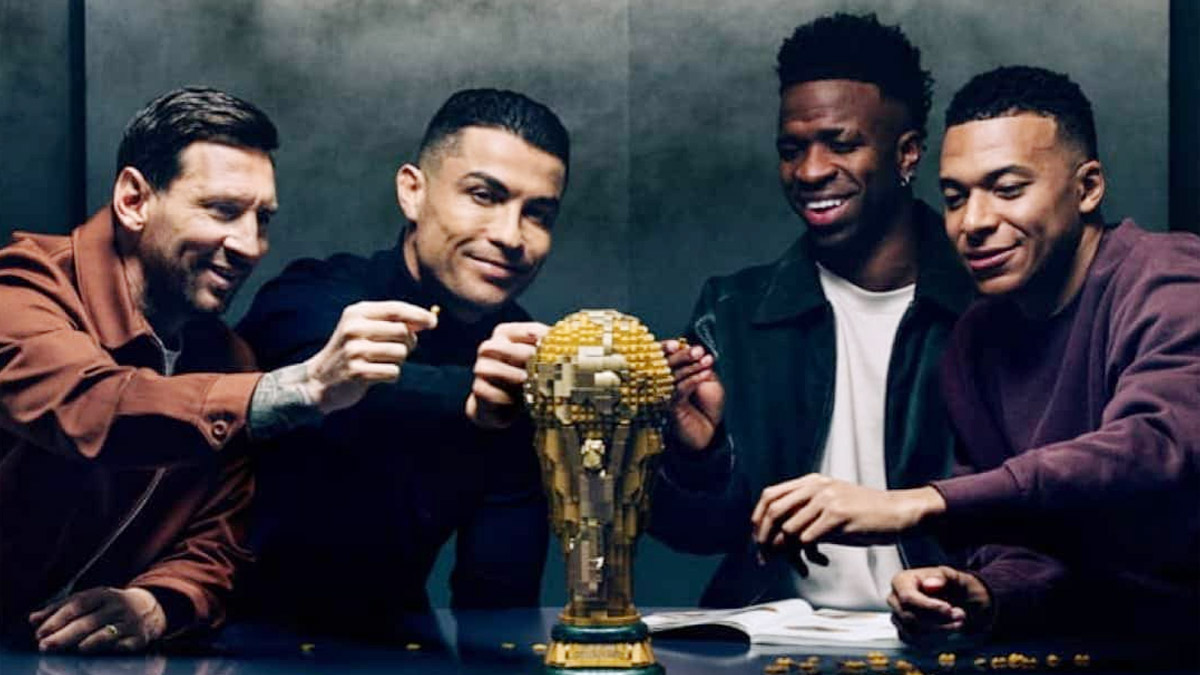
MUMBAI: Four legends, one frame and not a single tackle in sight. Lego has pulled off a crossover few thought possible, uniting Lionel Messi, Cristiano Ronaldo, Kylian Mbappé and Vinícius Júnior in a single campaign ahead of the FIFA World Cup 2026 only this time, they’re building dreams brick by brick.
Titled “Everyone wants a piece”, the campaign features the quartet assembling a Lego version of the World Cup trophy, before placing miniature versions of themselves atop it, a playful nod to football’s ultimate prize. Shared widely across social media, the ad carries a pointed disclaimer: it is not AI-generated, a subtle but telling signal in an era where even reality is often questioned.
The numbers tell their own story. The campaign has already crossed 314 million views on Instagram across the players’ accounts, with fans hailing it as a rare, almost nostalgic moment particularly for the reunion of Messi and Ronaldo, whose last shared campaign ahead of the 2022 World Cup became one of the platform’s most-liked posts.
Beyond the film, Lego is extending the play with exclusive, player-themed sets tied to each of the four stars, part of a broader football-led programme designed to ride the global momentum building towards 2026. The idea, as echoed by the players themselves, leans into the parallels between football and play experimentation, creativity, failure, and triumph.
Messi described the sets as a way to bring on-pitch moments into an imaginative, hands-on world, while Ronaldo called the transformation into a Lego figure a rare honour, blending sport with storytelling. Vinícius, meanwhile, struck a more personal note, recalling childhood moments of building with Lego and framing creativity as a universal language that transcends borders.
The timing is no accident. With the 2026 World Cup set to run from June 11 to July 19 across the United States, Canada and Mexico, and featuring an expanded 48-team format, global anticipation is already building. Argentina, led by Messi, will enter as defending champions, adding another layer of intrigue.
For Lego, the campaign does more than celebrate football, it taps into its mythology. Because when icons become figurines and rivalries turn into play, the beautiful game finds a new kind of pitch. one built, quite literally, by hand.






