Digital Agencies
Video content will be the game changer in 2019: Shrenik Gandhi, White Rivers Media

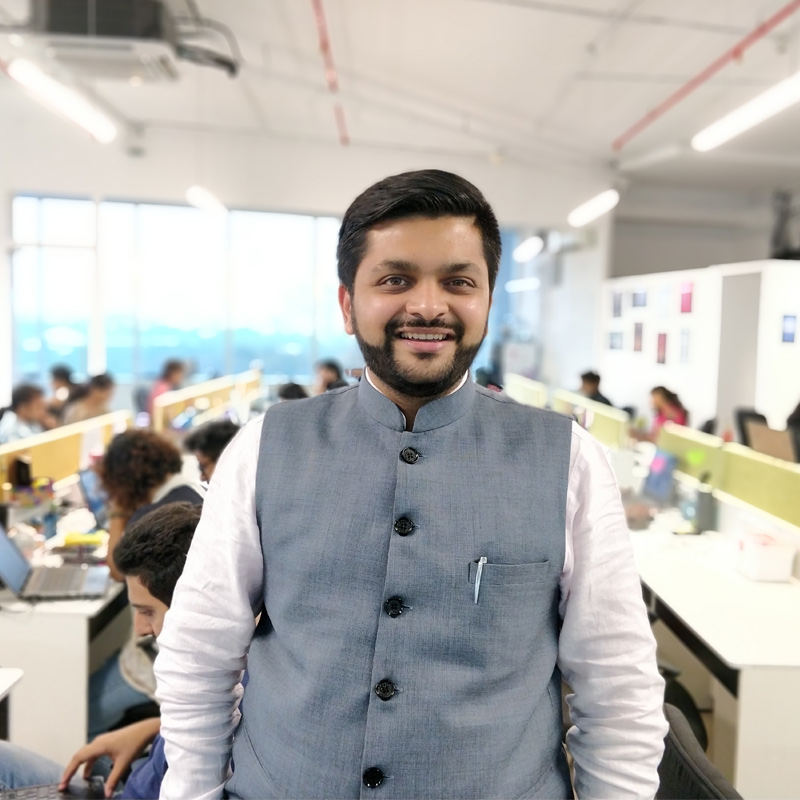
MUMBAI: A young professional just graduated from an MBA college would be thrilled to join a reputed company like Future Group. But Shrenik Gandhi’s entrepreneur blood wouldn’t allow him to work under someone else.
Within a year, he quit and started his own digital marketing agency White Rivers Media and propitiously the agency’s first client was Future Group who handed over the signing amount cheque during Gandhi’s exit interview at the company.
Gandhi began his entrepreneurial journey in 2012 with his MBA batchmate Mitesh Kothari, who was then working for another digital agency WATConsult. What started off as a two-man operation today has a team size of over 75 people in its HQ in Mumbai. With the new office in DLF Cyber City, White Rivers Media is looking to localise all the digital, video and AI-driven e-commerce solutions for its NCR-based clients and more.

With a strong hand over national and international clients from more than eight countries, it has worked with some of the top-valued brands in the country, executing many of their flagship campaigns and grabbing eyeballs internationally. The agency has worked across a range of industries and verticals, including brands like OnePlus, Viacom18, TATA Cliq, Zivame amongst others.
Indiantelevision.com caught up with White Rivers Media CEO and co-founder Shrenik Gandhi to discuss the company’s initial struggles, progress and how things are panning out today.
Excerpts:
What was your initial capital like when you started off White Rivers Media?
Our initial capital was just a laptop and our collective brains and I think that is the good and bad thing about digital that there is zero inventory/investment. Today, anyone with a good laptop and internet connection and some brain can start a digital company.
How was the opening year for you? Was it hard for you to recover money from clients since you were a new agency?
Yes, it was difficult to recover money but, luckily, acquiring clients was never a challenge for us because we made sure that the effort and passion we put in was 100 per cent. Our numbers grew only because of word of mouth. We hired a professional business development team only eight months back which only shows that our work spoke about the company for nearly four years. Today, we have 100 per cent growth year-on-year in terms of revenue.
Who were your initial clients? And do you think your clients have evolved over the time?
Our first five clients are still with us. In the first year, we had less than 10 clients but today, we have on board 50+ clients. Most of our business comes from retainer clients and 60 per cent of our clients are retainers. Our clients have also evolved with us and gone are the days when people said that digital is the future. Digital is not the future. The future is now! Most of our clients have accepted that and give us the required freedom to come up with the best possible campaign for them.
You recently expanded your reach and opened an office in Delhi. What’s your team size there and was this the right time to expand?
In Delhi, we currently have a team of four people but we are actively recruiting people to expand the team. Delhi is a big market and it only made sense to scale up and cater to our clients there, by physically being present.
So is Bangalore the next step for you?
Possibly!
You are traditionally a digital marketing agency, but today agencies are looking at expanding their reach and getting more clients to have a diverse portfolio. Will you also be looking at doing traditional medium anytime soon or are you only going to focus on digital marketing?
To be honest, going forward, I don’t see any offline campaign which will not be supported by digital. It will just not make sense. Yes, a newspaper article is very important but how do we measure it? The campaigns in future will have to be more integrated and digital by itself will not be always enough. As for us, we will do traditional stuff but the core will always be digital. If the offline campaign augments to digital we will definitely do it.
Will you be open to getting acquired at any time if a larger network approaches you?
It is a difficult question to answer, but if it makes return on investment (ROI), we will but only if the ROI makes sense today, after a year and five years down the line. Being a part of something bigger will only make sense when whoever we talk to makes strategic sense and the acquisition helps us in getting a seat next to bigger brands to pitch better with the agency’s larger network.
Is it safe to say that India has become digitally evolved with the advent of Jio, free data and cheaper mobile phones?
People in rural areas today are also using voice search, Google maps and internet. Kids as young as 10-12 years have their own YouTube channel. The younger generation has skipped the laptop and they have gone straight to using mobile phones. If we look at the data, India consumed roughly 25 crore GB of data per month before Jio was launched. Just after six months of launch, data consumption has grown up to 6X. With over 125 crore GB data consumption in India, we are today the highest data consuming nation in the world.
Every brand today wants to be present on digital as that seems to be the latest trend. Do you think digital investment will go up in future?
It will have to increase because brands will eventually realise that the amount they are putting in on hoardings is not yielding them with enough revenue. Clients might want to cut on the cost of two hoardings to invest on digital. Even if they see the same revenue coming in for the company, it is an ROI for them. You will see a lot of budget being shifted to digital. A lot of campaigns being devised for digital first. Gone are the days when people would say that lets create a digital strategy but the world today has become digital and agencies will have to create strategies which will ultimately be digital.
Which category do you think will make the most of digital for advertising?
I think FMCG and automobile will invest majorly on digital. FMCGs have traditionally been pathbreakers in the use of digital and they will continue to bet big on the medium. Smaller brands, however, will have to scale up and divide their advertising budget accordingly.
On a parting note, what do you foresee to be the game changer next year (2019)?
Without a second thought, it has to be videos. The video consumption in India has gone up rapidly. The consumption of short format six-second, 10-second and15-second videos is increasing. The micro video content consumption has become crazy because people have a lot of free data. Today, four out of 10 posts on your Facebook newsfeed will be videos. One would wonder what is the benefit for the social network in this? Well, it would result in better stickiness on the app and more chances of having videos with free data and better revenue for the social platform.




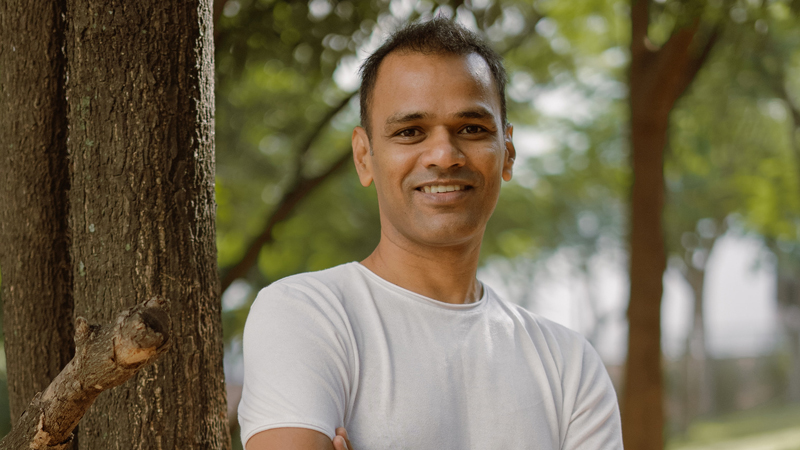
BENGALURU: For years, creative teams have learned to live with ambiguity. Vague comments, last-minute changes, feedback that arrives without context, clarity, or conviction. It became part of the job – something teams worked around rather than getting it solved.
But as we head into 2026, that tolerance is wearing thin.
Creative work today moves faster, scales wider, and involves more stakeholders than before. Teams are producing more content across more formats, often with distributed collaborators and tighter timelines. In this environment, guesswork is no longer a harmless inconvenience. It’s a cost – to time, to budgets, and to creative mindspace.
The real problem isn’t feedback, it’s how it’s given
Most creative professionals you see today will tell you they’re not against feedback. In fact, they rely on it. Good feedback sharpens ideas, strengthens execution, and pushes work forward. The problem is ‘unclear’ feedback. When someone says “this doesn’t feel right” without context, they aren’t just revising – they’re basically decoding. They’re guessing what the problem might be, trying different directions, and burning time in the process. Multiply that by a few stakeholders and a few rounds, and suddenly days disappear.
In 2026, when teams are expected to deliver faster without compromising quality, interpretation is a luxury most can’t afford.
Scale has changed rverything
Creative projects used to be smaller and simpler. A designer, a manager, maybe one client contact. Feedback loops were short, even if they weren’t perfect.
Today, the same project might involve internal marketing teams, agencies, freelancers, brand reviewers, and regional teams. Everyone has a say. Everyone leaves comments. And often, those comments don’t agree. More people reviewing work means alignment matters more than ever. Clear feedback isn’t just about being nice to creative teams, it’s about keeping projects moving when complexity increases.
Guesswork quietly wears teams down
One of the less talked-about impacts of unclear feedback is what it does to people.
When feedback is vague or contradictory, creatives second-guess their decisions. They hesitate. They overwork. They keep extra time buffers “just in case.” Over time, confidence drops. Ownership fades. Work becomes safer, not stronger. Creative energy gets spent on managing uncertainty instead of pushing ideas forward. And in an industry already grappling with burnout, unclear feedback adds unnecessary mental load.
Actionable feedback is a shared skill
Clear feedback doesn’t mean controlling creative decisions or dictating every detail. It means being specific enough that someone knows what to do next.
Actionable feedback answers three basic questions:
What exactly needs attention?
Why does it matter?
What outcome are we aiming for?
This applies whether you’re reviewing a video frame, a design layout, or a copy draft. The clearer the feedback, the fewer follow-ups it creates. In 2026, teams that treat feedback as a skill and not an afterthought, will move faster with less friction.
Tools shape behaviour (whether we admit it or not)
The way feedback is delivered is often dictated by the tools teams use. Comments buried in long email threads, messages split across chat apps, or notes detached from the actual work all contribute to confusion.
When feedback lives outside the work, context often gets lost. When it’s disconnected from versions and timelines, decisions get questioned. When it’s scattered, accountability disappears. More teams are starting to realise that feedback problems aren’t just communication issues, they’re workflow issues. How work moves between people matters just as much as the work itself.
From Opinions To Alignment
One of the biggest shifts happening in creative teams is a move away from purely opinion-driven feedback. Instead of “I like this” or “I don’t,” teams are asking better questions:
● Does this meet the brief?
● Does this solve the problem?
● Does this align with the goal?
This change reduces unnecessary back-and-forth and helps feedback feel less personal and more productive. It also makes decisions easier to explain and defend. As creative work becomes more strategic, feedback has to support that shift.
2026 Is About Fewer Loops, Not Faster Loops
There’s a misconception that speed means moving through feedback cycles faster. In reality, the most creative teams aren’t just accelerating loops, they’re reducing them. Clear, actionable feedback upfront leads to fewer revisions later. Clear approval stages prevent last-minute surprises. Clear decisions stop work from circling endlessly.
In 2026, efficiency won’t come from working harder or longer. It will come from designing workflows that respect creative time and attention.
Ending guesswork is a mindset change
Ultimately, ending creative guesswork isn’t just about better tools or processes. It’s about mindset. It’s about recognising that clarity is an act of respect – for the work, for the people doing it, for the time invested and for the mindspace used. It’s about moving from “figure it out” to “here’s what we’re aiming for.”
Creative teams that embrace this shift will find themselves not only delivering faster, but also enjoying the process more. And in an industry built on imagination, that might be the most valuable outcome of all.