MAM
US marketers cautiously optimistic, says DoubleClick survey
New York headquartered DoubleClick, which provides marketing tools for advertisers, direct marketers and web publishers, has released the results of its Marketing Spending Index, the first of a bi-annual survey designed to track trends and acceptance of both offline and online marketing tools.
The study that covered nearly 200 US marketing professionals shows marketers to be cautiously optimistic about the growth of their media budgets for the remainder of 2002. It also reveals that websites have already become a critical sales channel, and a larger proportion of respondents expect web sales to increase over the next 12 months than any other sales channel.
The study that also tracked the usage, spending and perceived effectiveness and revenue impact of various tools in the marketing mix found that while 23 per cent of respondents expect 2002 marketing budgets to decline from 2001 levels, 27 per cent expect them to stay the same and 50 per cent expect them to increase. Email budgets, in particular, are expected to increase, with 61 per cent of respondents expecting their email marketing budgets to grow over the next twelve months.
Relative to other forms of marketing, email (+17 per cent) and online marketing (+9 per cent), along with direct response TV (+18 per cent) and channel marketing (+15 per cent) are expected to see increases in budgets in 2002. Traditional media including TV (-1 per cent) print (-1.4 per cent) and radio (-2.3 per cent) are expected to see a small decrease in relative spending, while telemarketing (-7 per cent), direct mail (-7 per cent) and catalog marketing (-13 per cent) are expected to see the largest relative decline. Online advertising was cited as the third most commonly used form of advertising (54 per cent) behind print (86 per cent) and direct mail (58 per cent), and slightly ahead of TV (53 per cent), radio (47 per cent) and email (44 per cent).
Relative Growth/Decline of Marketing Budgets (per cent)
Direct response TV + 18
Email + 17
Channel marketing + 15
Online marketing + 9
TV – 1 Print – 1.4
Radio – 2.3
Telemarketing – 7
Direct mail – 7
Catalogue marketing – 13
According to the survey, websites account for 12 per cent of respondents’ sales, the third largest revenue source behind retail (30 per cent) and a direct sales force (28 per cent). Additional sales channels include resellers (11 per cent), telephone (nine per cent) and catalogs (seven per cent). In addition, three quarters of respondents (74 per cent) expect revenue generated online to further increase during the next 12 months, the study says.
Websites were also described as the second most pervasive sales channel with more than 55 per cent of respondents selling their products or services online. Almost 60 per cent use a direct sales force and 48 per cent use retail stores. Other channels include resellers (37 per cent), telephone (37 per cent) and catalogues (31 per cent).
The survey found that only 56 per cent of companies have tools in place for measuring the effectiveness of online advertising, while 60 per cent have tools for measuring email. 65 per cent of marketers have tools to measure their TV and promotions.

MAM
Publicis Groupe India launches data-led influencer platform ‘Influential’
A new platform, a seasoned hire and an ambitious plan to bring discipline to India’s booming but chaotic creator economy.
MUMBAI: Influencer marketing in India is big, messy and, for most brands, maddeningly hard to measure. Publicis Groupe India has decided it has had enough of that and is moving to fix it.
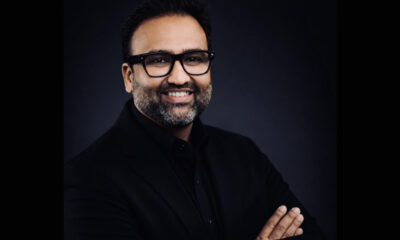
The advertising giant has launched Influential, its global creator marketing solution, in India, pairing the rollout with the appointment of Diwaker Chandani as managing partner for Influential India. The brief is blunt: drag influencer marketing out of the spray-and-pray era and into one defined by data, accountability and results that actually show up on a balance sheet.
A fragmented market ripe for disruption
India’s influencer ecosystem has scale in abundance. What it lacks is maturity. Measurement standards are inconsistent, creator databases are riddled with duplication, and brands remain dangerously hooked on organic reach, a strategy that flatters vanity metrics while delivering uncertain commercial returns. Chandani, who brings nearly two decades of experience across digital platforms and media, puts it plainly. “The ecosystem has scale, but not maturity,” he says. “By combining data-led audience intelligence with creator ecosystems and media amplification, we aim to build a model that delivers measurable and repeatable outcomes.”
It is a diagnosis that Publicis Groupe is staking serious infrastructure on. Influential is anchored in the group’s Connected Identity system, which maps consumer profiles to enable more precise audience targeting and creator selection. Layered on top are the Captiv8 platform and Influential’s global creator network, giving brands the tools to plan, activate and measure campaigns across the full funnel, from awareness down to commerce, rather than treating each influencer post as a standalone act of faith.
The hire
Chandani is not an unfamiliar face in the industry. He has held senior roles at Meta, Zee Entertainment and the Network18 Group, working across creator partnerships and content-led media strategies. His mandate at Influential India is to integrate data, creators, media and commerce into a unified framework and to build the team and client roster to scale it.
Anupriya Acharya, chief executive of Publicis Groupe South Asia, frames the launch as a response to a market that has grown faster than its own infrastructure. “The channel has reached scale, but lacks a unified, data-led foundation,” she says. “With Influential, we are moving from a creator-first approach to a cohort-first, identity-led model powered by Connected Identity.” The integration of creators, media and commerce, she adds, will enable more precise and scalable outcomes for brands.
Why now
The timing is deliberate. Influencer marketing in India is expanding rapidly, fuelled by cheap data, a vast and young social-media audience, and brands increasingly willing to redirect budgets away from traditional media. But growth without governance has created a market where consistent returns remain elusive and accountability is largely aspirational. Publicis Groupe is betting that the industry’s next phase belongs not to whoever has the biggest roster of creators, but to whoever can prove, with hard numbers, that those creators are actually shifting product.
The old model of picking a popular face, posting a reel and hoping for the best is running out of road. Influential is Publicis Groupe India’s wager that the future belongs to the spreadsheet as much as the selfie.