Ad Campaigns
Unilever’s Rahul Welde: Consumer communication in a digital world

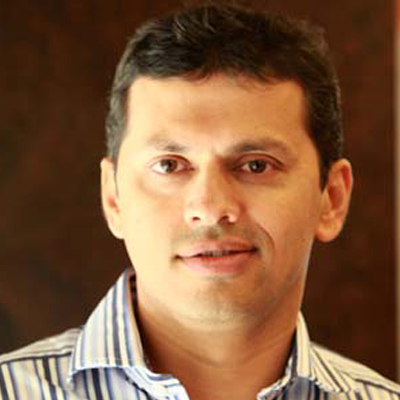
SINGAPORE: “Advertising and campaigns are not dead,” said the red-frame bespectacled executive on stage. “Whosoever says that is foolish. The TV commercial is changing from three seconds to as much as three minutes or six minutes. Its form may change but advertising and campaigns are here to stay.”
Most professionals in India are familiar with this gent. Rahul Welde is Unilever vice-president Media for Asia, Africa, Middle east, Turkey and Russia, and he is seen as a media tour de force in the world as he controls ad spends running into billions of dollars for a large part of the emerging markets for the consumer giant.

Welde was speaking at the closing session of Social Matters in Singapore. He said he welcomes the explosion; the fragmentation in media. “I believe it has brought with it tremendous opportunity. It allows to not go by classical reach and frequency approach that we have to do with mass media where we do a shot gun spray gun approach. It allows us to specifically target specific audiences. But we need to ride all the platforms – TV, print, outdoors, radio, online, social and what have you.”
He pointed out that Unilever is constantly listening to whispers in the digital social universe. “We are constantly on the alert. We are listening. We are reacting to what consumers are saying. It helps us tweak products; attributes and helps build brand love amongst consumers,” he stated.
He spoke about a campaign that Unilever ran in India on the day of the election results on 16 May on Facebook. “We knew everyone was going to be on Facebook to comment, give their views on the election results. The reach block we resorted to asked engaged Facebook users to embrace the change that is coming. We got 35 million impressions; 165,000 reacted and interacted. It was very effective,” he explained.
Welde said that digital is also permitting Unilever to deliver on “target moments.”
For instance, he said that if the weather prediction is that the temperature is going to rise four days from a specific date, then he can choose to flood the various social and digital sites with advertising or messaging pushing ice-creams.
“Let’s take this further,” he said. “This month is Magnum ice cream’s 25th birthday in Singapore. I can reach out to all those who are celebrating their birthday this week or this entire month individually and help create a personal touching moment for each of them with their brand which is Magnum. In the old world of print and television, I could have never done this. “
He also spoke about the Dove Real beauty sketches campaign which was conceived in Latin America but broke in Australia. The idea of the campaign was to convince 96 per cent of women who think they are not beautiful that their beliefs about themselves are untrue.
As part of the campaign, a forensic artist asked women to describe themselves and he drew them without ever taking a look at their faces. The next day a stranger – who had met the women – then described the women sketched the day before to the artist who once again drew them. In almost all’ the cases, the women’s description of themselves and their beauty was not as charitable as the strangers and it showed in the two version sketches.
“The video which was produced by our agency Ogilvy went viral wildly,” says Welde. “We wanted every woman to know and believe you are more beautiful than you think and I think it worked very well.”
Welde and the Unilever team are obviously pressing the right levers.






NATIONAL: Amazon Ads has laid out a sharply tech-led vision for the advertising industry in 2026, arguing that artificial intelligence, streaming TV and creator partnerships will combine to turn brand building into a more precise, performance-driven business.
At the heart of the shift, the company says, is the fusion of AI with Amazon’s vast trove of shopping, browsing and streaming signals, allowing advertisers to move beyond blunt reach metrics to campaigns designed around real customer behaviour.
“The future of advertising is not about reaching more people, but the right people with messages that resonate,” said Amazon Ads India head and vice president Girish Prabhu. “By combining AI with deep customer insights, we help brands move from broadcasting campaigns to having meaningful conversations wherever audiences spend their time.”
One of the biggest changes, according to Amazon Ads, will be the collapse of the wall between media planning and creative development. Retail media, powered by first-party data, is increasingly shaping everything from brand discovery to final purchase, pushing marketers to design campaigns around audience insight rather than internal instinct.
AI is also moving from a support tool to a creative engine. Agentic AI, which automates and accelerates production, is expected to make high-quality creative accessible even to small businesses, compressing weeks of work into hours and giving challengers the ability to compete with larger brands on speed and scale.
Behind the scenes, AI-driven analytics will take on a bigger role in campaign optimisation, identifying patterns, spotting opportunities and recommending actions that would previously have required teams of analysts.
Streaming TV is another big battleground. With India’s video streaming audience now above 600 million and connected TV users at 129.2 million in 2025, advertisers are set to treat streaming not just as a branding channel but as a performance engine, measured increasingly by sales, sign-ups and bookings rather than just reach.
Finally, Amazon Ads sees creators and contextual advertising reshaping how brands tell stories. Creators will act less like influencers and more like long-term partners, while scene-aware ads on streaming platforms will allow brands to insert hyper-relevant offers into the flow of what viewers are watching.
Taken together, Amazon Ads argues, these shifts mark a move towards advertising that is both more human and more measurable, where AI handles the complexity, and creativity does the persuading.







