MAM
Unified measurement system, branded content & engagement concern marketers today

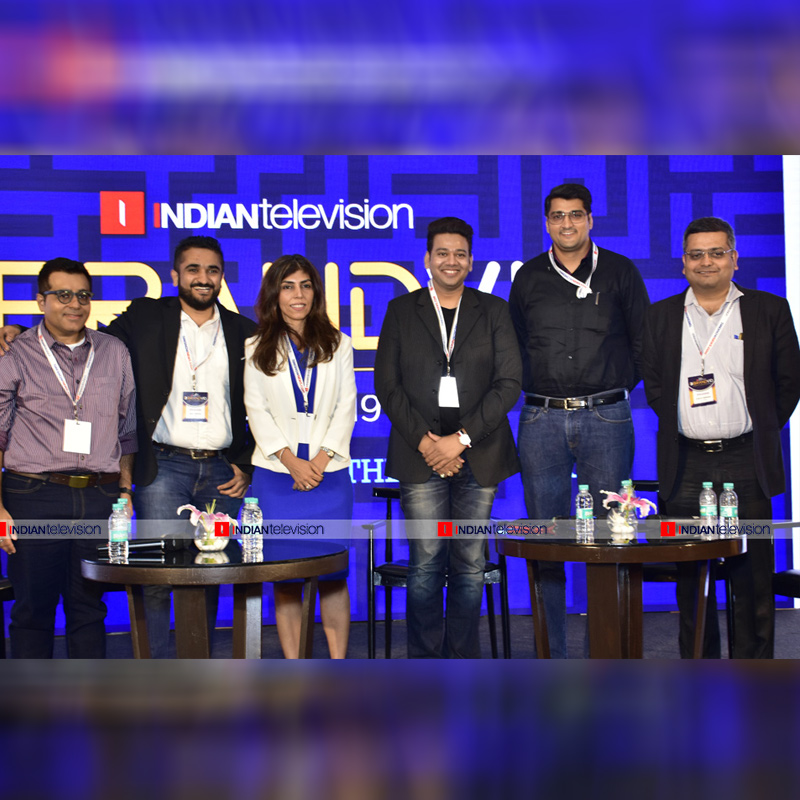
MUMBAI: At the recently concluded Indiantelevision.com’s BrandVid 2019, marketers discussed various issues such as the need for introducing a unified measurement system to check the impact of a content piece including that on sales as well as the impact of branded content. The session “Moving the needle from exposure to engagement: Still the challenge” saw L’Oréal India head of media Neel Pandya, Colgate-Palmolive associate director and head – integrated marketing communication and e-commerce marketing Priyanka Gandhi, Syska chief marketing officer Amit Sethiya, Mondelez India Foods Pvt Ltd senior category manager – equity and activation | chocolate marketing Sameer Yadav, and ITC Limited head—consumer health care Sanjay Srinivas touching upon the various aspects of brand engagements metrics. The session was moderated by Tonic Worldwide chief executive officer Chetan Asher.
Pandya reaffirmed that it is time to move away from exposure and focus on engagement. “It’s no doubt that you can’t go away from reach, it will be a primary metric to measure any kind of content you are creating but more and more organisations are going into measurability, which is more of engagement.”
Priyanka Gandhi noted that engagement helps in driving certain other metrics in the favour of brands. “You define your metric based on what your brand objective is. For example, it could be short-term metrics like awareness, or long-term metrics like favourability towards the brand. Those are the things that you want to achieve by driving engagement through content.”
Sethiya added, “It's great that we are talking about engagement because talking about exposure has got no merit because it's a clear variable of your investments. I think engagement brings a lot of efficiency and efficacy of your activities.”
However, the other two panellists were of the view that the requirement for engagement depends upon the category of the product and the objective a brand wants to achieve with the branded communication.
Yadav said, “I think it will depend on categories and it will depend on the purpose of doing it (branded communication). In some cases, exposure might be good enough while in some cases engagement alone would be good enough.”
Srinivas made an interesting point as he compared connectedness with engagement. “The challenge here is do we really have the right kind of insights to generate content that communicates. Going beyond that, there is also experience. In today’s time, engagement and experience go hand in hand to get brand conversions. We struggle today because we don’t have the right kind of metrics to understand if what we put out there is engaging audience or we are just getting proxies.”
Srinivas added that we should not just look at engagement in the form of social media shares. “Sharing something I like doesn’t mean that I am connected to the content. I share it because I want to connect better with my friends on social media. But does it really measure my connectedness with the brand in question?”
Adding to this, Pandya also vouched for the need to introduce a unified measurement system that can give marketers a better insight into the functionality of their content so they can create better communication strategies. He also noted that one should not be focusing on driving sales on the back of branded content.
Concurrently, Srinivas noted that it is not completely impossible to drive sales using branded content as he cited the example of Flipkart’s ‘Hagglebot’ that let the consumers bargain for the price of a product. “It was an intervention interesting to the consumers and it was designed to drive a lot of sales. It did drive a lot of sales,” he said.
The panel also corroborated the need for brands and marketers to define their brand and communication objectives before jumping onto the branded content bandwagon. The speakers also pressed upon the need to invest better money in the production process to ensure that the content works.
Srinivas said, “The challenge is not only in terms of execution but in terms of making the creative as well. The problem is that most people have this thought that if we create a great piece of content, then I won’t have to put a lot of money behind it. It will become viral. They give the example of Kolaveri Di. But the environment is a lot different today.” He cited the example of ‘Lego Batman’ to put across the point that bigger budget productions have been successful and have driven better ROIs.
Gandhi shared that the approach of creating content has changed a lot over time with newer content creators and platforms swarming in massive numbers. So the budget should be pre-decided.
She said, “Clearly the videos don’t go viral themselves unless they are very edgy or out of the box. You need to spend the right kinds of budgets at the right kinds of places to make sure the content is discovered. You should have a consistent approach on what you want to achieve, and then find the right mix of spending the content and finding the right amount of money to spend on it.”