Brands
Understanding viewer dynamics beyond TRPs


MUMBAI: Is a television brand different from any other fast moving consumer durable goods (FMCG) brand? Is brand building for a TV brand different from an FMCG brand?
With a spurt in the number of channels, options for marketers are no doubt getting complex. Increasingly there is direct implication on programming budgets. Questions like return on investment (RoI) and trigger factor are important for the TV and media buying and planning fraternity.
The TAM S-Group study of ‘unconventional ways to understand in-home TV viewing behaviour’ yesterday at the Ficci Frames talked about this after an analysis. Indian Idol was used as a case study as it resulted in ‘disruptive viewership’ from other channels.

TAM media research CEO LV Krishnan put things in perspective by first comparing a TV and an FMCG brand to see if they are really different.
“A brand is a product that provides functional benefits and added values so that consumers find value in buying the product. The same applies for a TV brand where the viewers find value enough to tune in,” explains Krishnan.
He went on to say that every programme on a channel is a brand by itself. Hence, it is important to build unique identities for each programme.
For whom are we creating the brand and what is the motivation? for tune-ins?
Presently, there are over 250 channels competing for a slice of the Indian TV market. TV space is dominated by soaps from Mondays to Thursdays in primetime. Very clearly, the programming elements are melodrama and family politics. Some soaps are running since 1999 and command a loyal viewer base.
Rival broadcasters today believe the answers lie in ‘A soap for a soap.’ This stood true till October 25, 2004 when Sony, at the heart of primetime, launched the much-acclaimed global format Idol. This was defined by the TAM panel as ‘disruptive programming’ and an adoption of alternate scheduling strategy.
The first episode of Idol was positioned in the standard Monday-Thursday block. The second show was slotted for the Friday block which is usually a non-standard programming day.
Interestingly, research data showed that though the Thursday episodes saw the slot grow, Friday received a lot more eyeballs than Thursday. Hence, Fridays delivered far better than Thursdays for Indian Idol.
This trend was intriguing for the media industry. It was pointed out that there was a certain family reaction when they were faced with this ‘disruptive programming’, considering that India is still predominantly a single TV household.
If audiences did shift, what were the trigger factors and which specific individual triggered the shift?
On Thursdays, Idol saw a 30:70 male-female ratio and Fridays, on the other hand, saw a more equitable 50:50 shift. The question is who controls the remote?
Research proved that from Mondays to Thursdays it was the chief wage earner (CWE), that is the male, who controlled the remote. Although, on Fridays the control was with both the CWE and the youth who were decision-makers.
Control is one thing, but who really decided what to watch? It is the housewife (HW) who decided from Mondays to Thursdays what to watch; this primarily being the effect of loyalty. Men, on the other hand, grab a few minutes during ad breaks when the HW is in the kitchen.
But viewing in primetime is not neat and is replete with unspoken agreements.
Though Fridays tell another story. Fridays are more fluid as the HWs have had their fill from Mondays to Thursdays and hence allow the men to decide what to watch.
There seems to be a tacit viewing arrangement where the male from Monday to Thursday says, “Let them watch now, it’s ok” and a reversal occurs on Friday when women say, “Let them watch now, it’s OK, as long as my Monday-Thursday is not affected.”
Another conclusion that was drawn was that youth are programming champions. Most confrontations take place between the CWE and youth over what to watch because entertainment means different things to different people.
Housewives don’t see Friday line-ups and are willing to hand over control; Males watch TV to unwind and wish to break HWs’ loyalty. The youth watch to fulfill their need to be ‘in’ and try and use ad breaks to catch up.
The launch of Indian Idol, got the status quo to go in for an overhaul. The riggers of change here were primarily the youth. Idol also proved to be a tacit support of change for the males. The results however clearly showed that the day of the week makes a difference.
Motivations to switch to Idol were interestingly different for different SECs. SEC A switched predominantly due to not being left out of college discussions, the prize money, show in the reality genre in Hindi, and acidic comments from Judges.
While SEC DE switched due to the celebrity factor and the
high aspirational value of the show.
Coming to the marketing front, promos both on-air and off-air, the marketing blitz and the buzz effect also hastened the process.
In conclusion, for a ‘disruptive programme’, kids and housewives are essentially the tertiary TG, males forming the sub-core and youth being the core focus. This holistic approach will help understand channel navigation, programmers’ schedule and make marketers understand who their focus TG really is.






Brands
YES Bank appoints S Anantharaman as chief risk officer
Former Jio Financial Services group chief risk officer takes charge of enterprise-wide risk at the embattled private lender
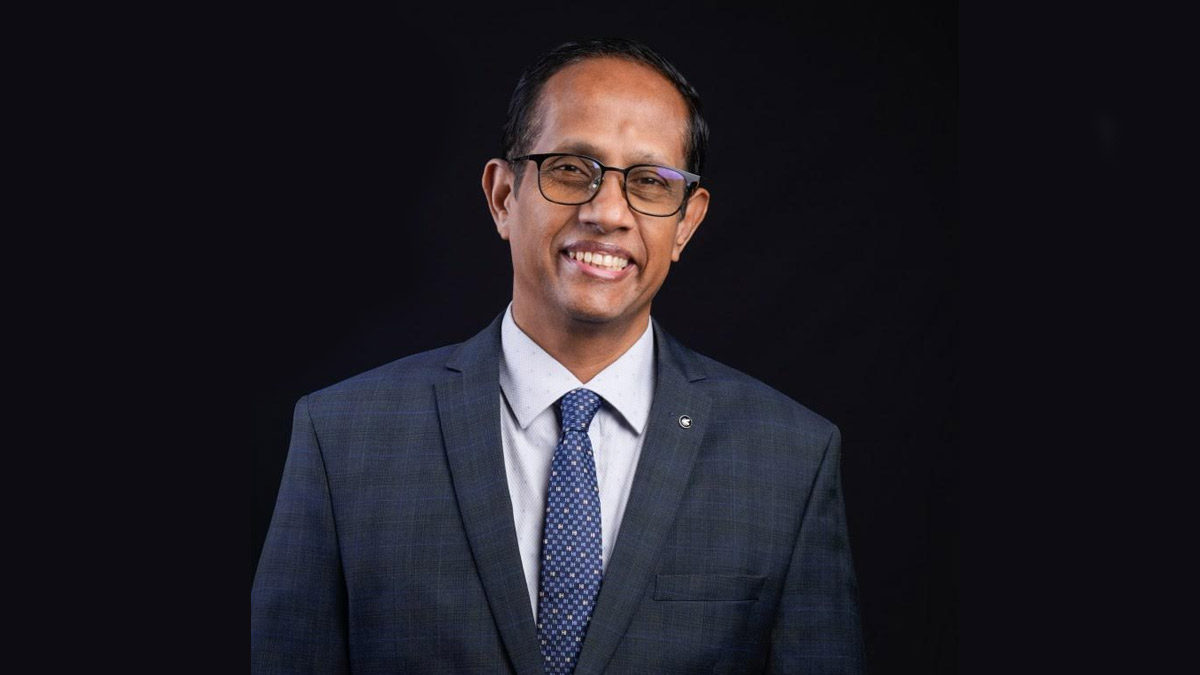
MUMBAI: YES Bank is not taking chances with risk anymore. The private lender has appointed S Anantharaman as its chief risk officer, a hire that signals the bank’s continued effort to rebuild credibility and tighten the controls that once famously slipped.
Anantharaman arrives from Jio Financial Services, where he served as group chief risk officer and built a risk management architecture spanning lending, payments, insurance broking and asset management from the ground up. Before that, he held the chief risk officer role at Bank of Baroda and senior leadership positions at HDFC Bank and L&T Finance Holdings. Three decades in banking and financial services, in other words, with scars and qualifications to match. He is a chartered accountant and a CFA charterholder.
At YES Bank, his brief is considerable. Anantharaman will oversee the bank’s entire enterprise-wide risk framework, covering credit policy, market risk, operational risk, information security, data governance, analytics, model governance and data privacy. It is, in short, every lever that matters when a bank is trying to prove it has grown up.
YES Bank’s turbulent past needs little rehearsing. What it needs now is exactly what Anantharaman has spent thirty years building: the kind of risk culture that stops problems before they become headlines. The appointment suggests the bank knows it.






