Brands
UHM enters India with Rosastays buyout
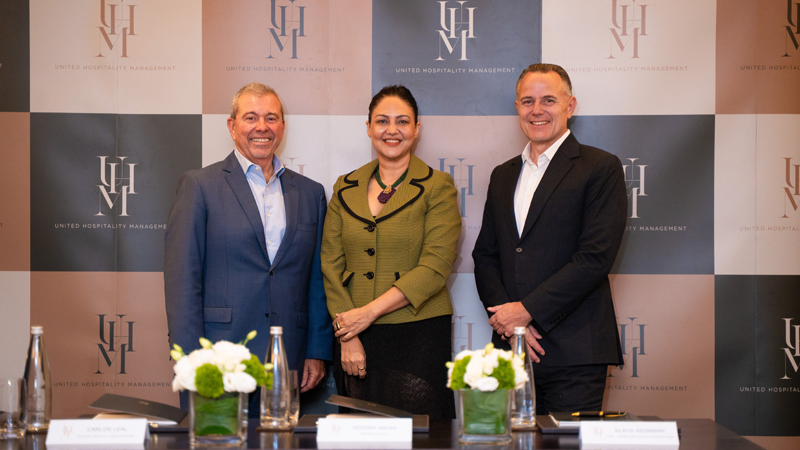
DUBAI: United Hospitality Management has stormed into India by snapping up boutique brand Rosastays, firing the starting gun on a high-stakes expansion in one of the world’s fastest-growing hospitality markets. Led by managing director Deepika Arora, UHM inherits 17 operational properties across hotspots including Goa, Kasauli, Nainital, Pushkar and Shimla, giving it an instant footprint and a loyal owner base that loves experiential travel.
Select Rosastays hotels will rebrand into the UHM portfolio between late 2025 and early 2026. A pipeline of more than 700 keys, including Garner projects with IHG Hotels & Resorts, signals an aggressive run at South Asia’s hotel owners who crave global standards delivered with local smarts.
Chief operating officer for the Middle East, India and Southeast Asia, Klaus Assmann, said India was among hospitality’s most dynamic battlegrounds and the company was betting long on the region’s soaring demand. His confidence rests on Arora, a respected industry strategist with two decades across global brands, who has sharpened Dusit’s comeback in India and now has the mandate to shape UHM’s presence in a market hungry for differentiation.
Arora said UHM was landing at a moment when travellers want authenticity, design and memorable service. Her playbook is built on global systems, strong owner economics and a clear aim to set new standards from boutique to luxury.
With more than 30 years of luxury know-how, UHM manages marquee properties from Hyatt Regency Lisbon and Sheraton Cascais to Th8 Palm Dubai Beach Resort and Movenpick JLT. Its reach extends into 60 plus restaurants and innovative wellness brands such as Serenity, Pure by Serenity and Active by Serenity, reinforcing its credentials as a lifestyle operator rather than a mere hotel manager.
A ”glocal” mindset, matching international rigour with local intelligence, has made UHM a trusted partner for giants like Marriott, Accor, Wyndham, Hyatt, Yotel and IHG. India is the newest stage of an audacious act.
The curtain has just risen and UHM is here to steal the spotlight.

Brands
Reliance Retail FY26 revenue rises 11.8 Per Cent to Rs 3.7 lakh crore
Q4 revenue up 11.1 Per Cent, hyperlocal orders surge 4x, PAT steady
MUMBAI: Reliance Retail isn’t just ringing up sales, it’s ringing doorbells faster than ever. Reliance Retail Ventures Limited (RRVL) reported a steady FY26 performance, with growth powered by store expansion, a sharp surge in hyperlocal commerce, and consistent traction across grocery, fashion and jewellery. For the full year, revenue rose 11.8 per cent year-on-year to Rs 3,70,026 crore. In the January–March quarter, revenue from operations climbed 11.1 per cent to Rs 87,344 crore, up from Rs 78,622 crore a year earlier.
Operating performance remained stable, with Q4 EBITDA inching up 3.1 per cent YoY to Rs 6,921 crore from Rs 6,711 crore. However, quarterly profit after tax held steady at Rs 3,563 crore. For the full fiscal, PAT grew 11.7 per cent to Rs 13,842 crore.
Expansion remained a key lever. RRVL added 1,564 new stores during FY26, while simultaneously scaling its digital and hyperlocal commerce play. The latter emerged as a standout, with daily orders surging more than fourfold year-on-year in Q4, underlining a clear shift towards faster, localised fulfilment.
In grocery, large-format stores maintained momentum, aided by festive demand and the expansion of Smart Bazaar, which crossed 1,000 stores. Promotional campaigns such as ‘Full Paisa Vasool’ delivered record results, with sales rising 26 per cent YoY.
Digital commerce also picked up pace. JioMart added 5.8 million new users in Q4, nearly doubling its registered base year-on-year. Hyperlocal orders grew 29 per cent sequentially and over 300 per cent annually during the quarter.
Fashion and lifestyle saw steady traction. Ajio recorded a 23 per cent YoY rise in average bill value, while fast-fashion platform Shein crossed 11 million app installs, scaling rapidly with expanding product lines.
The jewellery business added further shine, with average bill value jumping 53 per cent YoY, largely driven by rising gold prices and sustained consumer demand.
Commenting on the shift, RRVL executive director Isha Ambani said hyperlocal commerce has become a structural growth driver, with orders rising more than fourfold over the year.
Looking ahead to FY27, the company is betting on technology to deepen engagement. The focus, Ambani noted, will be on AI-led merchandising, sharper pricing strategies and disciplined execution turning scale into sustained customer value.
In short, the carts are fuller, the clicks are quicker, and the next phase looks less about reach and more about precision.