Ad Campaigns
Uber India launches new campaign with Virat Kohli

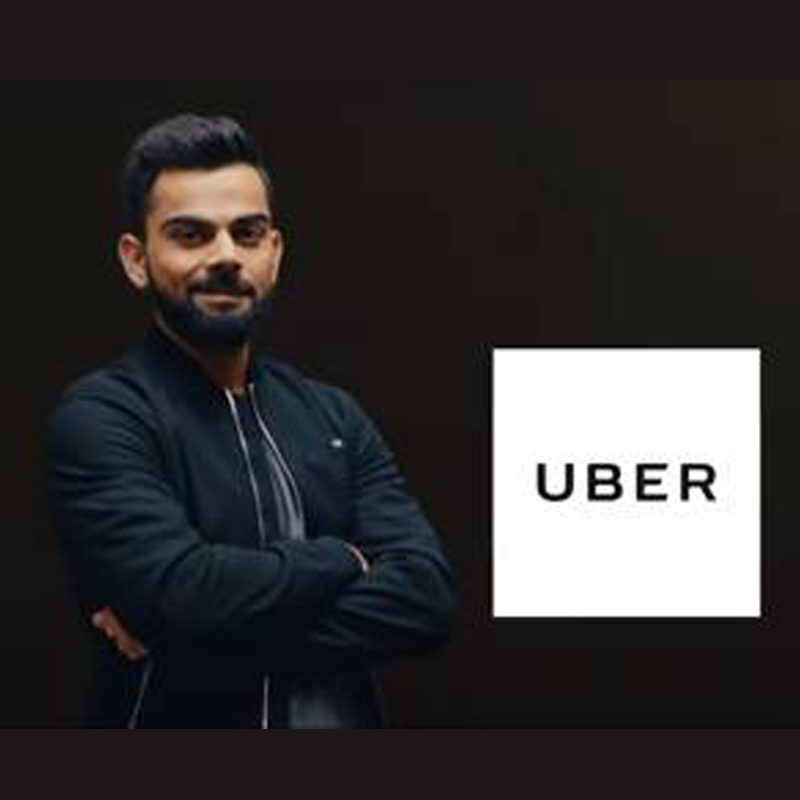
MUMBAI: Uber, the ride-sharing app that is redefining urban mobility across the world, has unveiled its new brand campaign, with brand ambassador Virat Kohli. The baseline, ‘Badhte Chalein’, is built around the brand’s new positioning that is intended to build Uber as an enabler of movement, that is culturally progressive.
Uber India head of marketing Sanjay Gupta says, “This is not just a brand idea – it’s happening on the ground, across India, everyday. This brand position is as intrinsically human as the millions of people who ride with us each week, and each of their pursuits. The communication has been designed to be progressive in thought, aspirational in spirit, widely-relatable in manner. And with Virat – perhaps India’s most inspiring model of personal progress. The breadth of communication built around this idea across ATL, digital and owned media, will cement our positioning and bring it to life.”

In this campaign, Virat plays the role of the brand’s voice to help build Uber’s narrative in India. Set against Virat’s narrative, the commercial showcases four real life inspired examples of riders using Uber in different contexts, to pursue what gives them purpose. The ad features a visually impaired rider, an expectant couple rushing to the hospital, a young female doctor commuting to work and an independent mother taking her daughter to an early morning judo class.
Uber’s brand ambassador and cricketer Virat Kohli mentions, “I am looking forward to be a part of Uber’s campaign, and moreover being a partner to a company, that in all its capacity, is committed to empowering cities and its people. I appreciate the service that Uber provides to its riders to travel comfortably anytime, anywhere. Being part of this campaign also gave me the opportunity to interact with the driver partners at a personal level and understand how the company has helped them to chase their dreams.”
The campaign conceptualised by Ogilvy, aims to reiterate its effort to make Uber an everyday, aspirational brand for millions of riders and drivers in India. It positions Uber as a brand that is beyond transportation from point A to point B, reinforcing Uber’s role as an enabler of opportunities for hundreds of thousands of driver partners and riders in India.
Uber’s relationship with Madison continues through to 2018, to build and execute the media strategy for this intervention. A six month multi-platform campaign, will span ATL (TV, Radio, OOH, Print) as well as Digital (Youtube, Facebook, Twitter and Content publishers) as well as Uber owned CRM Channels and locations. Given the scale and geographic footprint that the business has achieved, the TVC and radio campaigns will be aired in six languages Hindi, Kannada, Marathi, Telegu, Tamil and Bengali.






NATIONAL: Amazon Ads has laid out a sharply tech-led vision for the advertising industry in 2026, arguing that artificial intelligence, streaming TV and creator partnerships will combine to turn brand building into a more precise, performance-driven business.
At the heart of the shift, the company says, is the fusion of AI with Amazon’s vast trove of shopping, browsing and streaming signals, allowing advertisers to move beyond blunt reach metrics to campaigns designed around real customer behaviour.
“The future of advertising is not about reaching more people, but the right people with messages that resonate,” said Amazon Ads India head and vice president Girish Prabhu. “By combining AI with deep customer insights, we help brands move from broadcasting campaigns to having meaningful conversations wherever audiences spend their time.”
One of the biggest changes, according to Amazon Ads, will be the collapse of the wall between media planning and creative development. Retail media, powered by first-party data, is increasingly shaping everything from brand discovery to final purchase, pushing marketers to design campaigns around audience insight rather than internal instinct.
AI is also moving from a support tool to a creative engine. Agentic AI, which automates and accelerates production, is expected to make high-quality creative accessible even to small businesses, compressing weeks of work into hours and giving challengers the ability to compete with larger brands on speed and scale.
Behind the scenes, AI-driven analytics will take on a bigger role in campaign optimisation, identifying patterns, spotting opportunities and recommending actions that would previously have required teams of analysts.
Streaming TV is another big battleground. With India’s video streaming audience now above 600 million and connected TV users at 129.2 million in 2025, advertisers are set to treat streaming not just as a branding channel but as a performance engine, measured increasingly by sales, sign-ups and bookings rather than just reach.
Finally, Amazon Ads sees creators and contextual advertising reshaping how brands tell stories. Creators will act less like influencers and more like long-term partners, while scene-aware ads on streaming platforms will allow brands to insert hyper-relevant offers into the flow of what viewers are watching.
Taken together, Amazon Ads argues, these shifts mark a move towards advertising that is both more human and more measurable, where AI handles the complexity, and creativity does the persuading.