MAM
Top Publishers adopt Taboola’s New Header Bidding Solution

Mumbai: Taboola has announced Taboola Header Bidding—a new capability that expands on the native bidding service that was originally launched in April 2022.
Publishers using Taboola Header Bidding generate incremental revenue from existing display ad inventory, and to date, top publishers like McClatchy, Ströer, iMedia, and many others are already live.
With Taboola Header Bidding, advertisers can now use Taboola’s advanced AI and unique first-party data to seamlessly connect with 500 million daily active users across IAB-standard display placements on its large publisher network. This gives advertisers working with Taboola even more visibility in prominent locations across trusted publishers in verticals like local news, sports, entertainment, finance, and more.

Publishers benefit from Taboola Header Bidding by driving significantly more monetisation with their existing display ad units. Using this product, Taboola’s publishers can tap into unique native advertising demand by working with 15,000 direct advertisers, immense first-party data, and AI. This helps publishers increase auction density across display ad inventory, resulting in a stronger and healthier display marketplace.
Speaking about this new feature, Taboola founder and CEO Adam Singolda said, “I’m excited to expand our partnership with 15,000 of our advertisers, providing them a broader opportunity to reach their target audiences and driving lower acquisition costs.”
Singolda added, “It is critical to help drive strong performance for advertisers and businesses all around the world, especially during times when social networks and privacy are in play. The feedback we’ve gotten working with some of our top publishers has been incredible. We’re not only able to provide value by generating incremental revenue from existing display placements but also by making the display marketplace healthier. We have a unique proposition given our massive first-party dataset, our direct advertisers, and AI—and I’m excited to make this available to 9,000 of our publishers in years to come.”
McClatchy chief revenue officer Tony Berg, who looks forward to the added benefits that this collaboration offers advertisers, said, “Taboola continues to be a strategic partner for us. Working with them on their header bidding technology strengthens our relationship even further. Their expertise in AI, coupled with their strong advertiser relationships, will create increased revenue opportunities.”
“Taboola has been a longtime partner of ours and has shown a commitment to collaborating on products that drive our business forward. We’ve integrated their products holistically because of their strength in making our properties more appealing to both advertisers and readers. More relevancy for ads on our site means a better experience for readers, while also giving advertisers the chance to tap into millions of very engaged and savvy readers. We are pleased to be the first sales house in DACH using this innovation within our Header Bidding solution powered by Yieldlove,” said Yieldlove senior vice president of product management programmatic & sata at Ströer and managing director Abdelkader Barjiji.
Ströer is the first sales house in the DACH region to use Taboola’s Header Bidding capabilities and, in doing so, continues its use of a variety of Taboola offerings. Most recently, the companies announced an extended partnership through 2028.
iMedia Digital Services president Matt Leardini commented, “Taboola has been our trusted, longtime partner, and their new header bidding product is very exciting to us.”
“Over our long partnership, their technology has given us a clear competitive advantage. With Taboola header bidding, we’ve got incredible new potential to grow our business together,” Leardini added.






MAM
Crocs and Lego launch new collaborative collection in India
Iconic brands bring playful creativity to footwear with first drop on 13 April 2026.
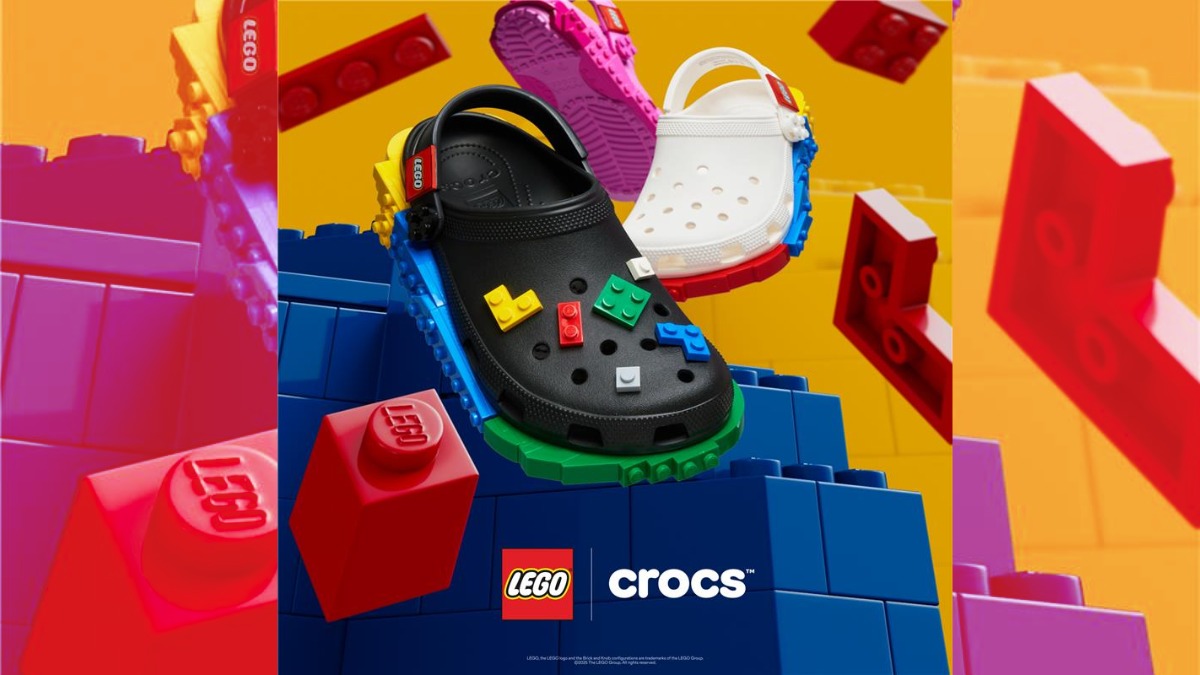
MUMBAI: Crocs and Lego have clicked together once again and this time, the bricks are heading straight for Indian feet. The global footwear brand Crocs has announced the India launch of its latest Crocs x Lego Group collection, following the excitement of their multi-year global partnership unveiled earlier this year. The collaboration celebrates creativity, play, and individuality, merging Crocs’ signature comfort with Lego’s iconic building-block spirit.
The collection will roll out in two phases. A digital-exclusive pre-launch begins on 13 April 2026 on crocs.in, featuring four styles: the Lego Masterbrand Creativity Clog, Lego Midnight Garden Creativity Clog, Lego Creativity Clog, and Kids’ Lego Creativity Clog. Each pair purchased during this phase will include an exclusive Lego minifigure as a collectible bonus.
From May 2026, the full collection will be available across select Crocs stores, VegNonVeg, and Foot Locker outlets nationwide.
The designs playfully blend Crocs’ classic clog silhouette with Lego brick-inspired details, complete with custom Jibbitz charms on the upper and sole. The collection encourages wearers to treat their footwear as a canvas for personal expression, without any set instructions just an open invitation to build, explore, and have fun.
Crocs chief marketing officer Carly Gomez said, “The Lego Group’s boundless imagination makes them the perfect match to Crocs’ wonderfully unordinary spirit. We are both brands that pride ourselves on being built different, celebrating self-expression and fuelling creativity.”
LEGO Group, head of licensing & extended line design & partnerships Satwik Saraswati added, “Our common mission to enable self-expression and wear it with pride only marks the beginning of a journey with endless possibilities.”
The campaign will extend beyond the product launch through creator-led seeding, elevated visual merchandising, and exclusive on-ground previews, supported by a deeper partnership with the Lego India team.
In a market that loves both comfort and fun, Crocs and Lego have built something special, a collection that lets every step feel like playtime. Get ready to click your heels (or rather, your clogs) because this collaboration is set to be a blockbuster hit with Indian fans.







