Brands
These five Indian startups are at forefront of innovation

Mumbai: India’s thriving startup ecosystem has gained the trust of investors, customers and employees alike. Entrepreneurs from various parts of the country have come up with innovative solutions and profitable businesses that are no less than a Silicon Valley company. Let’s take a look at give such Indian startups which are at the forefront of innovation:
1. Paytm
Paytm has been at the forefront of UPI and payments innovation in the country. It was among the first to introduce QR codes for UPI payments, way back in 2015. In a country dependent on either cash transactions or expensive debit or credit card transactions, the QR codes made it easy to receive payments from customers seamlessly and instantly and at minimal cost. Since then, the company has branched out into becoming a full fledged fintech company. Paytm was founded by Vijay Shekhar Sharma in 2011.
Paytm was also the company to introduce the SoundBox. This made it easy for a merchant to keep track of UPI payments, as the SoundBox would announce the payments that they received. Recently, the company has also come up with two different kinds of sound boxes – one that plays music, and another that can be carried around in the pocket.

The company also has a widely used online payment gateway. It is also in the business of providing merchant loans, and enabling merchants to have their businesses discovered through its app.
2. Wahter
Wahter, the brainchild of founders Amitt and Kashiish A Nenwani, is set to transform the packaged water industry in India. With its innovative idea of providing clean, premium-quality drinking water at an unbelievably low price of just Rs 1 per bottle, Wahter is not only addressing the need for clean water but is also making a powerful statement about fairness and accessibility.
Additionally, the company is providing brands with an impactful advertising medium for the first time in the country – brands can actually advertise themselves on the labels of Wahter bottles. This way, they are not only visible to a larger audience but can measure the reach and impact of their message through Wahter’s proprietary tech.
Wahter’s MRP is just Rs 1 for a 250mL bottle, and Rs 2 for a 500mL bottle, which makes it very economical for all categories of consumers. Demonstrating a commitment to sustainability, Wahter uses fully recyclable bottles. Wahter will be available everywhere — from a paan shop, all the way to flights. The problem of clean accessible drinking water is very old, but Wahter will solve this once and for all.

3. Blusmart
BluSmart is a ride-sharing company that operates a fleet of about 5500 electric vehicles in Delhi-NCR and Bengaluru. Unlike competitors, Ola or Uber, which are aggregator platforms, BluSmart, owns its own fleet of cars and employs drivers on a contract basis. This reduces the problem of cancellations and ensures uniform service. The company was started by Anmol Singh Jaggi, Punit K Goyal and Puneet Singh Jaggi in 2019.
The company is looking to capitalise on the government’s clean energy push and rising concerns around air pollution. BluSmart has so far received around $133 million in debt and equity funding from various investors.
The company plans to scale this to 8000 cabs by next year. The company also owns and operates over 4000 charging stations in Delhi-NCR and Bengaluru. It plans to open these up for commercialisation in 2024, meaning other EV owners and fleet operators can use these for charging their vehicles.
Tech-enabled transit retail network Yatrikart raises $450 K in the seed round of funding | Startup Story
4. Yatrikart
Yatrikart is a tech-enabled company that focuses on retailing-on-the-go. The company has around 40 branded roadside retail shops and carts on long-distance trains. It ties up with hawkers and vendors and provides them with inventory, training and a vending license. In exchange, the hawkers — who are called “captains” by the company — get to keep a 20 per cent commission on the products, while 20 per cent is retained by Yatrikart.
The company has raised Rs 450,000 in seed funding so far. Founded by Gaurav Rana and Shivangee Sharma, Yatrikart is a tech-enabled transit retail chain, enabling micro-entrepreneurship by empowering hawkers and retailers who sell to those traveling by road or train. These hawkers and retailers get the advantage of not being harassed by the police for illegal vending and gain respectability. The company has partnered with brands such as Dove, Colgate, Colorbar, Pepsi, PeeSafe, Unilever and ITC. In addition, the startup offers channel partnerships to help small businesses get higher profit margins and foster growth.
5. Zoho
Zoho is an Indian multinational software-as-a-service company that was started by Sridhar Vembu in 1996. Zoho is popular for its product Zoho Office Suite, and serves over 100mn customers worldwide.
Recently, Zoho made news when it revealed that it is in the process of developing its own large language model (LLM), although this will be smaller than existing ones like GPT by OpenAI and Gemini by Google. While Zoho recently integrated several generative AI tools including ChatGPT into its products, its long-term intent is to develop its own LLM based on 7 million to 20 million parameters. For context, GPT 4 has 1.76 trillion parameters. The project is being supervised by Vembu, who is also the CEO of the company. The company also intends to have its own GPU (graphics processing infrastructure) to save on long-term costs.
Zoho’s focus is on getting talent from rural India, and focusing on building innovation ecosystems in rural India. Vembu himself operates out of the company’s office in Tenkasi, a village in Tamil Nadu.







Brands
Kotak Mahindra Prime names Suraj Rajappan as managing director and chief executive
The car-finance arm of Kotak Mahindra Bank lines up a new chief and raises its borrowing limit
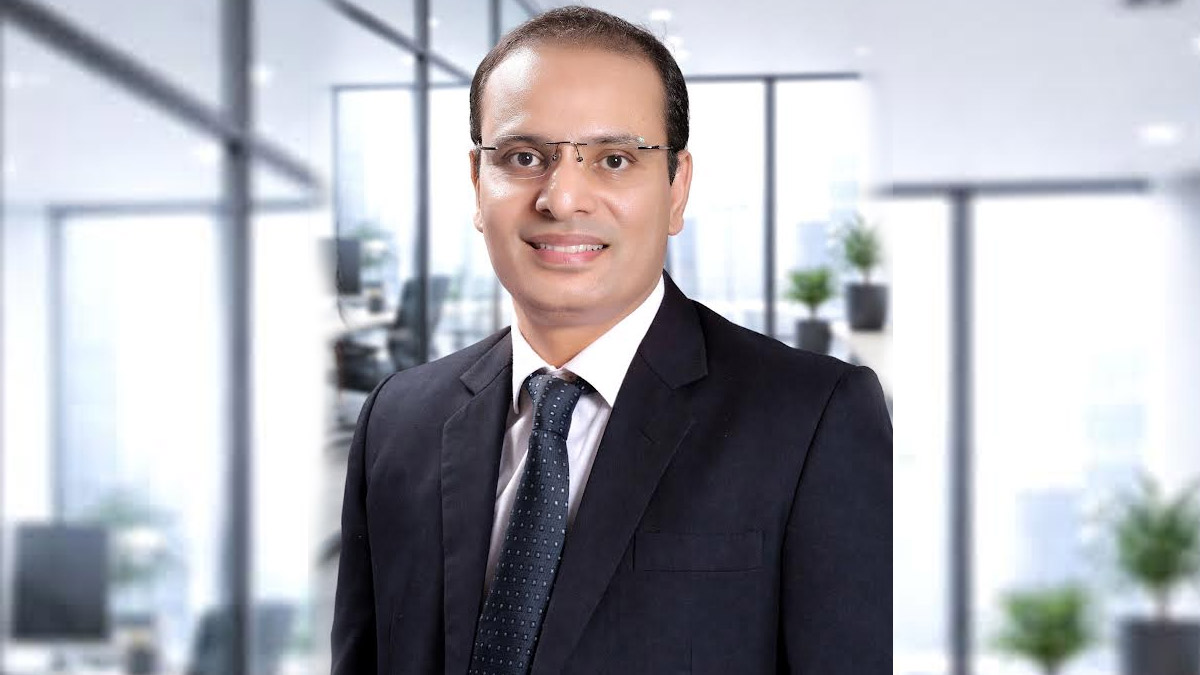
MUMBAI: Suraj Rajappan is getting the keys. Kotak Mahindra Prime Limited (KMPL), India’s veteran car-finance outfit, has named him managing director and chief executive, effective June 1st, 2026—the same day his predecessor drives off into retirement.
The board approved the appointment at its meeting on March 18th. Rajappan, currently a whole-time director at the company, has spent his entire 24-year career at KMPL, working across functions before rising to the top job. The three-year term remains subject to shareholder approval, and the company confirmed he faces no bar from SEBI or any other authority from holding the post.
He takes over from Shahrukh Todiwala, who superannuates on May 31st after more than three decades with the Kotak Group. Ashok Vaswani, managing director and chief executive of parent Kotak Mahindra Bank, was generous in his send-off. Todiwala, he said, “leaves behind a legacy marked by prudent growth, strong risk discipline, and a focus on customer-centricity.” Of his successor, Vaswani was equally bullish: Rajappan’s “deep industry experience and execution capabilities position KMPL well for its next phase of growth.”
The board also loosened the purse strings, raising the company’s overall outstanding debt limit from Rs 43,000 crore to Rs 48,000 crore. The expanded ceiling covers bank loans, debentures, commercial paper, treasury operations, credit facilities and external commercial borrowings.
KMPL has operated as a car-finance company since 1996, branching into two-wheeler loans in 2018 and loans against property in 2021. With fresh leadership, a bigger borrowing arsenal and an ambitious lender for a parent, Rajappan’s first task is clear: step on the accelerator.