Brands
Kotak Mahindra Prime names Suraj Rajappan as managing director and chief executive
The car-finance arm of Kotak Mahindra Bank lines up a new chief and raises its borrowing limit
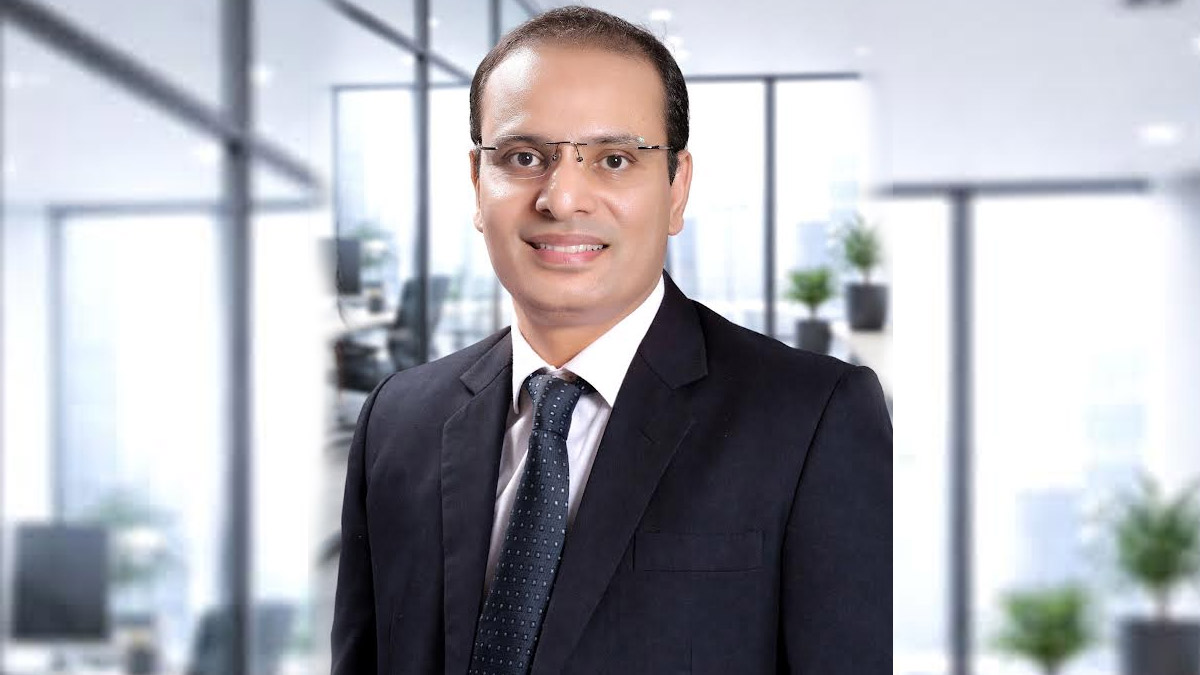
MUMBAI: Suraj Rajappan is getting the keys. Kotak Mahindra Prime Limited (KMPL), India’s veteran car-finance outfit, has named him managing director and chief executive, effective June 1st, 2026—the same day his predecessor drives off into retirement.
The board approved the appointment at its meeting on March 18th. Rajappan, currently a whole-time director at the company, has spent his entire 24-year career at KMPL, working across functions before rising to the top job. The three-year term remains subject to shareholder approval, and the company confirmed he faces no bar from SEBI or any other authority from holding the post.
He takes over from Shahrukh Todiwala, who superannuates on May 31st after more than three decades with the Kotak Group. Ashok Vaswani, managing director and chief executive of parent Kotak Mahindra Bank, was generous in his send-off. Todiwala, he said, “leaves behind a legacy marked by prudent growth, strong risk discipline, and a focus on customer-centricity.” Of his successor, Vaswani was equally bullish: Rajappan’s “deep industry experience and execution capabilities position KMPL well for its next phase of growth.”
The board also loosened the purse strings, raising the company’s overall outstanding debt limit from Rs 43,000 crore to Rs 48,000 crore. The expanded ceiling covers bank loans, debentures, commercial paper, treasury operations, credit facilities and external commercial borrowings.
KMPL has operated as a car-finance company since 1996, branching into two-wheeler loans in 2018 and loans against property in 2021. With fresh leadership, a bigger borrowing arsenal and an ambitious lender for a parent, Rajappan’s first task is clear: step on the accelerator.

Brands
UK’s OnlyFans seeks US investor at $3bn valuation after owner’s death
The adult video platform is seeking stability after the death of its billionaire owner
LONDON: OnlyFans is looking for a new partner. The London-based adult video platform is in advanced talks to sell a minority stake of less than 20 per cent to Architect Capital, a San Francisco-based investment firm, in a deal that would value the business at more than $3bn (£2.2bn).
The move is driven by an urgent need for stability. Leonid Radvinsky, the Ukrainian-American billionaire who owned OnlyFans, died of cancer last month at the age of 43, leaving the future of one of Britain’s most profitable privately held businesses suddenly uncertain.
The choice of Architect Capital is not arbitrary. The firm has deep expertise in financial services, which aligns neatly with OnlyFans’ ambitions to offer banking products to its creators, many of whom have long struggled to access basic financial services because of the nature of their work.
The numbers behind OnlyFans are, by any measure, staggering. The platform posted revenues of $1.4bn in the year to 30th November 2024, with a pre-tax profit of $684m, up four per cent on the prior year. Payments to creators totalled $7.2bn over the same period, a rise of nearly ten per cent. Radvinsky personally collected $701m in dividends from the business in 2024 alone, on top of more than $1bn in such payments he had already received. The platform, run through its parent company Felix International, hosts 4.6m creator accounts, with performers keeping 80 per cent of subscription proceeds and the platform pocketing the remaining 20 per cent. It has 377m fan accounts in total.
The current minority stake talks represent a notable scaling back of ambitions. In January, OnlyFans was reported to be in discussions with Architect about selling a majority stake of 60 per cent. Before that, the company had explored a sale to a consortium led by Forest Road Company, a Los Angeles-based investment firm. Neither deal materialised.
OnlyFans has built an enormously lucrative business on content that mainstream finance has long refused to touch. Now, with its owner gone and a $3bn valuation on the table, it is looking for the kind of respectable institutional backing that might finally persuade the banks to take its calls.