MAM
The satirical conceit of The Grade Cricketer is that Australian cricket is superior to all else: Sam and Ian


Mumbai: Podcasts have emerged as a popular medium for engaging content, and India is no exception to this trend. Amidst the thriving podcast culture, cricket fans are finding new and innovative ways to connect with their beloved sport. As the ongoing ICC T20 World Cup generates its usual buzz, one podcast, in particular, stands out for its unique blend of humour and cricket insights: The Grade Cricketer.
Hosted by Sam Perry and Ian Higgins, The Grade Cricketer (TGC) podcast has carved a niche for itself in the cricketing world. The podcast offers an authentic and refreshing take on cricket, combining sharp wit with in-depth analysis. This distinctive style has struck a chord with cricket enthusiasts, especially in India, where an impressive 62 per cent of their listeners are based.
TGC has hosted a range of cricketing legends and celebrities, including Sunil Gavaskar, Ricky Ponting, Brett Lee, Wasim Akram, Shubman Gill, Faf du Plessis, Glenn James Maxwell, Shane Watson, Harsha Bhogle, Gaurav Kapur, Tanmay Bhat, Danish Sait, Adam Zampa, Ravi Shastri, Glenn Maxwel, Delhi Capitals, Gujarat Titans and Brian Lara, among others.Though they never crossed paths on-field, Ian Higgins’ background in Law and Sam Perry’s in communications have helped them illuminate the rich, dark underbelly of cricket. With trademark irreverence, they chronicle as it really is, with all its complex social dynamics and masculine by-play. In a nutshell, they are fans who say it like it is and that’s what differentiates them from the rest of the publishers out there. Their fans love the original approach and their numbers validate their approach.

TGC’s influence extends beyond traditional media. They command an audience of over 800,000+ on social media and have a highly engaged YouTube channel with over 289K subscribers. Their content has amassed over 36.2M video views and 81.7M+ impressions, demonstrating their strong engagement metrics. Notably, TGC’s average engagement rate of 3.46% per video on YouTube is significantly higher than the platform’s average of 0.40%.
Indiantelevision.com caught up with Sam Perry and Ian Higgins, where both shared their story on the inception behind the podcasts, the memorable experience during the show and much more…
Edited excerpts
On the story behind the inception of The Grade Cricketer podcast
Pez (Sam Perry) founded The Grade Cricketer, which began as a Twitter account in 2011. Soon after a few friends became involved in creating content, including Higgos (Ian Higgins). We expanded the character first through the medium of books, followed by a podcast. Since then, the podcast has become the centrepiece of the venture, but we’ve developed our work through video on YouTube, TV, and live shows.
On striking the balance between entertaining and informing your audience
It’s just a reflection of our personalities and our personal experience of playing cricket. While we love the game, it is naturally unforgiving, so humour is a very helpful lens through which to cope with the pain it inflicts. That said, the humour wouldn’t work if it wasn’t underpinned by hard-won insights. We both played the game for decades, chasing the dream of playing for Australia, accruing homespun knowledge about how it works and, importantly, how it feels.
On Indian cricket fans resonating the most with
We’ll never fully know, but I don’t think it differs too much from other audiences. There’s a lot of cricket narration focused on dry insights and statistics – which is great, by the way. But many cricket fans prefer humour with their cricket, which TGC caters for.
On sharing a memorable moment or episode from the podcast that had a significant impact on your audience
The opportunity to interview Harsha Bhogle for an hour, in-person, was very special to us and resonated with our audience. Harsha has a deep understanding of not only contemporary Indian cricket, but also Indian history, society and culture. For two Australians looking to better connect with and understand the context of Indian cricket, we were truly grateful to receive his knowledge.
On the podcast changing your perspective on cricket and its community
The central, satirical conceit of The Grade Cricketer is that Australian cricket is superior to all else, and we view the game accordingly. Fortunately, or otherwise, doing this show has given us an authentic appreciation of the extent of people’s love for the game, all around the world, and particularly in India.
On your future plans for The Grade Cricketer podcast
We’d just like to continue providing joy and entertainment for anyone who likes humour with their cricket. And who knows, maybe there’s a documentary out there comparing Australia’s main fields with India’s maidans.







Brands
Tessolve lands a semiconductor veteran to drive its next big push
Ravi Kumar Chirugudu, who started his career at ISRO and has spent 35 years building chips and companies, joins the Bengaluru-based firm as president and chief operating officer
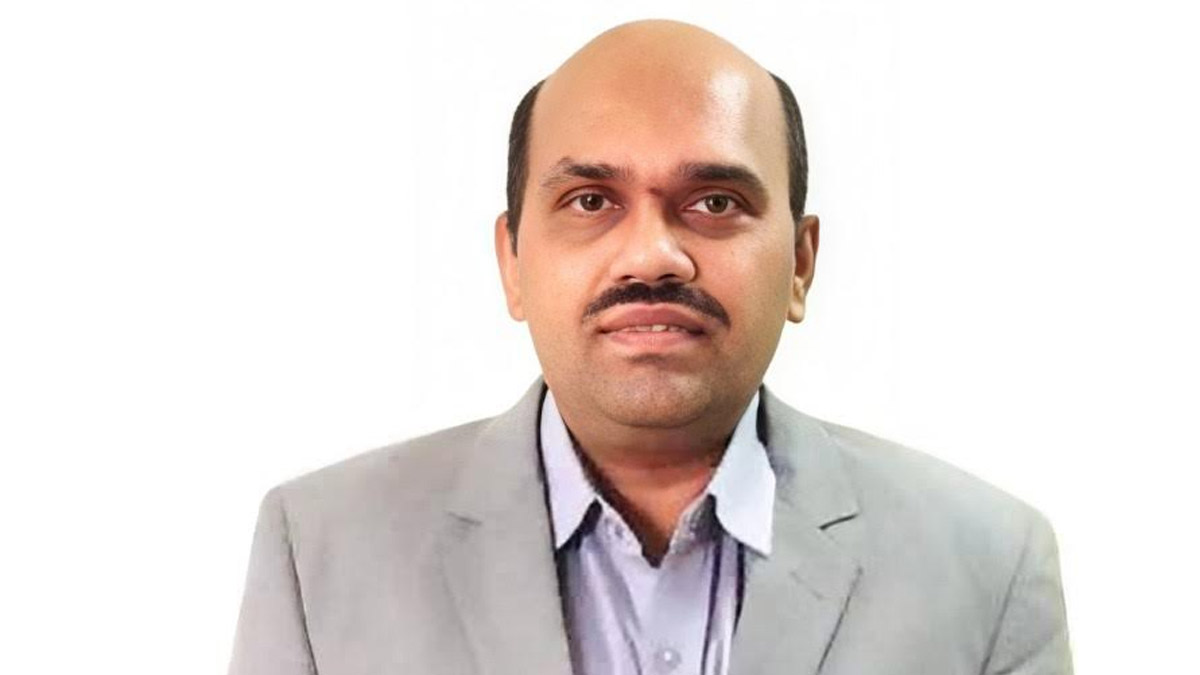
BENGALURU: Tessolve has never been shy about its ambitions. The Bengaluru-based engineering services firm already counts 18 of the world’s top 20 semiconductor companies among its clients, employs more than 3,500 engineers across 12 countries, and last year pocketed a $150m investment from TPG. Now it has hired the executive it believes can turn those assets into something bigger. Ravi Kumar Chirugudu, a 35-year semiconductor veteran who once built satellite payloads for ISRO and has since scaled engineering organisations across three continents, joins as president and chief operating officer, effective immediately.
THE MAN AND THE MANDATE
The appointment is, by any measure, a serious hire. Ravi Kumar Chirugudu comes to Tessolve after senior leadership stints at HCL Technologies, Altran and Wipro, where he managed large profit-and-loss portfolios and oversaw cross-regional teams. Over the course of his career, he has been instrumental in bringing more than 1,000 new products to market across the high-tech, energy and manufacturing verticals. Before the private sector claimed him, he began his working life as a scientist at the Indian Space Research Organisation, contributing to research and development in charge-coupled device technology and satellite payloads, a foundation that shaped everything that followed.
In his new role, he will lead Tessolve’s global growth strategy: expanding its engineering capabilities, deepening customer relationships and accelerating innovation across semiconductor and high-performance computing domains. The brief is broad, but the context is specific. Tessolve operates in the $550 billion global semiconductor market, and its recent moves, the acquisition of Germany’s Dream Chip Technologies and the TPG funding round, have sharpened both its reach and its expectations.
Srini Chinamilli, co-founder and chief executive of Tessolve, is characteristically direct about why Ravi Kumar Chirugudu was the choice:
“As we scale our global semiconductor and system engineering capabilities, Ravi’s appointment marks an important step forward. As global semiconductor demand continues to accelerate across industries, it is creating significant opportunities across the semiconductor lifecycle, from design, packaging, validation and systems integration. Ravi’s deep knowledge and leadership in this ecosystem brings the right mix of industry expertise, customer connect and execution capability, which will play a key role in strengthening our position as a trusted global engineering partner and reinforcing our market leadership.”
THE NEW ARRIVAL SPEAKS
Ravi Kumar Chirugudu, for his part, frames the move in terms of timing and culture, two factors that veteran executives tend to weigh as heavily as title or compensation:
“I am happy to join Tessolve at a time when the industry is rapidly evolving towards more complex, AI-driven systems. What stands out to me is its strong people-first culture and its commitment to bringing value to its customers. The strength of its global team, combined with its deep expertise in semiconductor innovation and next-generation product engineering, creates a solid foundation to build differentiated, scalable solutions. I look forward to working closely with the team to drive strategic growth and strengthen its role in shaping the global semiconductor ecosystem.”
The reference to AI-driven systems is not incidental. The semiconductor industry is in the midst of a structural reshaping, driven by the insatiable compute demands of artificial intelligence. For engineering services firms like Tessolve, which offers end-to-end capabilities from silicon design to packaged parts and invests in high-performance computing, high-speed interfaces, photonics and 5G, the moment is both an opportunity and a test. The company says it is well positioned to capture the next wave of industry growth. Ravi Kumar Chirugudu is now the person who has to prove it.
He came in from outer space, literally, and spent three decades learning how the semiconductor industry works from the inside out. Now Tessolve is betting that accumulated knowledge can help it cross the next frontier. In the $550 billion global chip market, the gap between ambition and execution is measured in engineering hours and leadership quality. Tessolve has just gone shopping for both.






