Brands
Tendulkar’s Smaaash acquires SVM Bowling and Gaming
MUMBAI: Smaaash, a sports-based virtual entertainment company co-owned by Sachin Tendulkar, has acquired a 100 per cent stake in SVM Bowling and Gaming, a popular bowling and entertainment format operated by SVM Private Limited.
Fractal Capital acted as the sole advisor to Smaaash for the PVR bluO and SVM deals.
The new acquisition will add 13 centers to Smaaash’s blueprint in India, across Hyderabad, Mysore, Madurai, Vijaywada, Mangalore and Pune, and Smaaash will introduce its signature games at all locations.
The deal is a part of the national growth strategy, and Smaaash will now be present in 26 centers across 13 cities in India, besides the one in the Mall Of America – the largest mall in the US.
SVM’s strategy in Tier B and C towns and cities is what attracted Smaaash to the proposition, and theirstrong market relationships and customer-focused approach present a fantastic geographic, strategic and cultural fit for Smaaash.
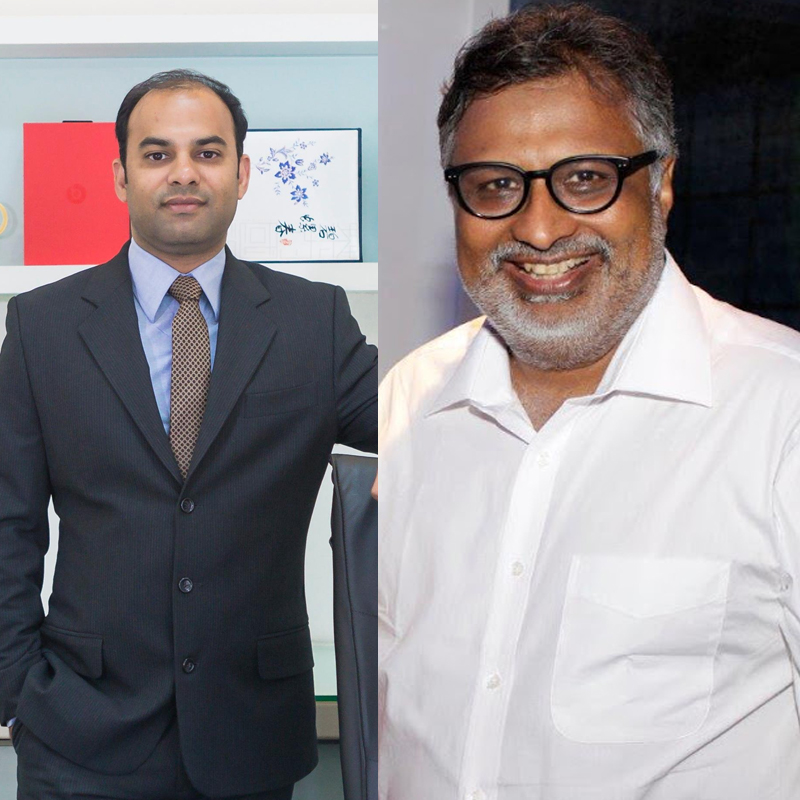
Smaaash Entertainment founder and chief imagination officer Shripal Morakhia said, “Our endeavour is to provide aspirational active experience and sports throughout India, whether it is a big metropolis or a small town. We are totally committed to “un-pause” the play button of all Indians. As consumer behaviours and expectations continue to be reshaped by experiences, we are sure that SVM’s infrastructure, coupled with Smaaash’s leadership in innovation will make this association unlock transformational synergies in the gaming space.
SVM chairman Vijayender Tulla said, “The gaming and entertainment business will benefit greatly from consolidation, as the scale significantly enhances operational efficiencies and brand value.
The transaction would enable us to focus more on our malls, multiplexes and medical sector businesses. I have been invited to be part of Smaaash Board.”

Brands
UK’s OnlyFans seeks US investor at $3bn valuation after owner’s death
The adult video platform is seeking stability after the death of its billionaire owner
LONDON: OnlyFans is looking for a new partner. The London-based adult video platform is in advanced talks to sell a minority stake of less than 20 per cent to Architect Capital, a San Francisco-based investment firm, in a deal that would value the business at more than $3bn (£2.2bn).
The move is driven by an urgent need for stability. Leonid Radvinsky, the Ukrainian-American billionaire who owned OnlyFans, died of cancer last month at the age of 43, leaving the future of one of Britain’s most profitable privately held businesses suddenly uncertain.
The choice of Architect Capital is not arbitrary. The firm has deep expertise in financial services, which aligns neatly with OnlyFans’ ambitions to offer banking products to its creators, many of whom have long struggled to access basic financial services because of the nature of their work.
The numbers behind OnlyFans are, by any measure, staggering. The platform posted revenues of $1.4bn in the year to 30th November 2024, with a pre-tax profit of $684m, up four per cent on the prior year. Payments to creators totalled $7.2bn over the same period, a rise of nearly ten per cent. Radvinsky personally collected $701m in dividends from the business in 2024 alone, on top of more than $1bn in such payments he had already received. The platform, run through its parent company Felix International, hosts 4.6m creator accounts, with performers keeping 80 per cent of subscription proceeds and the platform pocketing the remaining 20 per cent. It has 377m fan accounts in total.
The current minority stake talks represent a notable scaling back of ambitions. In January, OnlyFans was reported to be in discussions with Architect about selling a majority stake of 60 per cent. Before that, the company had explored a sale to a consortium led by Forest Road Company, a Los Angeles-based investment firm. Neither deal materialised.
OnlyFans has built an enormously lucrative business on content that mainstream finance has long refused to touch. Now, with its owner gone and a $3bn valuation on the table, it is looking for the kind of respectable institutional backing that might finally persuade the banks to take its calls.