MAM
TCH 2022: The art of telling authentic brand stories using content


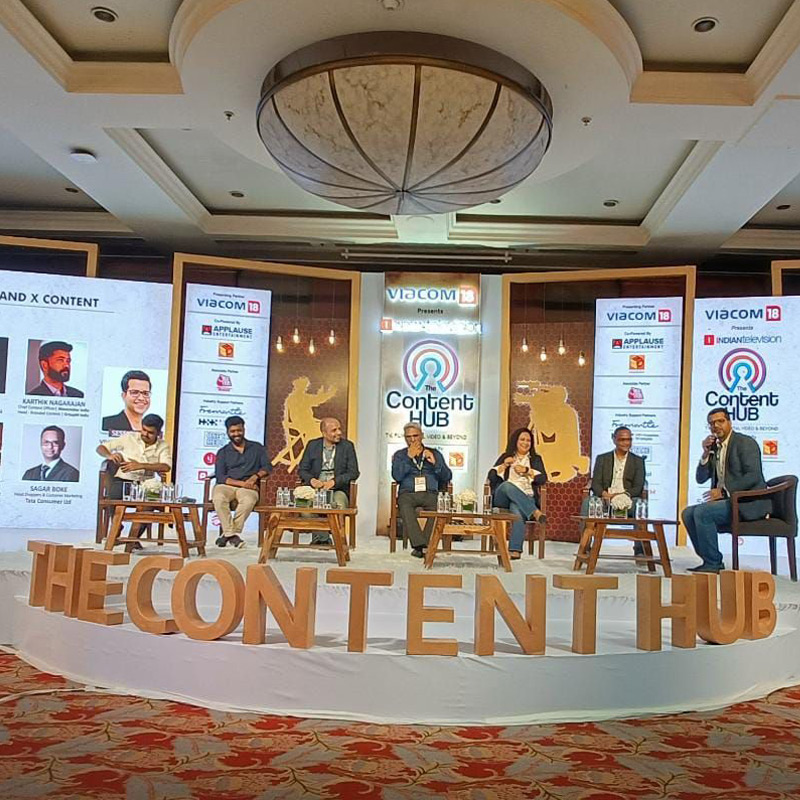
Mumbai: There’s a lot of content available to consumers that is vying for their attention. Brands are finding it difficult to leave a deeper mark on the consumers’ minds with plain vanilla advertising. The mode of brand storytelling has evolved from 30 seconders and one-minute advertisements to creating owned media platforms and content to form an association with the consumer which lasts.
Brands cannot jump blindly into the content-making exercise. First, one has to identify the brand purpose and where the brand is standing with its content. Content is a powerful way to increase the mind share of the brand but if executed poorly it can also go wrong.
At the sixth edition of Viacom18 presents Indiantelevision.com’s The Content Hub Summit 2022 held on Wednesday leading marketers spoke about the role of content in their brand strategy. The session was joined by Dentu international The Story Lab country head Deepak, Godrej Industries and Associate Companies AVP corporate brand and communications Michelle Francis, GroupM India head – branded content and Wavemaker India chief content officer Karthik Nagarajan, Tata Consumer Products head shoppers and customer marketing Sagar Boke, PhonePe director and head of brand marketing Ramesh Srinivasan and OPPO India chief marketing officer Damyant Singh Khanoria. The session was moderated by Viacom18 head branded content Vivek Mohan Sharma.
The industry event is co-powered by Applause Entertainment and IN10 Media Network. Aaj Tak Connected Stream is the association partner. Industry partners are Fremantle India, Hill+Knowlton Strategies, One Take Media, Pratilipi, Pocket FM and The Viral Fever. The Indian Motion Pictures Producers’ Association (IMPPA) is our community partner.
“We have a smartphone launch every second week. When you need to make the consumer realise the unique features of each product there’s a lot of content creation that needs to happen,” remarked OPPO’s Damyant Singh Khanoria. “We solved this problem by enabling creation in the larger community of creators and influencers.”
Another aspect that OPPO realised was to stop looking at its brand ambassadors as celebrities who are endorsing a product but rather as actors to leverage in a storytelling narrative.
“I think it is important to have a healthy appetite for risk as a brand. We started commissioning projects that break the artificial boundaries of how we advertise,” said Khanoria.
OPPO had partnered with the infotainment channel National Geographic to create a series called OPPO Superfactories that turned out to be an excellent piece of branded content, he added. “We want content to be natural and authentic to our brand. An ad is no longer about showing a consumer visiting a store, asking about a product in a three-minute film.”
When Godrej wanted to change its perception to be associated with lifestyle, the challenge, observed Godrej’s Michelle Francis, was that it was perceived as a legacy brand that had been around for many decades. “We thought that we needed to build a community that would advocate for the lifestyle brands of the Godrej group. That’s how we came up with Godrej L’affaire.”
The platform launched a nine-episode web series with actor and comedian Jamie Lever with a seamless integration of Godrej brands. “The content was so authentic that it did not look at branded content in terms of integration,” said Francis.
Whether a brand decides to create its own content is not an either, or question, explained Tata Consumer Products Sagar Boke. He believes it depends on the object and life cycle of the brand. There are advantages to branded content which takes a bit more time to build but connects deeply with the audience. “If you want to build a community around your brand, there’s nothing better than building your own content,” he said. “If you use someone else’s content or a celebrity, it is not going to work.”
Boke further said that if data is part of a brand strategy, then building your own platforms makes a lot of sense to gather first party data on your consumer. This helps the brand create more targeted and sharper advertising communication.
PhonePe’s Ramesh Srinivasan concurred with Boke stating “As a brand we’re trying to cater to India at large. That means we need to be placed where India is in terms of culture. Branded content captures the consumers’ mind space when they want to consume communication. It creates the right context which is key.”