Brands
Tata Motors posts Q3 loss as JLR cyber incident hits results

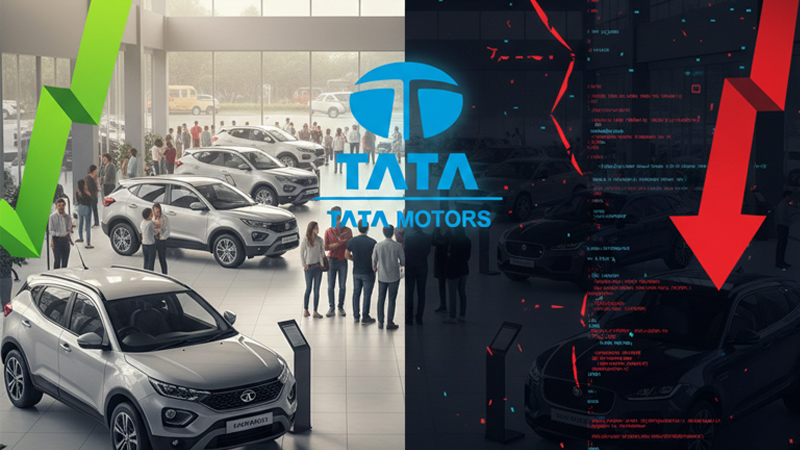
MUMBAI: Tata Motors Passenger Vehicles Limited (TMPVL) had a quarter of two very different moods. Back home, the showrooms were busy, the order books thick, and the festive glow lingered. Overseas, however, a cyber incident at Jaguar Land Rover pulled the plug on profits and dragged the group into the red.
For the third quarter of FY2026, Tata Motors posted a consolidated net loss of Rs 3,483 crore. A year ago, it had reported a profit of Rs 5,485 crore. Revenue also slipped sharply, down 25.8 per cent year on year to Rs 70,108 crore. Earnings before interest and tax fell into negative territory, with margins dropping to minus 4.7 per cent.
Strip away exceptional items and the picture still looked bruised. Profit before tax stood at a loss of Rs 3,136 crore, while earnings per share from continuing operations came in at minus Rs 9.47.

For the nine months to December, the company reported a net loss of Rs 7,255 crore from continuing operations, with revenue down 14 per cent year on year to Rs 2.3 lakh crore. Free cash flow for the quarter was also negative at Rs 17,900 crore.
Most of the damage came from Jaguar Land Rover. The luxury carmaker saw revenue plunge 39.4 per cent year on year to £4.5 billion. Ebit margins slid to minus 6.8 per cent, and profit before tax before exceptional items stood at a loss of £310 million.
The reasons were a perfect storm: a cyber incident that disrupted production, the wind-down of legacy Jaguar models, a weakening China market, and tariff pressures in the United States. The result was a free cash outflow of £1.5 billion for the quarter and net debt rising to £3.3 billion.
Still, the company has held on to its guidance, expecting Ebit margins of 0 to 2 per cent for the full year.
Back home, the domestic passenger vehicle business offered a more cheerful read. Revenue rose 24 per cent year on year to Rs 15,317 crore. Profit before tax before exceptional items stood at Rs 302 crore, while market share climbed to 13.8 per cent, securing the number two spot.
The company’s electric vehicle play also stayed strong, with a commanding 43.6 per cent share of the EV market and cumulative sales crossing the 2.5 lakh mark. The domestic unit ended the quarter with a net cash position of Rs 5,100 crore.
It was also a record quarter on the ground. Tata clocked its highest-ever quarterly wholesales at 171,000 units, up 22 per cent year on year, while retail sales crossed the 200,000 mark for the first time. The Nexon led the charge as the country’s best-selling model for the quarter, supported by the Punch and the newly introduced Sierra.
The quarter carried Rs 1,597 crore worth of exceptional losses. These included Rs 800 crore tied to the JLR cyber incident, Rs 400 crore linked to the new labour code, and another Rs 400 crore in stamp duty charges.
Yet on the restructuring front, the company booked a windfall. The demerger of the commercial vehicles business delivered an exceptional gain of Rs 82,616 crore. That helped push the nine-month net profit, including these gains, to Rs 76,767 crore.
Chief financial officer Dhiman Gupta called the quarter “challenging as anticipated” due to the cyber incident at JLR, while highlighting the domestic business’ revenue growth and margin improvement quarter on quarter. He added that performance is expected to improve significantly in the fourth quarter as JLR recovers.
JLR chief executive PB Balaji said production returned to normal by mid-November after the shutdown triggered by the cyber incident, and the company is now focused on rebuilding momentum.
Meanwhile, TMPVL managing director and CEO Shailesh Chandra pointed to record wholesales and strong festive demand as key drivers of the domestic business.
As of December 31, 2025, the group’s net debt stood at Rs 39,400 crore, with a debt-equity ratio of 0.61 times. Net worth was reported at Rs 1.07 lakh crore.
In short, Tata’s quarter read like a tale of two garages: one humming with orders and electric optimism, the other grappling with a digital breakdown. If the cyber clouds lift and the domestic engine keeps firing, the next quarter could look far less bumpy.







Brands
Samsung certifies 1,000 Maharashtra students in AI and coding
The South Korean electronics giant marks its first large-scale skilling push in the state, with women making up nearly half the national programme’s enrolment
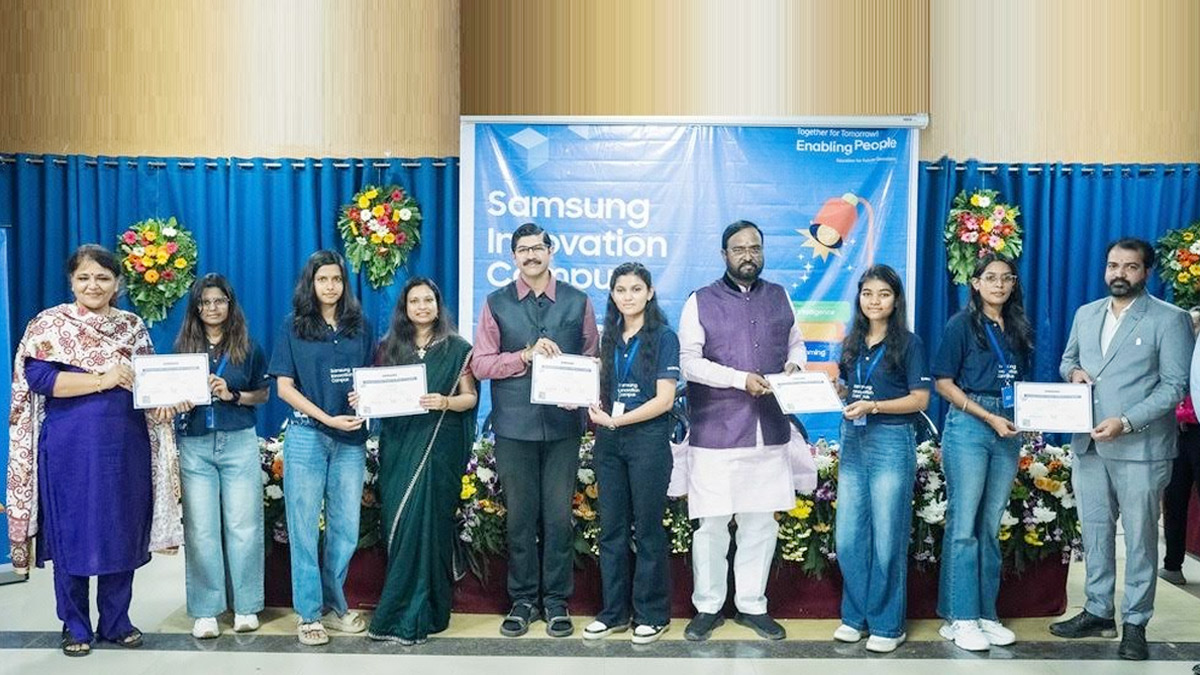
PUNE: Samsung has put 1,000 students in Maharashtra through a certified training programme in artificial intelligence and coding, the largest such drive the South Korean electronics company has run in the state and a signal that corporate India’s skilling ambitions are moving well beyond the boardroom brochure.
The certifications were awarded under Samsung Innovation Campus (SIC), the company’s flagship corporate social responsibility programme, which launched in India in 2022 with the stated aim of democratising access to future-technology education. The 1,000 graduates were drawn from four institutions: 127 from Savitribai Phule Pune University, 373 from Pimpri Chinchwad University, 250 from D.Y. Patil University’s Ramrao Adik Institute of Technology and 250 from Anjuman-I-Islam’s Kalsekar Technical Campus. All completed training in either AI or coding and programming, the two disciplines Samsung has identified as the critical pillars of the digital economy.
The programme does not stop at technical training. Soft-skills development and career-readiness modules are baked into the curriculum, a deliberate attempt to close the gap between what universities teach and what employers actually want.
“India’s digital growth story will ultimately be shaped by the quality of its talent pipeline,” said Shubham Mukherjee, head of CSR and corporate communications at Samsung Southwest Asia. “As technologies like AI move from the periphery to the core of industries, skilling must evolve from basic training to building real-world capability. This milestone in Maharashtra reflects how industry and academia can come together to create a future-ready workforce that is both globally competitive and locally relevant.”
The Maharashtra drive sits within a rapidly scaling national effort. Samsung Innovation Campus trained 20,000 young people across India in 2025, hitting its stated target for the year. Women account for 48 per cent of national enrolments, a figure the company cites as evidence of its push for an inclusive technology ecosystem. The programme is implemented in partnership with the Electronics Sector Skills Council of India and the Telecom Sector Skill Council.
Samsung, which is marking 30 years in India this year, runs SIC alongside two other initiatives, Samsung Solve for Tomorrow and Samsung DOST, as part of a broader effort to build what it calls a generation of innovators with both the technical depth and the problem-solving mindset to thrive in a fast-moving digital world.
A thousand certified students is a tidy headline. Whether they find jobs that match their new skills is the harder question, and the one that will ultimately determine whether corporate skilling programmes like this one are genuine pipelines or well-photographed gestures.






