MAM
Tata Motors partners with what3words – Redefines navigation with just 3 words

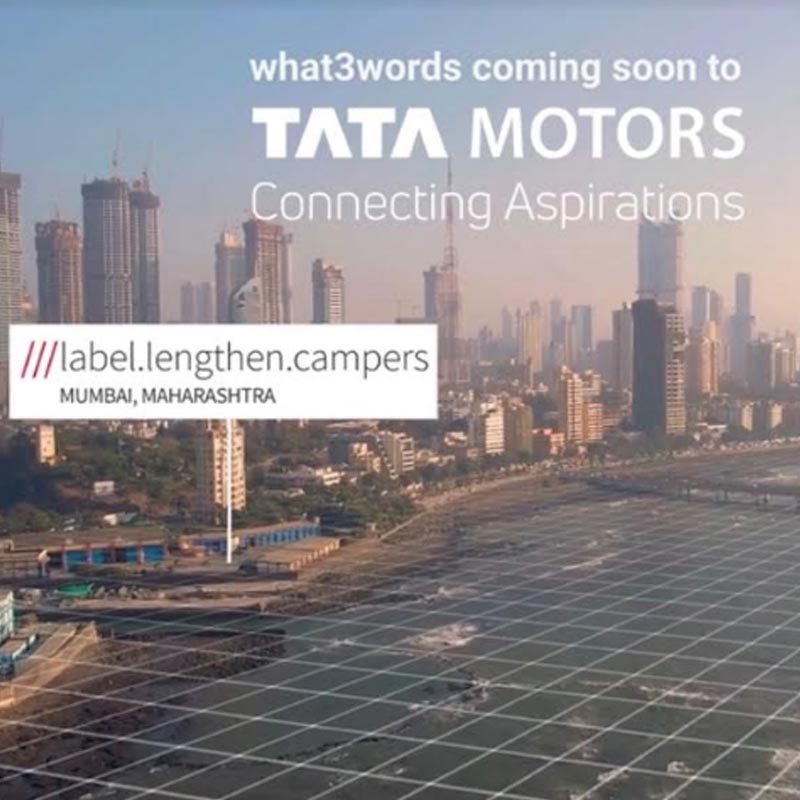
MUMBAI: Tata Motors, India’s largest automobile manufacturer today announced its partnership with the innovative location technology provider, what3words. Tata Motors will be the first manufacturer in India to bring what3words addressing system in its cars.
In a first for the Indian automotive industry, the partnership with Tata Motors and what3words will enable car-drivers to enter a 3 word address by voice or text input, and then navigate to the accurate address within 3 meters of the destination location. This is especially relevant in the Indian context, where addresses are non-standard and complex network of roads make it difficult for last-mile navigation. This accurate & unique 3 word-addressing system will make the last-mile navigation simple, safe, hassle-free and less time-consuming for the Indian customers. The what3words system is available in 36 languages, including 5 Indian languages: Hindi, Bengali, Tamil, Telugu and Marathi. The addition of these new native languages means that what3words will be making this technology more accessible for the Indian consumers.
Commenting on this partnership, Mr. Mayank Pareek, President – Passenger Vehicle Business Unit (PVBU), Tata Motors said, “Tata Motors is proud to be the first automaker in India to collaborate with what3words. With this collaboration, our customers will now be able to navigate to accurate 3-word addresses represented by what3words; offering a clear solution to a very visible problem related to the non-standard traditional address system. The three-word addressing will not only provide a more seamless navigation experience, but will also increase efficiency with drivers not spending a lot of time locating their destinations and reaching the precise location (within 3m of space) with minimum hassle and effort. Globally, the what3words technology comes as a unique offering only in the premium car models, but customers can expect this groundbreaking technology to feature in our mainstream line-up of products very soon.”

“India has a rapidly growing economy, but like many other countries, it still suffers from the big three infrastructural challenges – the unbanked, the unconnected and the unaddressed,” said Chris Sheldrick, what3words CEO and Co-Founder. “Our partnership with Tata Motors will begin to change this, as together, our impact will expand across humanitarian, travel, e-commerce – and of course automobile industries. This will also be a breakthrough for the tourism industry as it will make travelling very convenient for incoming tourists.’’
With the increase in the usage and ownership of smartphone devices across the country and India’s rapid growing economy, the need for a sophisticated location technology has never been more pronounced. The varying regional address formats across the country, its oft unnamed streets and localities coupled with more often than not buildings with no numbers, further compound this problem. To solve this real-world issue, what3words has taken the entire world, divided it into 3mx3m squares, and assigned each square a unique identifier – made of three random words. For example, Gateway of India can be found at ///holiday.surpises.design.
With the what3words technology, a 3 word address can simply be entered into the car navigation system, manually or via speech recognition. To prevent errors, every 3 word address is unique, and similar addresses are located far apart to avoid confusion. Additionally, the intelligent AutoSuggest feature helps drivers to spot and correct their mistakes immediately and effortlessly redirects them to the accurate address.
The latest version of what3words will be available in the upcoming products by Tata Motors in future. Customers will be able to download the what3words application for free via iOS and Android platforms. The easy adoption is what has made what3words a popular tool for businesses around the world and has helped them improve their customer experience and enhance efficiency, while reducing expenses and environmental impact.







Brands
Hyundai and TVS Motor partner to develop electric three wheelers
Joint development pact targets last mile mobility with localisation push
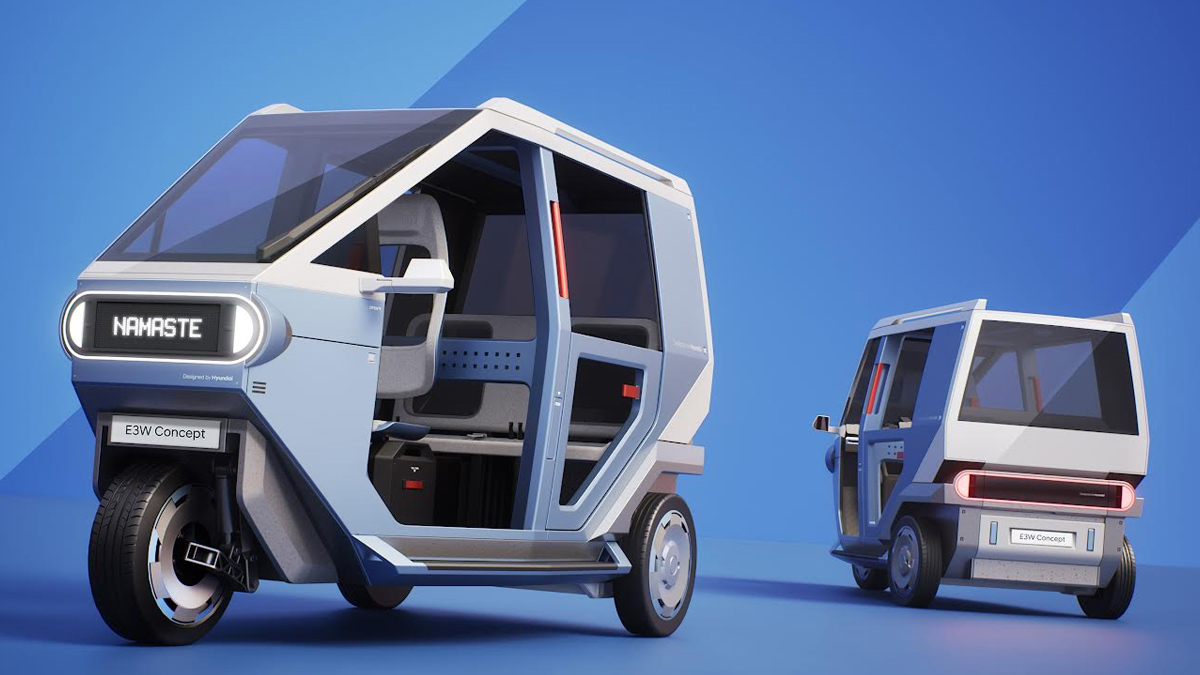
MUMBAI: Three wheels, one big ambition and a charge towards the future. Hyundai Motor Company and TVS Motor Company have signed a joint development agreement to co-create electric three-wheelers (E3Ws), aiming to crack India’s complex last-mile mobility puzzle. The collaboration moves beyond concept talk into execution mode, building on the E3W prototype first showcased at the Bharat Mobility Global Expo 2025. The goal now is clear, design, develop and commercialise a purpose-built vehicle tailored to Indian roads, riders and realities.
Under the agreement, Hyundai will lead design and co-development, bringing its global R&D muscle and human-centric engineering approach to the table. TVS Motor, meanwhile, will anchor the product on its electric platform, leveraging deep three-wheeler expertise and local market insight. It will also handle manufacturing and sales in India, with an eye on exports down the line.
The timing is strategic. India remains the world’s largest three-wheeler market, where affordability, durability and adaptability often outweigh sheer innovation. The upcoming E3W aims to strike that balance combining advanced technology with practical features such as adaptive ground clearance for monsoon-hit roads, improved thermal management for tropical climates, and flexible interiors suited for passengers, cargo or emergency use.
A key pillar of the partnership is localisation. Major components will be sourced and manufactured within India, a move expected to strengthen the domestic supply chain, create jobs, lower costs and improve after-sales support.
The shift from prototype to production will involve rigorous testing, certification and refinement to meet regulatory standards and consumer expectations. Dedicated cross-functional teams from both companies are already in place to accelerate timelines.
At a broader level, the tie-up reflects a growing trend in mobility, global players partnering with local specialists to navigate emerging markets. For Hyundai and TVS, the bet is that combining scale with street-level insight could unlock a new chapter in sustainable urban transport, one that runs not just on electricity, but on relevance.