MAM
Tata Ace Gold celebrates the Spirit of Entrepreneurship; announces ‘Ghar Lao Gold’ contest

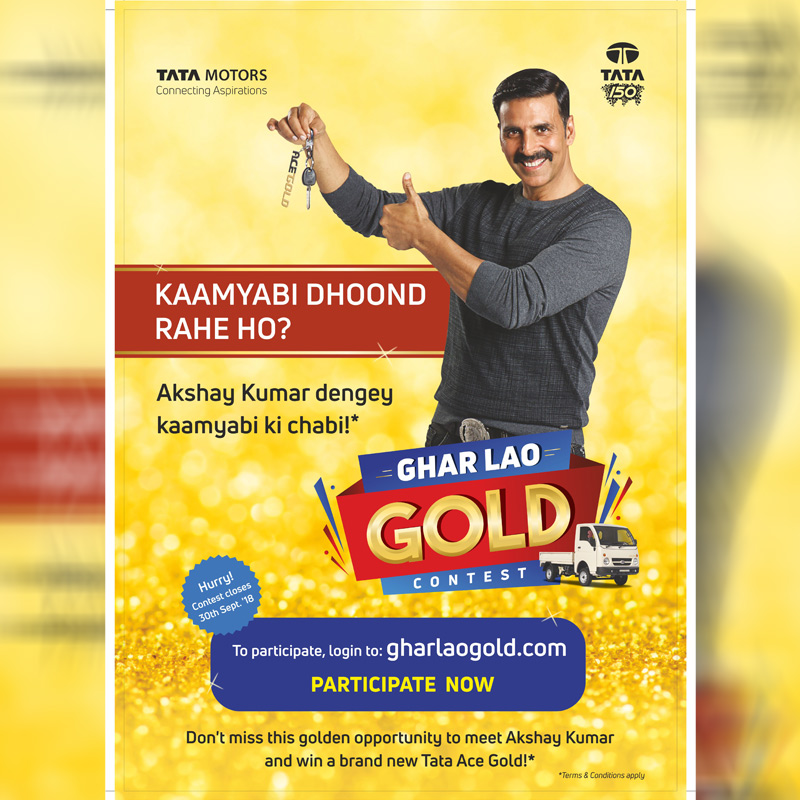
Mumbai : Encouraging self-employment and entrepreneurship in India, Tata Motors Ace Gold kicked started a two month long ‘Ghar Lao Gold’ contest. Five lucky winners will get a golden opportunity to meet superstar Akshay Kumar and take home a brand new Tata Ace Gold worth Rs. 3.78 Lakhs. Additionally, weekly prizes of Rs. 5000/- each will be given to the top 10 entries.
To participate in #GharLaoGoldContest, participants are required to answer 3 simple questions and share a unique and innovative business idea with Tata Ace Gold. A distinguished panel will shortlist the best entries and the shortlisted participants will be invited to share their detailed business idea with the panel. Educational qualification is not the criteria but innovativeness of the idea is.
Kicked started in August 2018, the Ghar Lao Gold Contest has received an overwhelming response. With over 19,000 entries so far, the campaign has become a huge success online and has garnered over 30,000 organic searches since its inception. It has also received over 3.7 million views on our Social Media Platform with over 2.5 lakh people actively engaging on our campaign page. The campaign has so far touched 6 million lives. Last day to participate in the contest is September 30th, 2018.
Commenting on the campaign, Mr. UT Ramprasad, Head – Marketing and Brand Communications, Commercial Vehicle Business Unit, Tata Motors said “According to the International Labour Organisation, unemployment in India is projected to hit 18.9 million in 2019. Our demography provides a distinct edge in terms of availability of skilled as well as unskilled labour. The sheer potential of this can only be leveraged by facilitating an environment that fosters entrepreneurship and innovation. It is with this objective, Tata Motors launched the Ghar Lao Gold Contest, with an aim to foster entrepreneurship, across the country. We are immensely pleased with the overwhelming response the contest has garnered. The Tata Ace has helped thousands of entrepreneurs fulfil their dream in the past. With this contest, we look forward to assisting more budding entrepreneurs in their quest for success.”
Tata Motors pioneered the small commercial vehicle industry with the Tata Ace. Since 2005, thousands of businesses have relied on the Tata Ace for their transport and logistics needs. With a market share of 68%, Tata Motors continues to be the market leader in the Mini Trucks segment. With close to 2 million (20 Lakhs) vehicles on the Ace platform, plying on the roads today, Tata Motors is the undisputed market leader in the segment. Today, one out of every 3 commercial vehicle (goods carrier) sold is from the Ace family.