Brands
Tanay Chothani on Travelxp’s shift from content to AI commerce
Tanay Chothani on Travelxp’s content, commerce, AI and Marco powered future


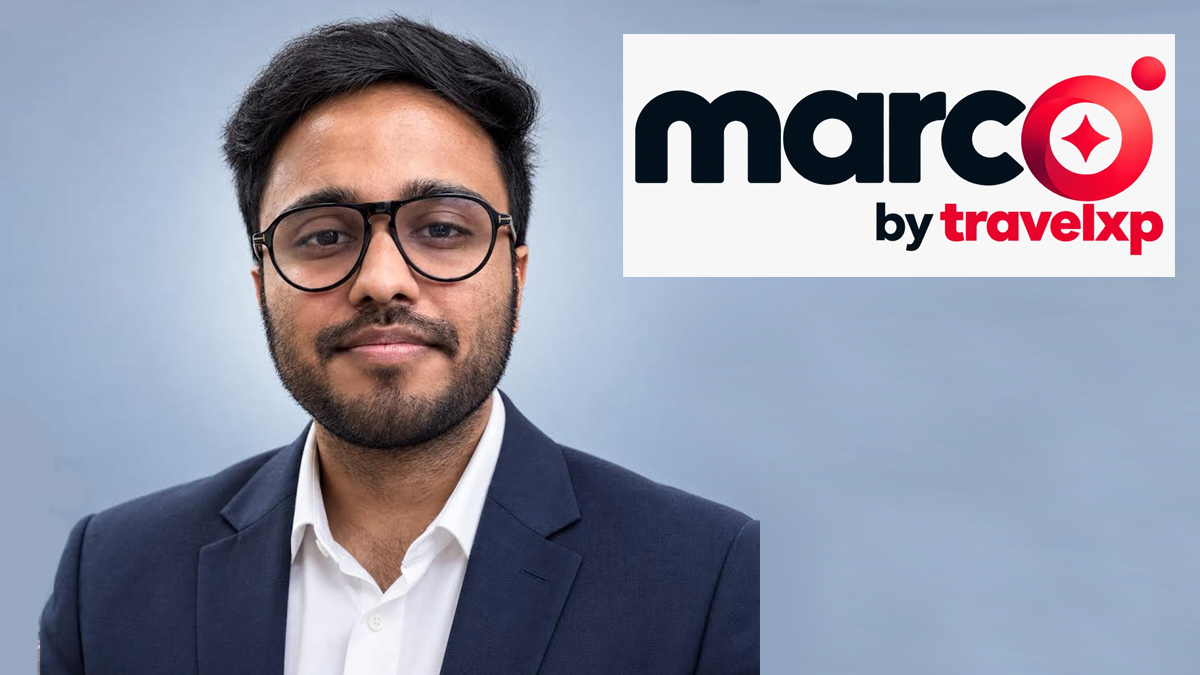
MUMBAI: Travelxp has spent 18 years building its identity around travel content, pioneering formats such as 4K HDR while building an audience rooted in travel inspiration. Over the past six years, however, the company has expanded into commerce, evolving into an online travel agency with more than 100,000 travellers having booked flights, hotels and holidays through the platform. Chothani describes this evolution as the coming together of two distinct businesses, with content building affinity and trust while commerce focuses on delivering a consistent service experience.
Now, the company is looking to take that convergence further through technology and AI, with Marco positioned as its first AI-first travel booking product capable of planning and transacting on behalf of travellers. Drawing on Travelxp’s content knowledge and commerce experience, Marco is designed to reduce the complexity of travel planning while operating within defined permissions and policies. As Travelxp looks towards scaling its content, commerce and technology businesses, Tanay Chothani, CEO, Travelxp, in conversation with Indian Television Dot Com. READ ON……..
On Travelxp’s evolution from a travel content brand into a business spanning both content and commerce, discussing how the company has transformed and the defining milestones along the way.
Travelxp today is two businesses standing on one foundation. The first is what people know us for – travel content. For 18 years we’ve held what we believe is the gold standard in the category, and we’ve usually got there first: we moved into 4K HDR before almost anyone else in the world, and that decision defined the channel. Last year that work was recognised with a National Award for Timeless Tamil Nadu.
The second business is travel commerce, which we started six years ago and which has grown into one of India’s fastest-growing online travel agencies. More than 100,000 travellers have now booked and travelled with us – flights, hotels, holidays.
The milestones, honestly, include a very messy start. We launched into commerce and then COVID happened. We spent that period deliberately not building another OTA, and it took us time to find where we could genuinely serve the aspirational and frequent traveller better than the incumbents. From 2022 we’ve been on a consistent ramp: scaling international flights, partnering with most of India’s leading banks to make international travel more affordable, and then moving beyond air – our own hotel booking engine, activities through partners like GetYourGuide, and now an end-to-end holiday product. The ambition is simple: you watch an experience on Travelxp, and you can book that same experience, as-is.
Talking about the relationship between content and commerce, highlighting how operating both sides of the business has shaped your approach to building an audience and a consumer business.
They are genuinely different disciplines, and I’d underestimated how different.
Building an audience is a creative act. You work with creative people, you take the time a story needs, and you’re judged on the finished thing. Whatever goes on screen – ten episodes, or three hours – is the product of everything coming together slowly and deliberately.
Building a consumer business is an operating act. Travel has been more volatile in the last six years than at any point I can remember: a pandemic, wars, airspace closures, airline failures. In that environment the job isn’t a great month, it’s delivering the identical promise every single day. That means resilient processes, a team with genuinely world-class travel knowledge, a technology layer that spots a disruption before the customer does, and a support layer that holds when things go wrong.
The shorthand I use internally: in content you’re judged on your best work; in commerce you’re judged on your worst day.
What connects them is trust, and the direction of travel is one-way. Content earns affinity and credibility long before anyone has booking intent – it is the cheapest, most durable acquisition asset we have. But one badly handled trip undoes what a hundred episodes built. So content buys you the right to be considered; operations are what let you keep the customer.
On the growth of Travelxp’s commerce business over the past six years, discussing the key milestones and results that best illustrate its progress and the role content has played in that growth.
Travel commerce is a harder model than we anticipated, and I think it’s underrated how hard. We tell our teams we operate in the industry with the highest number of SKUs on earth – every destination can be reached a dozen ways, every hotel has to be sold on its own merit, every activity is its own product. That complexity is exactly where the opportunity sits, but you have to build the capability in-house to get at it: travel tech, the service layer, and direct relationships with vendors across the globe.
Very few new players have established themselves in this industry. Our main competitors are all listed companies. So the numbers that matter to me are the ones showing we’ve found real footing. Our international flight business has grown roughly 40% year on year for three consecutive years. Our retention rate sits at 65–70%. The average customer books 3.5 to 4 tickets with us a year, well above market norms, and our average order values run higher than a typical agency’s.
Content is why. It attracts the aspirational, high-frequency traveller , the person with the highest affinity for travel, and it builds trust before we’ve ever sold them anything. Content builds the affinity; commerce has to deliver the service guarantee, and the technology underneath it is all built by our own teams.
Talking about the journey from travel inspiration to a booking decision, sharing what you have learned about consumer behaviour and how those insights have shaped Travelxp’s approach in a competitive travel market.
Our OTT has been live four years, and joining that viewing data to booking data took real work but it taught us that inspiration and intent are two separate states, and they need to be served differently.
Some viewers are bucket-listing. They’re watching to know what’s new in the world of travel, and the trip is on a distant horizon. Others are planning. Someone who watches five or more videos on a single destination is telling us something quite precise, and at that point one of our trip managers can reach out and help them turn a trip they’ve imagined into a trip they actually take. We’ve built proprietary logic around exactly that distinction – which content inspires, and which content converts.
The most interesting finding is about format. Travellers heading long-haul to the Europe, the Americas, or Japan consume significantly more long-form content, not less. Their behaviour has changed: a Europe holiday is no longer twelve days, six countries, all the capitals. People now spend twelve days in one or two countries and go deeper. In Japan it isn’t only Tokyo and Osaka; they want Hakone.
That’s where we have a structural advantage. A 30-second reel makes everything look good. A seven-minute segment on a single attraction tells you honestly whether you want to spend half a day there.
On the growing role of commerce within Travelxp, explaining how it has influenced the company’s content strategy, from the stories being commissioned to the way they are distributed.
Less than people expect, and I think that’s deliberate. Our content strategy hasn’t changed: make beautiful travel films that show people the power of travel, and inspire journeys they’ll keep for the rest of their lives. We don’t commission a show because we want to sell a particular hotel, and I’d protect that.
What commerce has changed is not what we make but what we know when we make it.
Previously we planned content the way any broadcaster does through public insight, industry reports, our own editorial instinct about where travel was heading. Now we also speak directly to 30,000 to 40,000 travellers a year. We hear first-hand which experiences people actually want, which destinations are turning, and where the market is shifting.
That primary data layer simply didn’t exist for us before, and it makes the content business far better connected to reality. It sharpens what we commission and where we put it. But the editorial bar stays exactly where it was.
- Talking about leadership, sharing what it has taken to bring Travelxp’s creative, commercial and technology teams together around a common business vision.
Everything at Travelxp is in-house – content, marketing, technology, travel operations, servicing. That’s both the beauty and the challenge, because these teams run on completely different clocks. A creative team measures in months and is right to. A commerce team measures in hours. Getting them to believe in one vision is genuinely hard work.
Two things have made it possible. The first is that we set the vision out loud. In 2022 we said that having built one of the world’s largest travel channels, the next job was to build one of the world’s best travel content, commerce and technology companies. Once that’s stated, people can locate their own work inside it.
The second is who we hire. The single bar we apply across every function is natural curiosity. Curious people want to understand how the other teams work. The editor wants to know how the booking engine handles a fare drop, the engineer wants to know why a shot took three days. That curiosity is what makes building this team easier.
And we’ve been fortunate in our team leads, who have carried a consistent vision through 18 years without it drifting.
On AI and its role within Travelxp’s strategy today, discussing the areas where you are seeing the most meaningful applications for the business and its customers.
Travel is an almost perfect fit for AI, because travel is inherently burdensome. The research, the discovery, the planning, and then a booking process with a dozen moving parts and all of it currently happens across hundreds of websites, and it’s enormously heavy on the customer’s mind. Anything that can absorb complex, multi-step work and reduce that cognitive load belongs in this industry.
We’re applying it in three layers.
Internally, it lets us run leaner and far more efficiently across operations.
On the customer side, we’ve done the expected stack. Service chatbots, automated call handling, AI-driven planning and filtering.
The third layer is the one that matters most: rewiring our commerce business around the question of what an AI-first travel booking engine actually looks like in 2026, rather than bolting AI onto a 2015 architecture. Marco, which we launched at the Global Fintech Festival, is our first product built on that premise.
The opportunity here is larger than assistance. Travel pricing and operations are volatile by nature, and the planning burden is enormous. We have 18 years of content, research and expertise in how travel actually works around the world. The question we’re answering is how to put all of that in a customer’s hands in a form that’s simple enough to just ask for.
Talking about Marco, Travelxp’s AI travel agent, explaining what led to its development and what it enables travellers to do today.
Marco is an AI travel agent that doesn’t just plan your trip , it books it. It is among the first agents anywhere in the world able to make payments on your behalf through a secure, policy-driven layer supported by Visa, Mastercard and Pine Labs.
This isn’t an assistant with your card details saved that mimics a checkout. Marco is an authenticated, registered agent, authorised by our payment partners to transact. Getting there required us to satisfy them that real money, on real bookings, for real customers, would be handled safely.
What led to it was a simple observation about our own customers. They fly frequently, they travel aspirationally, and they’re operating in an industry with genuinely volatile pricing. So what if the booking just… happened, correctly, at the right moment?
Today you can tell Marco: book me to Dubai for my conference, I fly Emirates or IndiGo, book it the moment the fare goes under ₹30,000, and I like this hotel on Sheikh Zayed Road , take it if it’s under ₹20,000. It handles instructions that complex, and it learns your preferences as you keep talking to it.
Two things we had to invent to make that work. The first we call decision context , the mechanism that ensures the option Marco picks is the option you’d have picked yourself, because an agent built on delegation is worthless if you have to check its work. The second is the policy layer: the guardrails that make a wrong transaction structurally impossible.
We’ve always been at the cutting edge of content , 4K HDR was the breakthrough moment for Travelxp the channel. We believe Marco is the breakthrough moment for Travelxp the commerce business.
On how your experience of running a content and commerce business has shaped Marco, discussing the principles behind its development and the metrics you will use to measure its success.
Marco is the culmination of both sides of the company, and it genuinely couldn’t have been built by either one alone.
The knowledge layer comes from content. 18 years of shooting in destinations, and the research behind every one of those films. That’s what lets Marco know that if you have twelve days in Japan, Hakone belongs in the itinerary. The judgement layer comes from commerce. More than 100,000 bookings that taught us how real travellers actually choose between two fares, two hotels, two routings.
Put plainly: an agent that can transact but doesn’t understand travel will book the wrong thing perfectly.
On judging success, I’d separate it from the usual metrics. The one I care about most is delegation depth. How much of a trip a customer is willing to hand over without checking our work. That is the real test of trust in an autonomous agent, and it only rises if we’ve earned it.
Underneath that: decision agreement, meaning how often the option Marco chose is the one the customer says they’d have chosen; repeat delegation, meaning whether a first mandate turns into a second; and zero policy breaches, which is non-negotiable rather than a target. The commercial numbers , share of bookings originating through Marco, and its effect on retention and order value , will follow those, not lead them.
Talking about the next chapter for Travelxp, outlining how you see the balance between content, commerce and technology evolving over the next few years.
We’ve built three centres of excellence , content over 18 years, commerce and technology over the last six. The next chapter is the synergy between them, and then scale.
I’d argue the whole industry is converging on this point. Content companies are moving toward commerce because pure content ARPUs are low and attention is hard to monetise , you’ve seen it with gaming, with affiliates, with every attempt to convert time spent into revenue. Commerce companies are moving toward content because acquisition keeps getting more expensive and they already have the monetisation layer solved. Everyone is becoming a content-to-commerce company. The game is attention, and your ability to monetise it.
Travel is the best possible category to play that game in: high content affinity, high consumption, high ticket size, and a genuine, repeating need to keep travelling. Indians are travelling in record outbound numbers year on year. We’ve been building consciously in this space for six to eight years, which is the moat.
So the next decade is about scale. We spent the last six learning travel commerce and travel technology properly , we’re no longer just a flight seller; we do flights, hotels, activities and end-to-end trips. Now we scale that into being the default travel app for the Indian traveller.
And on top of it sits Marco. The ambition is that every customer has their own personal travel agent , one that plans your trips, watches your fares, handles disruptions before you notice them, manages cancellations and refunds, and calls the airline or the local vendor on your behalf. That level of personal service used to be available to a handful of people. We think it can now be available to everyone.