
Brands
Suzuki targets 4 million vehicle production capacity in India by FY30
Japanese carmaker plans 38 per cent capacity jump as India becomes export hub


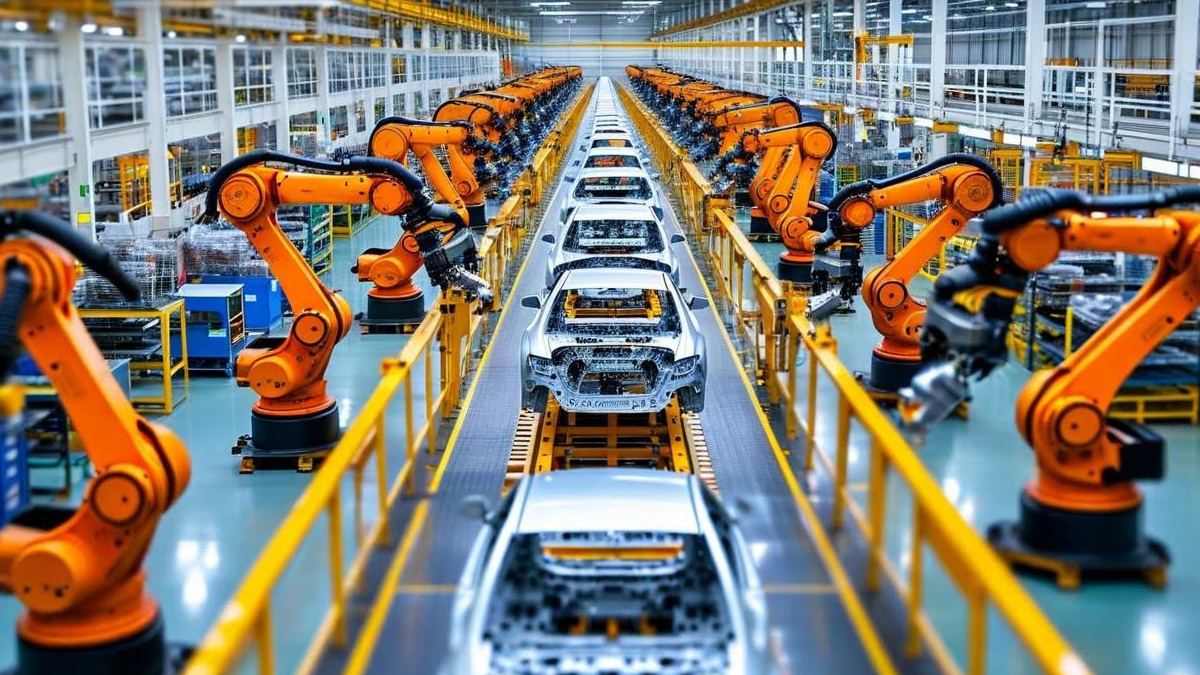
MUMBAI: Suzuki is shifting up a gear in India, with the Japanese carmaker planning to lift its annual production capacity in the country to about 4 million vehicles by FY30. The target represents a 38 per cent increase from current capacity and underlines the growing importance of India as a manufacturing and export base for Suzuki. The plan also puts production ambitions ahead of the capacity roadmap previously outlined by its Indian arm, Maruti Suzuki.
Maruti Suzuki currently has annual production capacity of 2.9 million vehicles. In its FY26 annual report, the carmaker had said installed capacity would reach 2.9 million units by the end of FY27 and 3.65 million units by the end of FY31.
The latest target was outlined by Suzuki Motor president Toshihiro Suzuki at the company’s Technology Strategy Briefing 2026. He said Suzuki was refining technologies developed in Japan into vehicles tailored to individual markets and delivering them not only in India but to customers worldwide.
The capacity push comes after Maruti found itself racing against demand last year. Following the government’s reduction in GST rates on small cars, demand across manufacturers increased sharply.
Maruti chairman RC Bhargava said in the company’s annual report that retail sales grew 17 per cent in the second half of the year after the new GST rates took effect on September 22, 2025. The company ended March with 1.9 lakh pending bookings, which Bhargava attributed to inadequate manufacturing capacity for models in demand.
The pressure on plants was high enough for Maruti to operate facilities on Sundays and holidays during several months, according to senior executive officer for marketing and sales Partho Banerjee.
Suzuki is also looking to make the development process faster. It aims to halve the time needed to develop a new model by 2030 compared with FY20, while targeting a 30 per cent improvement in development efficiency.
On the manufacturing side, Suzuki wants production efficiency to be 50 per cent higher than at its Manesar plant in India.
The company plans to achieve this by running planning, design, production, quality and procurement processes in parallel rather than sequentially. It also intends to make greater use of digital engineering, share more modules across models and transfer design standards, evaluation expertise and knowledge accumulated from physical vehicles into digital development environments.
But Suzuki’s technology roadmap is not limited to manufacturing speed.
The company is developing what it calls ‘REEV Light’, a range-extended electric vehicle based on a planned series-hybrid system for compact cars. The concept would use a relatively small battery, supplemented by external charging, with battery capacity designed around real-world driving patterns.
Unlike conventional hybrids, where both the engine and electric motor can drive the wheels, a range-extended EV is driven solely by an electric motor. Its combustion engine acts as a generator to recharge the battery. A pure EV, meanwhile, has no combustion engine.
Suzuki chief technology officer Katsuhiro Kato said the REEV Light would avoid an oversized battery while allowing drivers to use the vehicle without worrying about the remaining charge. The company has not disclosed a launch timeline or confirmed the markets where the technology will debut.
REEVs have gained traction in China and are beginning to attract attention in India. In July, JSW-MG launched a vehicle platform in India capable of accommodating EV, hybrid, plug-in hybrid and REEV powertrains. No carmaker currently sells a REEV in India, although JSW-MG has access to the technology through Chinese parent SAIC Motor.
Suzuki is simultaneously developing a next-generation direct-injection turbocharged petrol engine aimed at combining fuel efficiency with stronger performance in what it describes as growth markets such as India.
The company is also working to eliminate heavy rare earths from its motors, pointing to geopolitical risks around supplies of the materials.
That concern has already hit India’s automotive industry. China’s restrictions on rare-earth magnet exports last year disrupted Indian automakers, including Maruti Suzuki’s plans for e Vitara production.
With capacity, development speed, powertrains and supply-chain resilience all moving up Suzuki’s agenda, India is increasingly becoming a central piece of the Japanese automaker’s global manufacturing strategy.






